

Table Mountain water management plays a far greater role in Cape Town’s sustainability than many residents realise. While most people see Table Mountain as a landmark and tourism icon, it is also a vital ecological and hydrological system. Rainfall captured on its slopes feeds streams, underground aquifers, and catchment areas that influence the wider metropolitan water network.
Effective Table Mountain water management is not just about conservation. It involves environmental protection, stormwater control, erosion mitigation, and long-term drought resilience planning. As climate variability increases and rainfall patterns shift, the systems supporting Table Mountain water management have become more important than ever.
From infrastructure design to ecological preservation, Table Mountain water management sits at the intersection of environmental engineering and sustainable facilities planning.
Environmental protection and catchment preservation

The first layer of Table Mountain water management begins with protecting its natural catchment systems. The mountain’s sandstone geology allows rainwater to filter through porous rock, feeding springs and streams that eventually support downstream ecosystems. Preserving this process requires careful monitoring of vegetation, soil stability, and invasive plant control.
Alien vegetation poses one of the biggest threats to effective Table Mountain water management. Invasive species often consume significantly more water than indigenous fynbos, reducing runoff and groundwater recharge. Removing these plants is therefore not simply a conservation exercise. It directly improves water yield and ecosystem balance.
Fire management also plays a role. While fynbos ecosystems depend on periodic fires, uncontrolled burns can increase erosion and sediment runoff. Responsible Table Mountain water management must balance ecological cycles with infrastructure protection and slope stability.
Without consistent environmental oversight, the hydrological function of Table Mountain would gradually degrade, impacting both biodiversity and water security.
Engineering systems and stormwater control
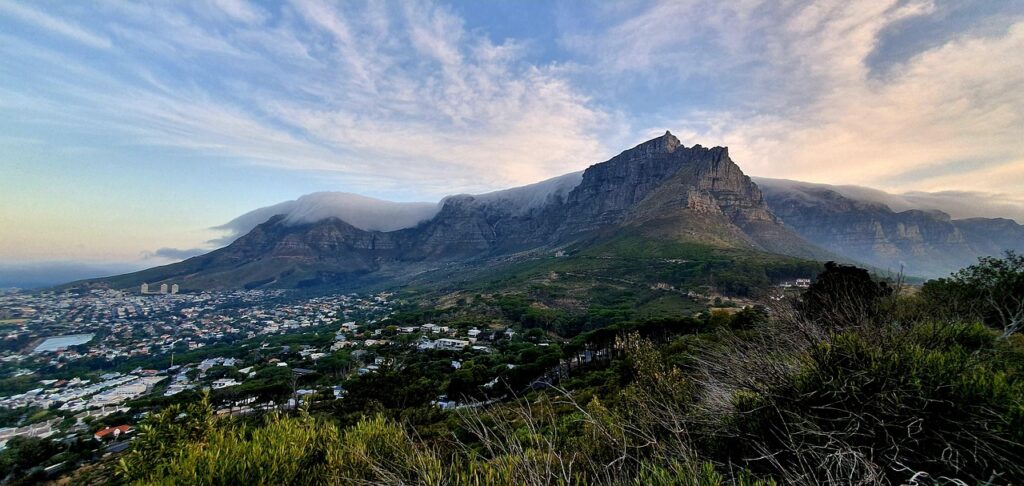
Beyond natural processes, Table Mountain water management depends on engineered systems that regulate runoff and prevent infrastructure damage. Steep slopes and intense seasonal rainfall create a high risk of flash flooding and erosion if not properly managed.
Modern Table Mountain water management includes:
- Controlled stormwater channels and culverts
- Reinforced drainage systems near access roads
- Erosion control structures on vulnerable slopes
- Sediment management in high-flow zones
- Regular inspection and maintenance programmes
These systems are essential for protecting hiking routes, cableway facilities, service roads, and nearby urban areas. Poorly managed runoff can damage infrastructure and increase sediment loads in downstream waterways.
In urban environments surrounding the mountain, Table Mountain water management must integrate with municipal stormwater planning. Coordinated systems ensure that heavy rainfall does not overwhelm lower-lying suburbs or contribute to preventable flood events.
Engineering solutions, when combined with ecological sensitivity, create a resilient framework for managing rainfall variability.
Lessons from Day Zero and drought resilience
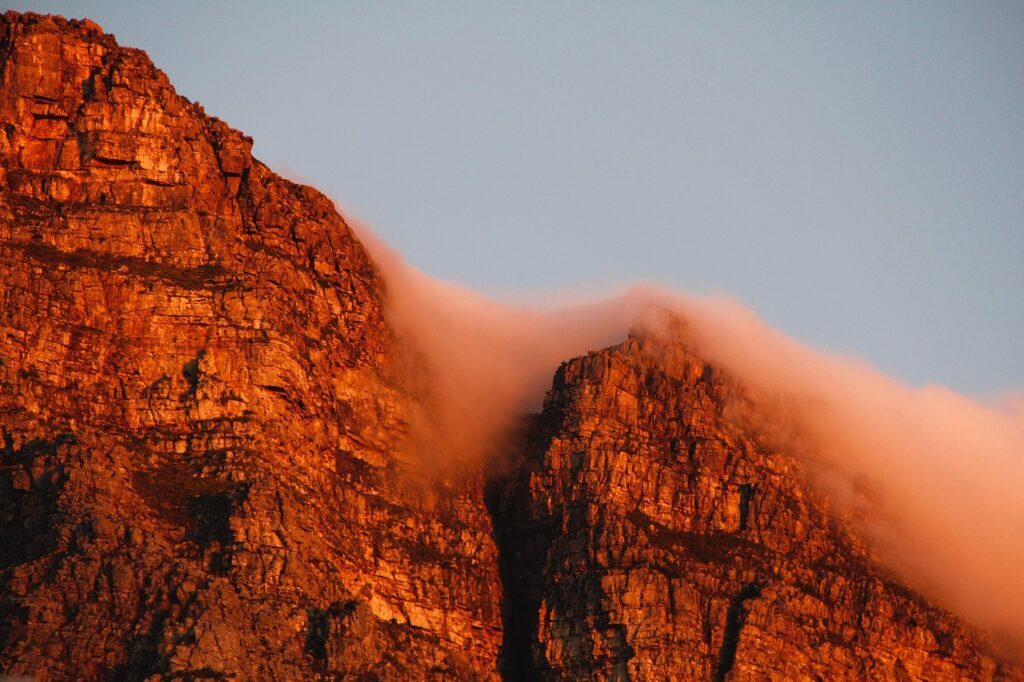
Cape Town’s Day Zero crisis fundamentally reshaped how water security is viewed across the region. Table Mountain water management became part of a broader conversation about alternative sources, groundwater recharge, and catchment optimisation.
During periods of drought, every drop counts. Healthy mountain ecosystems improve natural water retention and recharge rates. Effective Table Mountain water management therefore supports long-term drought mitigation by strengthening natural hydrological cycles.
There is also growing recognition that catchment areas must be actively managed rather than passively protected. Monitoring rainfall data, groundwater levels, and vegetation density provides critical insights for future planning. Table Mountain water management now includes adaptive strategies designed to respond to changing climate patterns.
The mountain is not a primary dam supply source, yet its broader hydrological influence affects regional water dynamics. Strengthening Table Mountain water management contributes to overall resilience in the Western Cape water system.
The future of sustainable mountain water systems
Looking ahead, Table Mountain water management will increasingly rely on integrated data systems and sustainability-focused design. Climate modelling, remote sensing, and environmental monitoring technology will allow more accurate forecasting and maintenance planning.
Collaboration between conservation authorities, engineers, and municipal planners will also remain essential. Table Mountain water management cannot operate in isolation. It must align with urban expansion, tourism infrastructure, and environmental protection policies.
Ultimately, Table Mountain water management represents a model of how natural landscapes and engineered systems can coexist. Protecting this iconic mountain is not just about preserving scenery. It is about safeguarding water systems that support communities, biodiversity, and long-term sustainability in Cape Town.
In a city shaped by water scarcity and environmental pressures, responsible Table Mountain water management remains one of the most important investments in the region’s future.


