Effective light asset management is essential for facilities managers responsible for maintaining safe, compliant, and cost-efficient buildings. From office parks and retail centres to industrial plants and public infrastructure, lighting systems are critical operational assets that require structured oversight rather than reactive maintenance.
Without a proper light asset management strategy, organisations often face rising energy costs, inconsistent performance, unplanned failures, and compliance risks. A proactive, data-driven approach ensures that lighting infrastructure supports operational efficiency, sustainability targets, and long-term asset performance.
What is light asset management?

Light asset management refers to the structured tracking, maintenance, optimisation, and lifecycle planning of lighting systems within a facility or portfolio. This includes luminaires, control systems, emergency lighting, cabling, and associated electrical infrastructure.
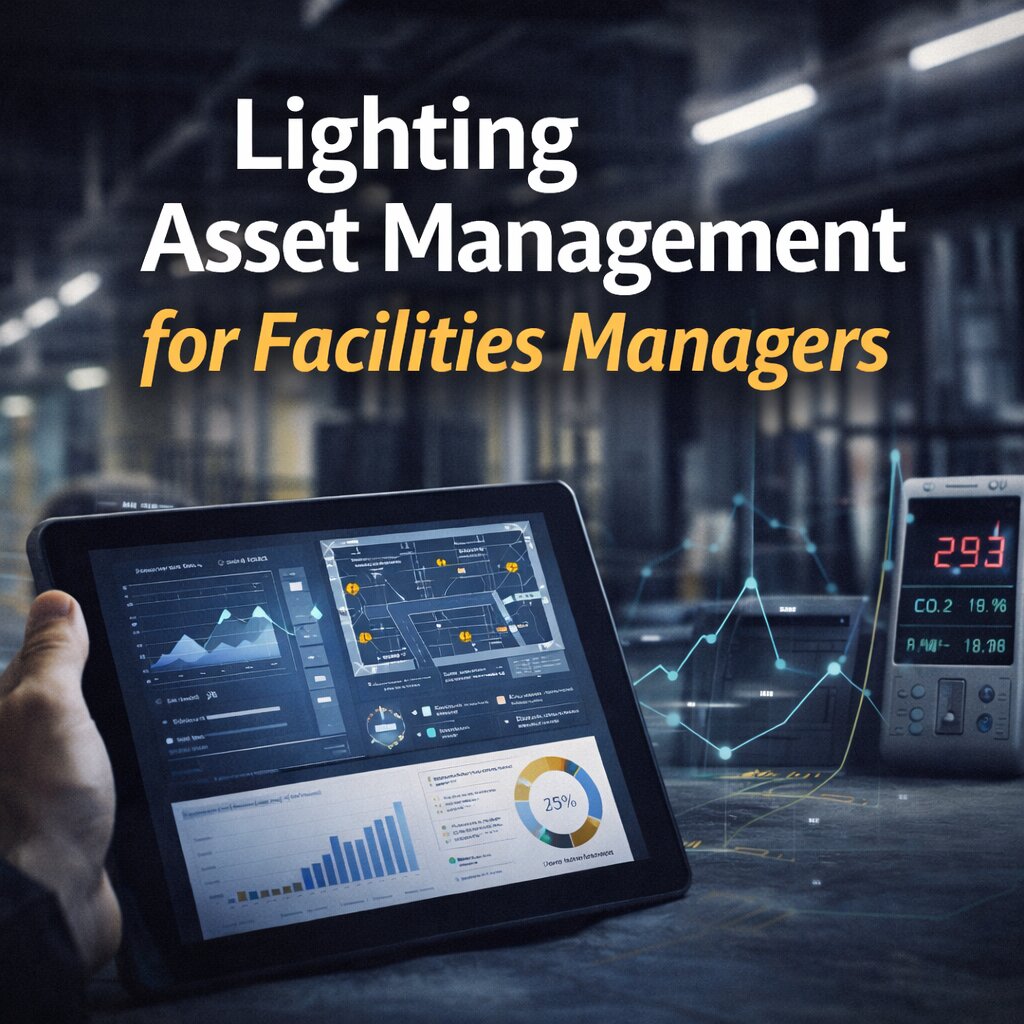
Facilities managers use lighting asset management frameworks to record asset condition, installation dates, energy consumption data, maintenance history, and warranty information. By centralising this information, teams can make informed decisions rather than relying on guesswork or reactive repairs.
Modern lighting asset management often integrates with digital asset registers and facilities management systems. This enables predictive maintenance planning, performance tracking, and capital expenditure forecasting.
Why facilities managers need a structured approach

For facilities managers, lighting is more than illumination. It affects safety, productivity, tenant satisfaction, and regulatory compliance. A structured light asset management plan reduces downtime, minimises safety risks, and ensures emergency systems remain operational.
Unplanned lighting failures can disrupt operations and create liability concerns, particularly in commercial or public environments. With proper lighting asset management, facilities managers can schedule maintenance proactively and replace ageing components before failure occurs.
Additionally, energy performance plays a significant role in operational budgets. Through strategic light asset management, organisations can identify inefficient fittings, transition to LED solutions, and optimise control systems to reduce energy consumption and carbon footprint.
Lifecycle planning and cost control

Lighting systems have measurable lifespans, and understanding those cycles is key to effective light asset management. Rather than replacing fixtures individually as they fail, facilities managers can implement phased upgrade strategies based on lifecycle data.
A long-term lighting asset management plan enables accurate budgeting for capital upgrades. It also supports return-on-investment calculations when considering retrofits, smart lighting controls, or energy-efficient technologies.
By aligning lighting upgrades with maintenance schedules and sustainability goals, light asset management becomes a strategic tool rather than a maintenance burden.
Compliance, safety, and reporting

Regulatory compliance is another major driver of light asset management. Emergency lighting systems must meet testing standards, and workplace environments require adequate illumination levels to maintain health and safety compliance.
Through comprehensive light asset management, facilities managers can document inspections, testing records, and compliance certifications. This ensures readiness for audits and reduces risk exposure.
Data-backed reporting also strengthens communication with stakeholders. When facilities teams can present clear metrics supported by light asset management, it improves transparency, justifies budgets, and supports strategic decision-making.
Strategic lighting for long-term performance
In today’s facilities environment, reactive maintenance is no longer enough. Light asset management empowers facilities managers to take control of performance, costs, and compliance through structured planning and measurable data.
By implementing a proactive light asset management strategy, organisations improve reliability, reduce energy consumption, and extend the lifespan of lighting infrastructure. For facilities managers seeking operational excellence, lighting is not just an expense line. It is a managed asset that supports the entire built environment.
If your facility requires a structured lighting assessment or asset review, consider professional support to develop a robust light asset management framework tailored to your infrastructure.