Glass recycling equipment forms the backbone of efficient and contamination-free glass recovery operations. From municipal recycling facilities to industrial processing plants, the right equipment ensures waste glass is transformed into high-quality cullet suitable for remanufacturing. Because glass is abrasive, brittle, and easily contaminated, glass recycling equipment must be robust, precise, and carefully integrated into the overall recycling workflow.
This in-depth guide explores the core types of glass recycling equipment, how they function within the glass recycling process, and why proper equipment selection is critical for long-term operational success.
Understanding the glass recycling process
Before examining individual machines, it is important to understand where glass recycling equipment fits into the wider process. Recycling of glass typically follows a staged workflow, starting with collection and ending with furnace-ready cullet.
Glass recycling equipment is used to:
- Reduce glass into uniform sizes
- Remove contaminants such as ceramics, metals, labels, and paper
- Sort glass by colour or composition when required
- Control dust and airborne particulates
Each stage requires specialised glass recycling equipment designed to handle glass without excessive breakage, wear, or cross-contamination.
Glass crushers and pulverisers

Glass crushers are the primary size-reduction machines in glass recycling equipment systems. Their role is to break down bottles, jars, and flat glass into manageable cullet sizes.
There are several crusher types used in glass recycling equipment setups:
- Hammer mills for high-throughput operations
- Roll crushers for controlled size reduction
- Impact crushers for mixed glass streams
Pulverisers are sometimes used when finer glass particles are required. Proper crusher selection is essential, as excessive fines can reduce cullet quality and increase dust management requirements.
Screening and size-grading equipment

Once glass is crushed, glass recycling equipment must separate material by size. Vibratory screens are commonly used to grade cullet into consistent size fractions.
Screening equipment helps to:
- Remove oversized fragments
- Separate fines from usable cullet
- Improve downstream sorting efficiency
Maintaining uniform cullet size is critical for remanufacturing, making screening systems a core component of professional glass recycling equipment installations.
Optical sorting and contaminant removal
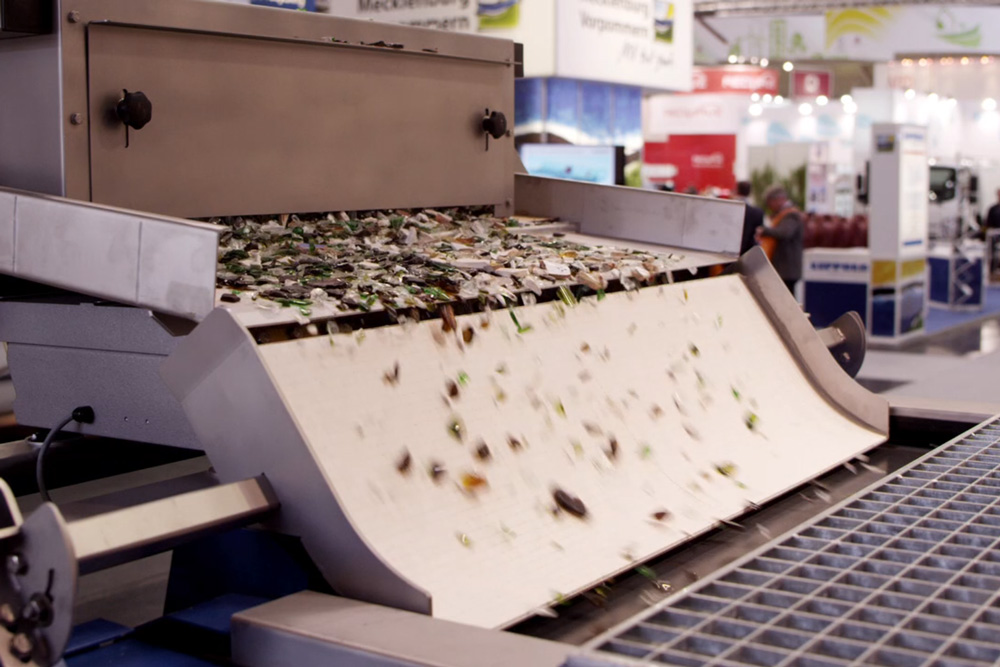
One of the most advanced forms of recycling equipment is optical sorting technology. These systems use cameras, lasers, or sensors to detect and eject unwanted materials.
Optical sorters are particularly effective at removing:
- Ceramics and stones
- Heat-resistant glass
- Non-glass contaminants
In colour-separated glass recycling streams, optical sorting equipment can also distinguish between clear, green, and amber glass. This significantly increases the value of recovered cullet.
Air classifiers and label removal systems

Lightweight contaminants such as paper labels, plastic films, and organic residue are removed using air-based glass recycling equipment.
Air classifiers work by:
- Blowing lighter materials away from heavier glass
- Separating paper and labels after crushing
- Reducing contamination before final processing
These systems are essential for meeting quality standards in bottle-to-bottle recycling and other closed-loop recycling glass applications.
Dust control and filtration systems

Recycling glass generates significant dust due to the brittle nature of the material. Effective dust management is therefore a non-negotiable part of glass recycling equipment design.
Dust control equipment includes:
- Extraction hoods at crushing points
- Cyclone separators
- Baghouse or cartridge filtration systems
Proper dust control protects worker health, prevents equipment damage, and ensures compliance with environmental regulations.
Integrating glass recycling equipment into a complete plant
Recycling equipment for glass must function as an integrated system rather than as isolated machines. Plant layout, material flow, and maintenance access all influence overall efficiency.
When designing or upgrading a facility, operators should consider:
- Equipment wear resistance
- Ease of maintenance and part replacement
- Scalability for future capacity increases
- Compatibility with existing recycling lines
Well-integrated glass recycling equipment reduces downtime and improves output consistency.
The role of equipment quality in cullet reuse
High-quality glass recycling equipment directly affects the usability of recovered glass. Manufacturers require cullet with strict size and purity specifications, and poorly selected equipment can result in rejected loads.
By investing in purpose-built glass recycling equipment, recycling facilities improve:
- Cullet quality and resale value
- Process efficiency
- Long-term operational sustainability
This aligns closely with the glass recycling process principles outlined in our main glass recycling guide.
Building efficient glass recycling operations
Glass recycling equipment is more than just machinery. It is a strategic investment in material recovery, environmental responsibility, and circular manufacturing. From crushing and screening to optical sorting and dust control, each component plays a vital role in delivering clean, reusable glass.
For operators looking to optimise or expand their recycling operations, understanding how glass recycling equipment fits into the broader process is the first step toward building efficient, compliant, and future-ready recycling systems.