
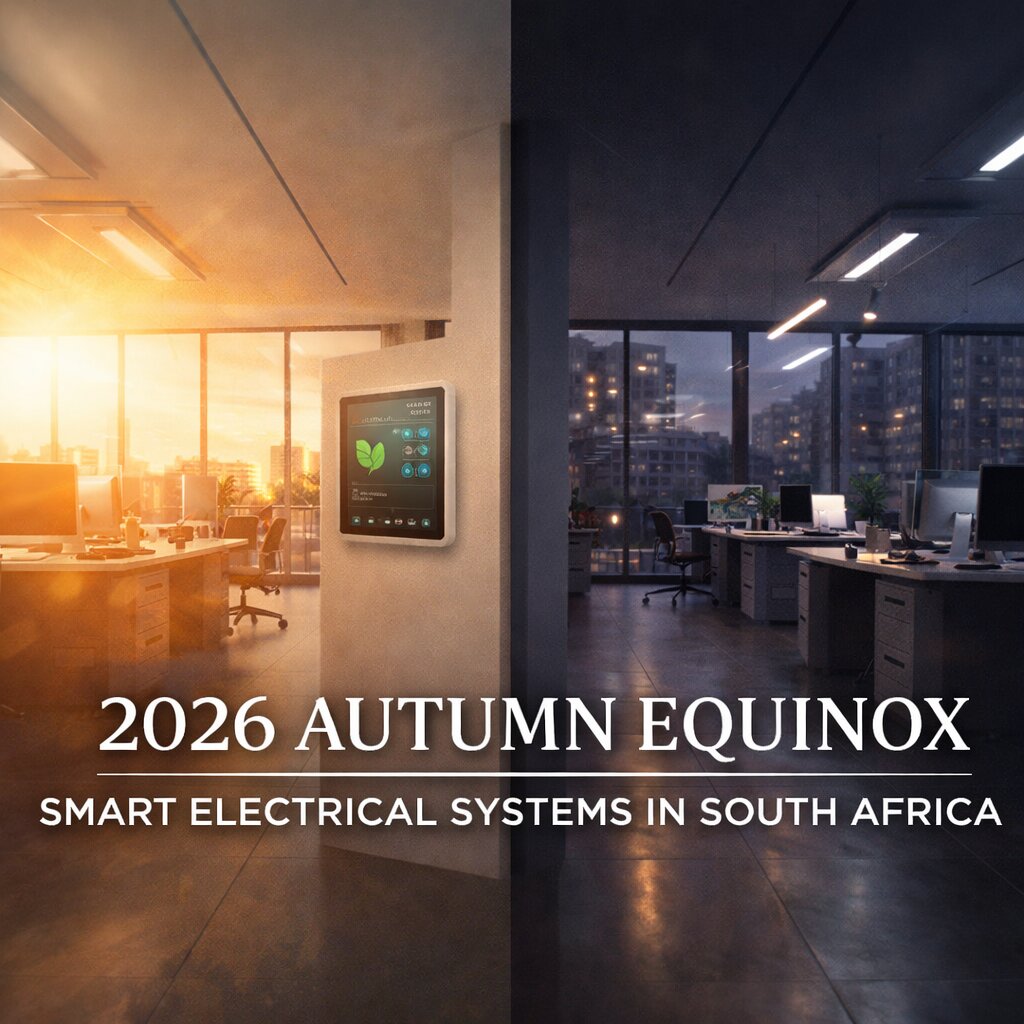
The 2026 Autumn Equinox marks the seasonal shift into autumn in South Africa, bringing shorter daylight hours, cooler temperatures, and changing environmental conditions. While this transition is often associated with nature, it also has a significant impact on buildings, infrastructure, and electrical systems.
For modern buildings, especially those using smart electrical systems, the equinox signals a change in energy demand, lighting requirements, and system performance. From increased reliance on artificial lighting to adjustments in heating and energy efficiency, this is a critical time to optimise how systems operate.
In this article, we explore what the 2026 Autumn Equinox means for smart electrical systems in South Africa and how property owners, facility managers, and developers can prepare for the seasonal transition.
How the 2026 Autumn Equinox affects energy demand

The 2026 Autumn Equinox introduces a noticeable reduction in daylight hours. As evenings become darker earlier, buildings rely more on artificial lighting and electrical systems.
This shift increases overall energy consumption, particularly in commercial buildings, offices, and residential complexes. Lighting systems, security systems, and internal electrical loads begin operating for longer periods each day.
In South Africa, where energy supply can already be under pressure, this increase in demand can place additional strain on both the grid and individual systems. Efficient energy management becomes essential during this period.
The 2026 Autumn Equinox is therefore the ideal time to evaluate energy usage patterns and identify opportunities for optimisation within smart electrical systems.
The role of smart lighting during seasonal change

Lighting is one of the most affected systems during the 2026 Autumn Equinox. With reduced natural light, buildings must compensate through artificial illumination.
Smart lighting systems offer a significant advantage in this area. Automated controls, motion sensors, and daylight harvesting technologies can adjust lighting levels based on real-time conditions. This ensures optimal brightness while minimising unnecessary energy usage.
For example, office spaces can automatically increase lighting as daylight fades, while residential systems can adjust ambient lighting to match occupant behaviour. Outdoor lighting, including security and pathway illumination, also becomes more important as nights grow longer.
The 2026 Autumn Equinox highlights the importance of having responsive, intelligent lighting systems that adapt seamlessly to changing conditions.
Preparing electrical systems for cooler temperatures

As the 2026 Autumn Equinox passes, temperatures begin to drop across many parts of South Africa. This leads to increased use of heating systems, whether through electrical heaters, HVAC systems, or underfloor heating.
This additional load can impact overall system performance if not properly managed. Smart electrical systems can help balance this demand by scheduling usage, optimising load distribution, and preventing unnecessary energy spikes.
Battery storage systems and backup power solutions also become more valuable during this time. With higher demand and potential grid instability, having reliable backup systems ensures continuity and resilience.
The 2026 Autumn Equinox is the right time to inspect these systems and ensure they are ready for increased usage in the months ahead.
Key system checks for the season
To prepare for the 2026 Autumn Equinox, it is important to review and maintain your electrical infrastructure. A proactive approach can prevent inefficiencies and system failures.
Here are essential checks to consider:
- Test smart lighting automation and sensor accuracy
- Review energy consumption data and adjust system settings
- Inspect backup power systems and battery performance
- Ensure circuit loads are balanced and within safe limits
- Update software and firmware for smart system controllers
These steps help ensure that your systems remain efficient, reliable, and ready for seasonal changes.
Why the equinox is a strategic optimisation point

The 2026 Autumn Equinox is not just a seasonal marker. It is a strategic point in the year for reviewing and improving system performance.
Smart electrical systems are designed to adapt, but they still require human oversight and optimisation. Seasonal transitions provide a natural opportunity to assess what is working and what can be improved.
For businesses, this can lead to cost savings through reduced energy waste. For residential users, it enhances comfort and convenience while maintaining efficiency.
The 2026 Autumn Equinox serves as a reminder that energy management is not a one-time setup. It is an ongoing process that evolves with changing conditions.
Building smarter for seasonal transitions
As South Africa continues to embrace smart building technologies, understanding how systems respond to seasonal changes becomes increasingly important.
The 2026 Autumn Equinox highlights the need for adaptable, efficient, and intelligent electrical systems. Buildings that can respond dynamically to changing light levels, temperatures, and energy demands will always perform better.
Whether you are managing a commercial facility or upgrading your home, aligning your systems with seasonal shifts ensures long-term efficiency and sustainability.
Optimising your systems for the months ahead
With the arrival of the 2026 Autumn Equinox, now is the time to take action. Review your systems, make necessary adjustments, and ensure everything is functioning at its best.
Small improvements made today can lead to significant benefits over the coming months. From reduced energy costs to improved system reliability, the advantages are clear.
The season is changing. Your systems should be ready to change with it.