Lighting in industrial facilities is not just about visibility. It affects safety, productivity, energy consumption, maintenance cycles, and long-term operational costs. One of the most common design questions in warehouses and factories is whether to install high-bay or low-bay lighting.
The correct choice depends primarily on ceiling height, but also on the nature of operations, layout, and compliance requirements. Installing the wrong system can lead to glare, uneven light distribution, wasted electricity, and increased risk in the workplace.
What Is High-Bay Lighting?
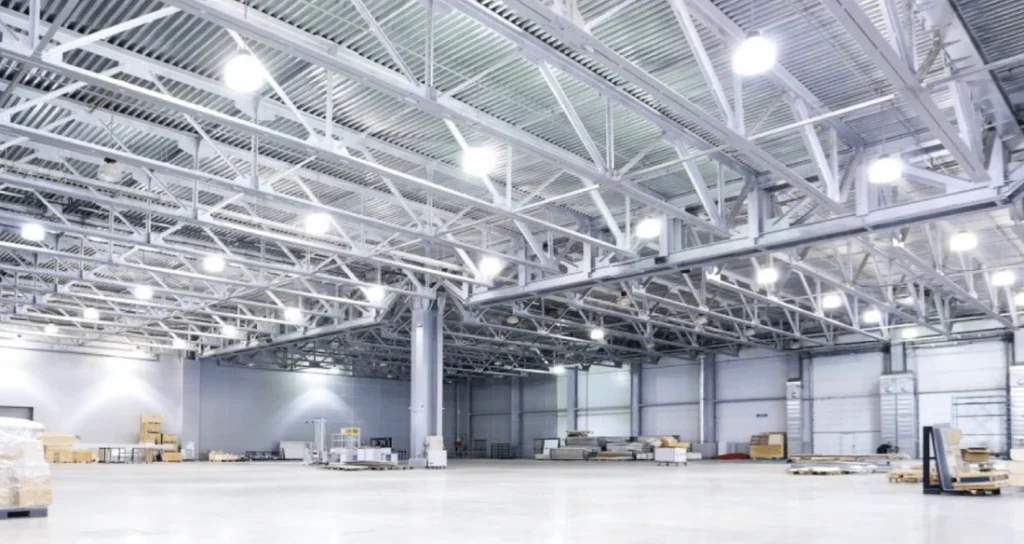
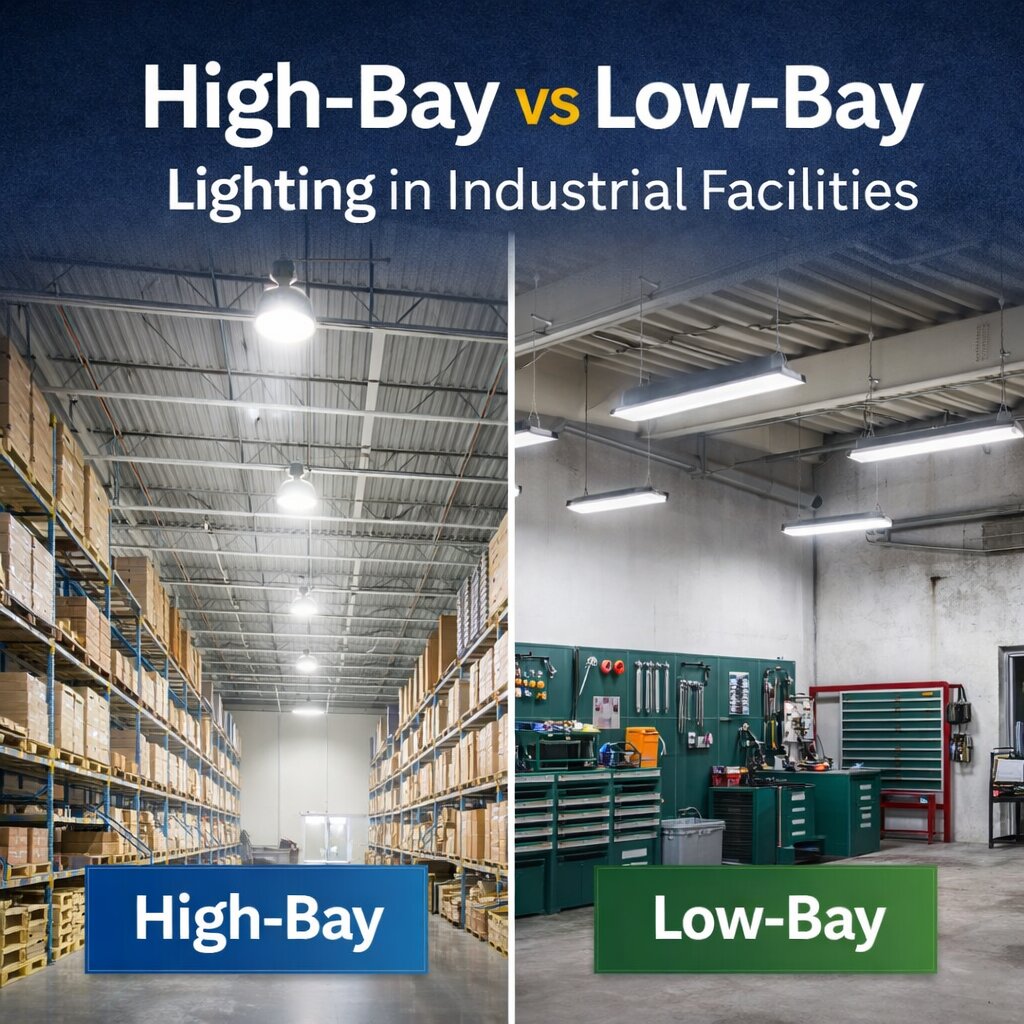
High-bay lighting is designed for facilities with ceilings typically above six to eight metres. Because fixtures are mounted at significant heights, they must produce higher lumen output and deliver controlled, focused beams to ensure adequate illumination reaches the working plane.
These systems are common in large warehouses, distribution centres, heavy manufacturing plants, aircraft hangars, and expansive retail environments. In facilities with tall racking systems, high-bay lighting is essential to provide vertical illumination across multiple storage levels.
Modern LED high-bay fixtures are engineered to deliver strong downward light with precision optics. This ensures uniform coverage while reducing dark spots and excessive energy consumption.
What Is Low-Bay Lighting?
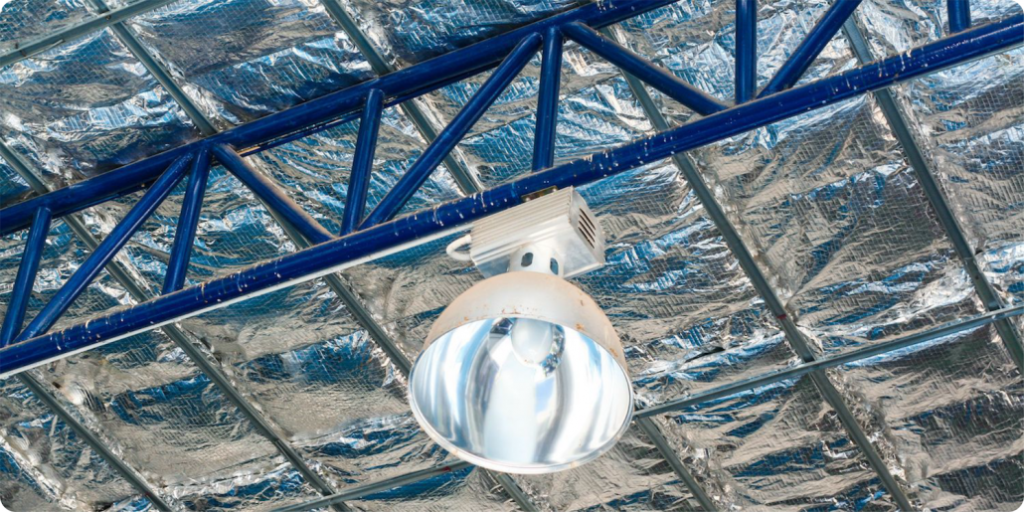
Low-bay lighting is used in facilities with ceilings below approximately six metres. Because fixtures are mounted closer to occupants, they require lower lumen output and wider beam angles to distribute light evenly without creating harsh glare.
Low-bay systems are typically found in workshops, smaller storage facilities, light manufacturing spaces, parking structures, and commercial interiors. Comfort becomes more important at lower mounting heights, so diffusers and glare control features play a larger role in fixture selection.
When correctly specified, low-bay lighting provides balanced illumination while maintaining energy efficiency and visual comfort.
Understanding the Core Differences
The primary distinction between high-bay and low-bay lighting is mounting height. However, several related factors influence system design.
High-bay fixtures require greater lumen output to compensate for distance from the floor. They often use narrower beam angles to focus light directly downward. Low-bay fixtures operate at lower intensities and typically distribute light more broadly to prevent glare at eye level.
Fixture design also differs. High-bay luminaires are generally larger and engineered for industrial robustness. Low-bay fixtures may include reflectors or diffusers to soften the light output.
Energy efficiency considerations apply to both. In many cases, upgrading older metal halide or fluorescent systems to LED high-bay lighting produces substantial reductions in electricity usage and maintenance costs.
The Role of LED Technology
LED has become the standard for both high-bay and low-bay applications. In industrial environments where lights may operate for extended hours, efficiency and reliability are critical.
LED systems offer longer lifespan, reduced maintenance requirements, lower energy consumption, and consistent light quality. Instant-on capability and improved thermal management also make LEDs suitable for demanding industrial settings.
Whether installing high-bay or low-bay fixtures, LED solutions provide measurable operational savings over time.
Selecting the Right Solution for Your Facility
Choosing between high-bay and low-bay lighting should begin with an assessment of ceiling height, but it should not end there. Facility managers must also consider the type of tasks performed, racking configuration, required lux levels, safety standards, and energy efficiency targets.
A properly designed lighting plan ensures compliance with occupational health regulations while optimising visibility and performance. Poorly specified lighting increases accident risk and reduces productivity.
Industrial lighting should always be evaluated as part of a broader facility strategy rather than treated as a standalone decision.
Designing for Performance and Efficiency
High-bay and low-bay lighting serve distinct roles in industrial facilities. The correct system improves working conditions, reduces operational costs, and supports long-term sustainability goals.
By aligning lighting design with ceiling height, operational needs, and energy strategy, facilities can achieve safer and more efficient environments that support productivity.
Thoughtful lighting design is not just a technical decision. It is an investment in operational performance.