The 21st century is defined by two parallel trends: the rapid growth of cities and the escalating threat of climate change. Urban areas now account for over 70% of global CO₂ emissions, much of it from energy-hungry buildings. But what if our buildings didn’t just consume energy?
They actively cleaned the air? Enter the concept of carbon-capturing skyscrapers, futuristic towers designed to function like artificial trees, absorbing greenhouse gases and releasing clean air back into the environment.
What is a carbon-capturing skyscraper?
A carbon-capturing skyscraper is a high-rise building engineered with systems that directly capture and store carbon dioxide from the atmosphere. Unlike traditional skyscrapers, which are often criticised for their heavy environmental footprint, these buildings are designed to be part of the solution.
Using technologies such as direct air capture (DAC), bio-reactive facades, and carbon-storing construction materials, they act as “breathing giants” in the heart of the city.
How do they work?
There are several approaches under development:
- Direct Air Capture panels: Installed on the building’s exterior, these panels suck in surrounding air and filter out CO₂. The captured carbon can be stored underground or reused in products like fuel and cement.
- Bio-reactive facades: Walls or windows filled with microalgae that photosynthesise, absorbing carbon dioxide and producing oxygen while also generating biomass for energy or food.
- Carbon-storing materials: Concrete and other construction materials infused with minerals that absorb CO₂ over time, turning the very structure of the building into a carbon sink.
Together, these features transform skyscrapers from emission sources into powerful climate tools.
The benefits of breathing buildings
Carbon-capturing skyscrapers offer a wide range of advantages:
- Cleaner air in cities – They help reduce smog and pollutants, making urban environments healthier.
- Lower global CO₂ levels – When scaled, entire districts of carbon-capturing buildings could significantly cut emissions.
- Energy efficiency – Many designs integrate renewable energy sources like solar panels and wind turbines.
- Circular economy – Captured carbon can be turned into useful products, from sustainable building materials to green fuels.
Futuristic designs already on the table
Architects and engineers have already begun conceptualising such structures. For example:
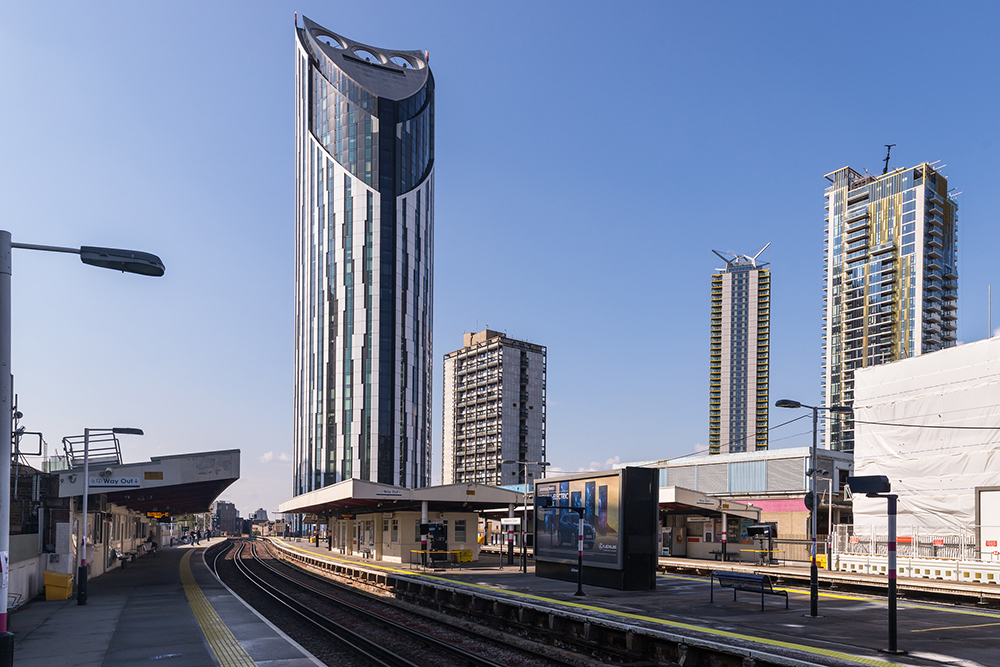
- The Torre Strata project in London included wind turbines in its design, hinting at how renewable energy can be integrated.
- Concept designs from firms like Arup and BIG Architects showcase futuristic towers with algae facades glowing green at night.
- In Asia, experimental buildings are already trialling “green walls” that act as vertical forests, a step toward integrating carbon-capturing bio-systems into architecture.
Could this work in South Africa?
South African cities like Cape Town and Johannesburg face two pressing challenges: air pollution and carbon emissions. With the country’s reliance on coal power, the need for innovative carbon reduction solutions is urgent.
Imagine Cape Town’s Foreshore lined with futuristic skyscrapers that don’t just offer office space, but also absorb thousands of tonnes of carbon every year. These buildings could be paired with renewable energy grids, sustainable water systems, and vertical gardens, creating healthier, more resilient cities.
In Johannesburg, carbon-capturing skyscrapers could complement ongoing urban regeneration projects, transforming polluted areas into sustainable hubs.
The challenges ahead
Despite the promise, there are obstacles to overcome:
- High costs – Carbon capture technology is still expensive.
- Energy use – Some capture systems require significant power, which must come from renewables to remain sustainable.
- Scalability – One building won’t make a huge difference. A coordinated effort across entire cities is required.
- Policy support – Governments will need to incentivise developers to invest in these futuristic designs.
The future of carbon-positive cities
Carbon-capturing skyscrapers are part of a bigger vision: cities that don’t just minimise harm but actively heal the planet. Combined with smart grids, renewable energy, vertical farms, and electric transport, these “living cities” could reshape the way humans interact with the environment.
What was once science fiction is now edging closer to reality. Within the next few decades, we may look up at our skylines not just as symbols of progress, but as vital lungs of our planet.
Conclusion
As climate change accelerates, bold ideas will be needed to turn the tide. Carbon-capturing skyscrapers represent one of the most radical and exciting concepts: buildings that act as allies in the fight against emissions. By transforming our cities into breathing ecosystems, we could build a future facility where architecture doesn’t just house humanity. It helps save it.