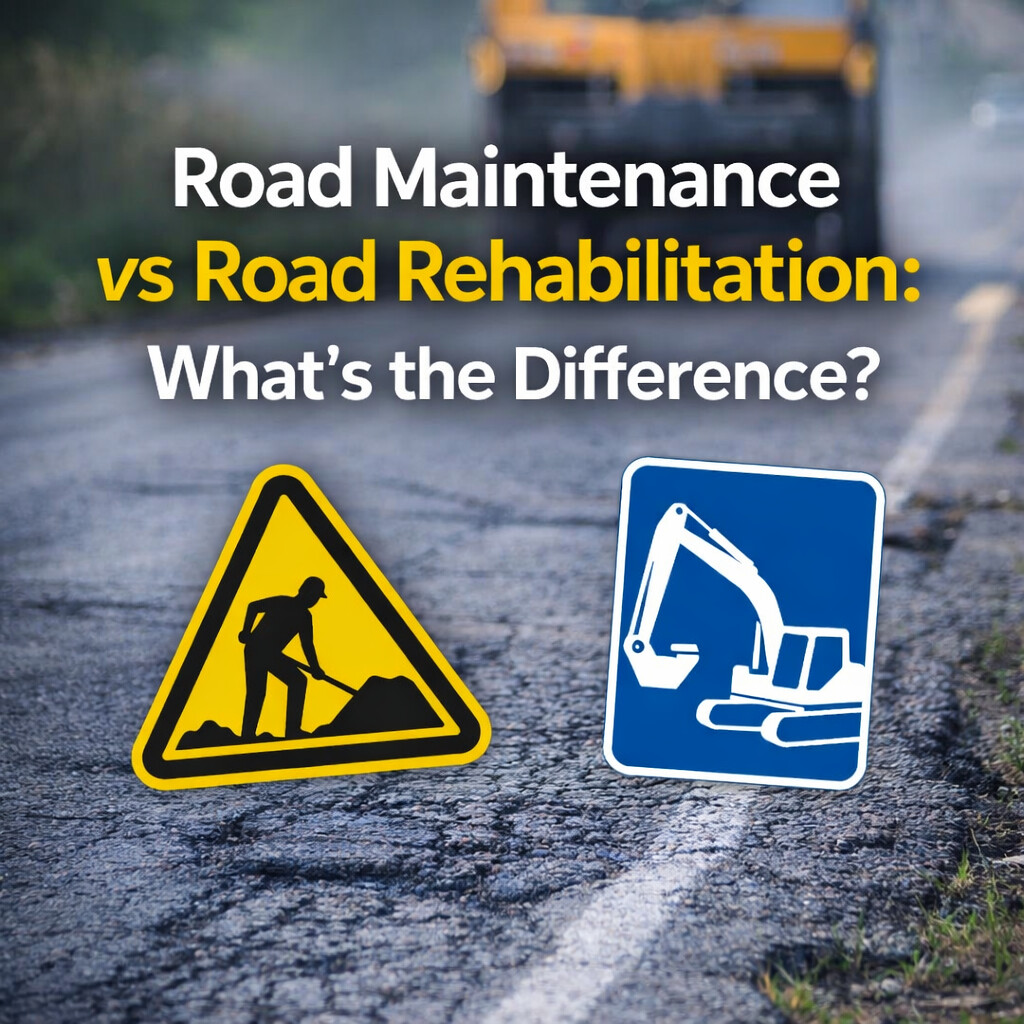
Roads deteriorate over time due to traffic loads, weather exposure, drainage issues, and ageing materials. When defects appear, they are often broadly referred to as “road repairs”, but in practice, not all road work is the same.
Understanding the difference between road maintenance and road rehabilitation is critical for municipalities, engineers, contractors, and property managers. Each approach serves a distinct purpose, operates at a different scale, and carries very different cost and planning implications.
What is road maintenance?
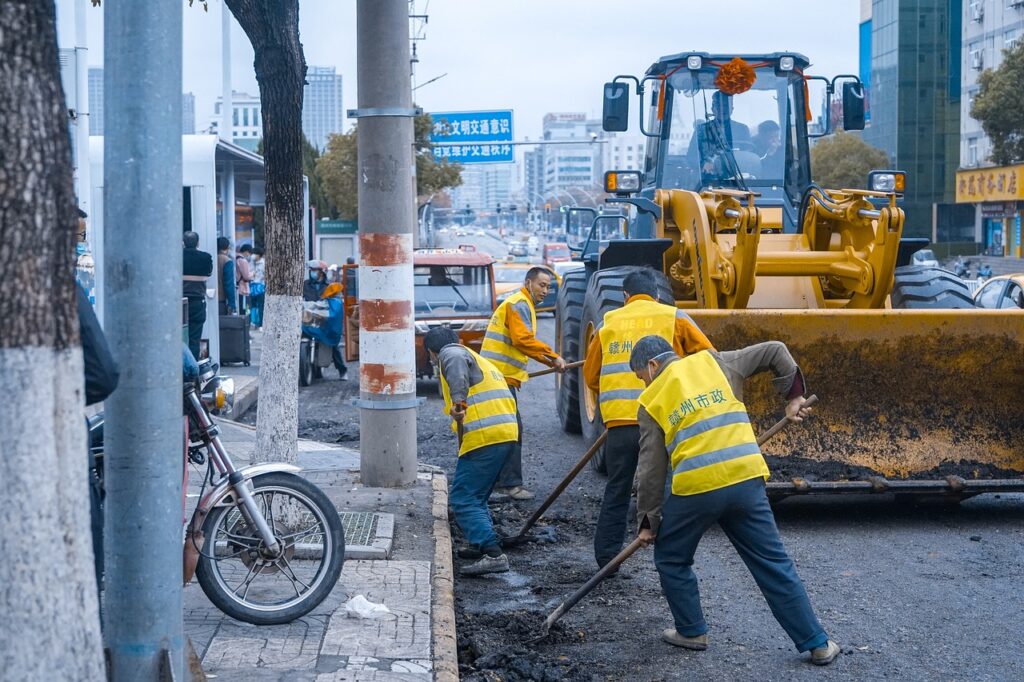
Road maintenance refers to routine and preventative activities carried out to keep roads safe, functional, and serviceable.
Its primary goal is to slow deterioration and address minor defects before they develop into structural failures.
Typical road maintenance activities include:
- Pothole repairs and patching
- Crack sealing
- Surface re-grading
- Shoulder repairs
- Cleaning and repairing drainage systems
- Line marking and signage upkeep
Maintenance is usually ongoing and reactive or planned on short cycles. When done correctly, it significantly extends the lifespan of a road.
What is road rehabilitation?
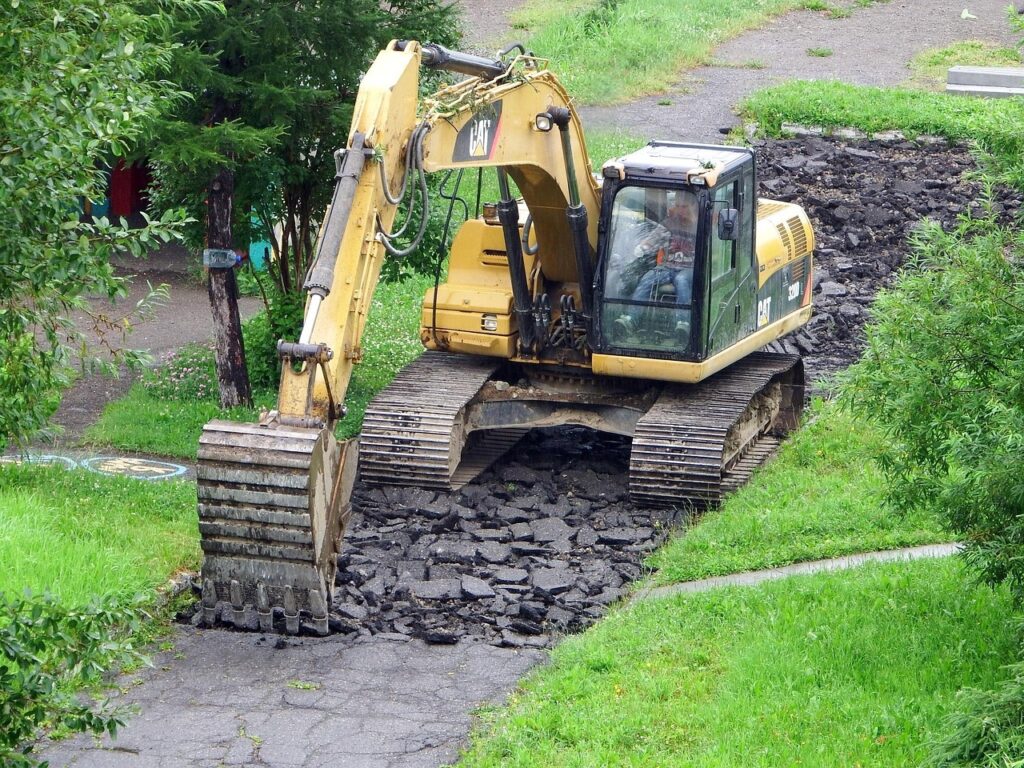
Road rehabilitation involves major structural interventions aimed at restoring a road that has reached the end of its serviceable life.
Unlike maintenance, rehabilitation addresses underlying structural failure, not just surface defects.
Common rehabilitation methods include:
- Milling and resurfacing
- Partial or full-depth pavement reconstruction
- Base and sub-base strengthening
- Structural overlay systems
- Drainage redesign and correction
Rehabilitation projects are typically larger, more expensive, and require formal design, traffic management plans, and longer construction periods.
Key differences between maintenance and rehabilitation
| Aspect | Road Maintenance | Road Rehabilitation |
|---|---|---|
| Purpose | Preserve condition | Restore structural integrity |
| Scale | Localised, smaller works | Large-scale intervention |
| Cost | Lower | Significantly higher |
| Timing | Ongoing or short-term | Periodic, long-term |
| Disruption | Minimal | Moderate to severe |
| Road condition | Still serviceable | Structurally compromised |
When maintenance is no longer enough
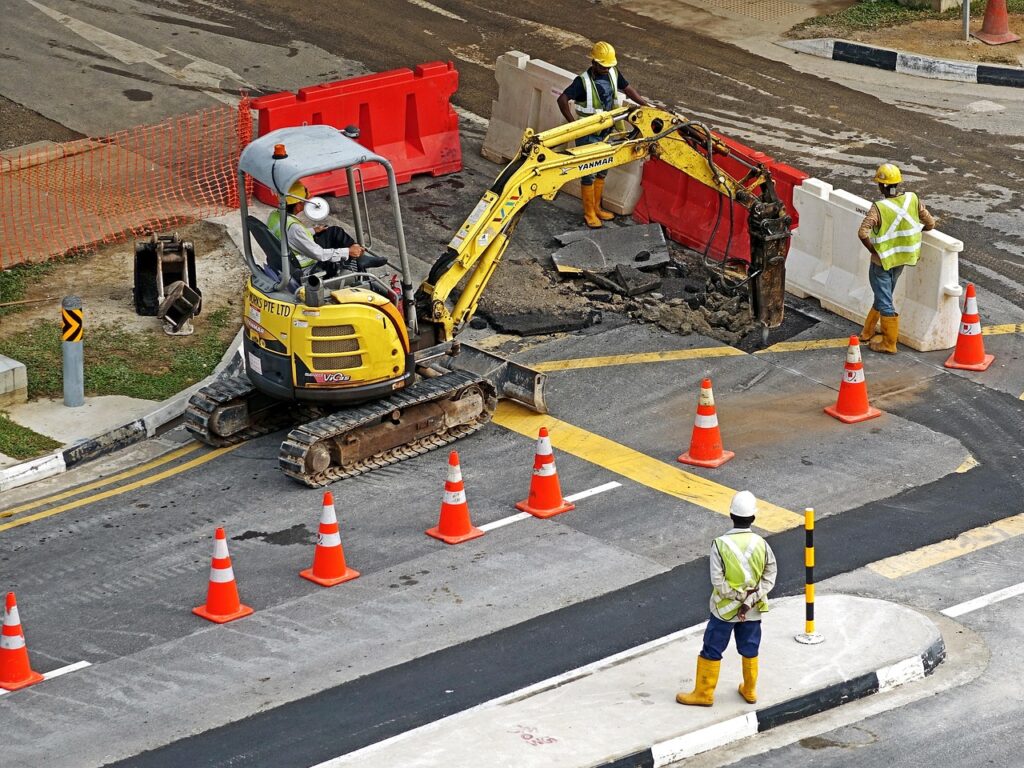
A common infrastructure failure occurs when roads that require rehabilitation are treated with repeated maintenance instead. While patching may temporarily improve safety, it often masks deeper problems such as base failure or poor drainage.
This results in:
- Repeated potholes in the same locations
- Escalating repair costs
- Increased vehicle damage and safety risks
- Reduced road lifespan
Early intervention and proper assessment are essential to determine the correct treatment strategy.
Choosing the right approach

Choosing between road maintenance and road rehabilitation is not just a technical decision. It is a budgeting, risk, and service-delivery decision. The aim is to apply the right treatment at the right time, before a manageable problem turns into a structural failure that costs far more to fix.
A practical way to decide is to look at four areas: condition, cause, consequence, and capacity.
Condition:
Start with what the road is telling you. Surface defects like hairline cracks, early ravelling, and minor edge breaks can often be managed through maintenance if the pavement structure is still sound. But if the road shows widespread alligator cracking, pumping, rutting, depressions, or repeated potholes in the same places, that usually points to deeper failure. In those cases, maintenance may improve safety for a short time, but it will not solve the real problem.
Cause:
The “why” matters as much as the “what”. A road may deteriorate faster because of overloaded trucks, poor construction quality, ageing materials, or simply being past its design life. However, one of the biggest differentiators is drainage. If water is getting into the pavement layers, patching and resurfacing without fixing the drainage is often wasted spend. Where drainage is failing, the correct approach might include shoulder work, culvert repairs, regrading, or redesigning runoff flow alongside any surface treatment.
Consequence:
Decision-makers should match the intervention to the level of risk. A road serving a hospital route, public transport corridor, school zone, freight route, or emergency services access point may need more decisive action earlier, because the cost of failure is high. Lower-volume roads may be managed with targeted maintenance longer, provided safety and accessibility remain acceptable. This is where prioritisation becomes crucial, especially in municipalities facing large backlogs.
Capacity:
Even when rehabilitation is clearly needed, budgets, equipment, and contractor availability can force phased solutions. In these cases, the best approach is often to stabilise the road strategically, not cosmetically. That might mean focusing on drainage correction, strengthening weak sections, or applying interim treatments that reduce rapid decline while rehabilitation is planned and funded properly. A staged plan is usually more effective than endless patching with no long-term pathway.
To make these decisions consistent, organisations typically rely on:
- Condition assessments (visual surveys, defect mapping, roughness and rut measurements)
- Structural evaluation (where needed, to confirm base and sub-base condition)
- Traffic and loading data (especially freight routes)
- Drainage inspections (often overlooked, but critical)
- Lifecycle costing (comparing repeated maintenance vs timely rehabilitation)
The most cost-effective road networks are not the ones with the most repairs. They are the ones where interventions are planned, prioritised, and timed correctly. When maintenance is proactive and rehabilitation is scheduled before collapse, roads last longer, disruption is reduced, and budgets stretch further.
Building longer-lasting road networks
Knowing the difference between road maintenance and road rehabilitation helps decision-makers move from reactive repairs to sustainable infrastructure management. Preventative maintenance protects investment, while timely rehabilitation prevents total failure.
Together, they form the foundation of safer, more resilient road networks.