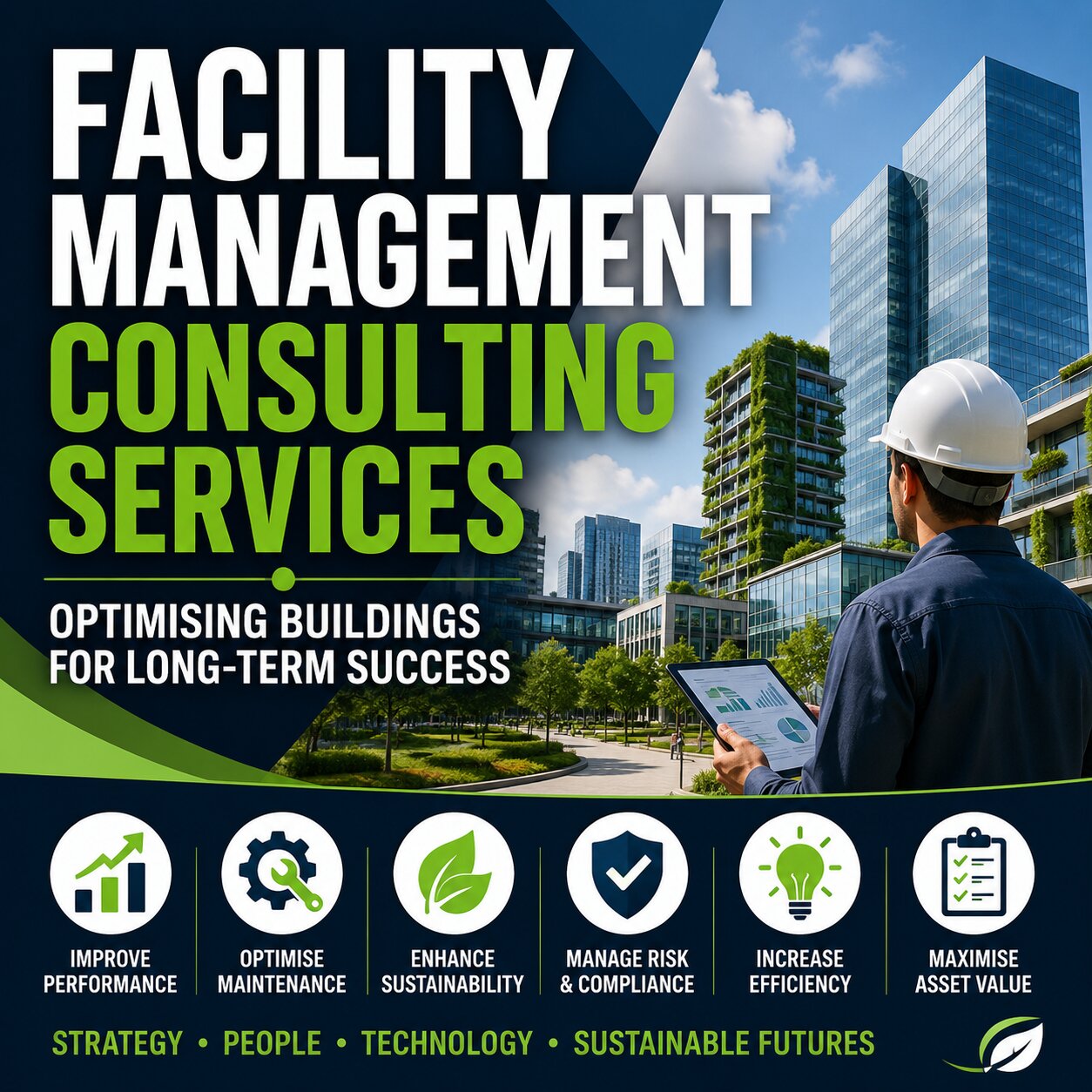
Facility management disciplines form the backbone of how buildings, infrastructure, and workplaces are planned, operated, maintained, and improved over time. Far more than basic maintenance, modern facility management is a multidisciplinary field that integrates people, processes, technology, and the built environment.
This guide explores the core facility management disciplines commonly taught and applied in professional practice, including maintenance, project management, safety, contracts, and construction oversight. Together, these disciplines ensure that facilities remain functional, compliant, cost-effective, and fit for purpose throughout their lifecycle.
Maintenance and Engineering Management

Maintenance is one of the foundational facility management disciplines, focused on preserving assets, preventing failure, and extending the life of buildings and equipment. This includes reactive maintenance, planned preventative maintenance (PPM), and condition-based strategies that reduce long-term costs and operational disruption.
Engineering management sits closely alongside maintenance and covers mechanical, electrical, plumbing, HVAC, and building systems. Facility managers must understand how these systems interact, how failures impact operations, and how to plan upgrades or replacements without compromising safety or continuity.
Project Management and Construction Management

Project management is a critical facility management discipline used when implementing upgrades, refurbishments, relocations, or new developments. Facility managers often act as client representatives, coordinating consultants, contractors, timelines, budgets, and quality standards.
Construction management extends this role into the build phase, focusing on site coordination, compliance, safety oversight, and progress tracking. In many organisations, facility managers bridge the gap between operational needs and construction teams, ensuring that completed projects align with long-term operational requirements rather than short-term build decisions.
Safety, Security, and Risk Management

Safety and security are non-negotiable facility management disciplines, particularly in commercial, industrial, healthcare, and public-sector environments. This includes occupational health and safety compliance, fire protection systems, emergency preparedness, and incident response planning.
Security management covers physical access control, surveillance systems, guard services, and risk mitigation strategies. Facility managers must balance safety, security, accessibility, and user experience while ensuring compliance with legislation and organisational policies.
Lease Management and Tenant Services

Lease management is a strategic facility management discipline that deals with property agreements, occupancy terms, renewals, and compliance with lease obligations. Poor lease management can result in financial loss, disputes, or operational limitations.
Tenant services focus on the day-to-day experience of building occupants. This includes space allocation, service requests, communication, and issue resolution. Effective tenant services contribute directly to productivity, satisfaction, and retention, making this one of the more people-centric facility management disciplines.
Tenders, Contracts, and Procurement

Procurement is a specialised but essential facility management discipline, particularly in large organisations and the public sector. This includes preparing tenders, evaluating bids, appointing service providers, and managing supplier performance.
Contract management ensures that service-level agreements are enforced, costs are controlled, and deliverables are met. Facility managers must understand contractual risk, performance metrics, escalation procedures, and compliance requirements to protect the organisation’s interests.
Fleet Management and Logistics

Fleet management is often overlooked but remains an important facility management discipline in organisations that operate vehicles, machinery, or mobile assets. This includes vehicle procurement, maintenance scheduling, fuel management, compliance, and lifecycle replacement planning.
Effective fleet management supports operational efficiency while reducing downtime, safety risks, and total cost of ownership. In many sectors, fleet operations are closely tied to facilities, maintenance teams, and service delivery.
Office Design, Space Planning, and Workplace Strategy

Office design and space planning have become increasingly important facility management disciplines as work patterns evolve. This includes workspace layouts, ergonomics, accessibility, and adaptability to hybrid or flexible working models.
Facility managers play a key role in aligning physical space with organisational culture, productivity goals, and employee wellbeing. Decisions around layout, lighting, acoustics, and shared spaces all fall within this discipline and have long-term operational implications.
Additional Facility Management Disciplines
Depending on the organisation and sector, facility management may also include:
- Environmental and sustainability management
- Energy and utilities management
- Asset lifecycle planning
- Facilities technology and systems management (CAFM, IWMS)
- Compliance and regulatory management
These supporting facility management disciplines strengthen decision-making and help organisations respond to regulatory, environmental, and economic pressures.
Integrating Facility Management Disciplines for Long-Term Success
No single discipline operates in isolation. The true value of facility management lies in integrating these disciplines into a coordinated strategy that supports operational efficiency, safety, and long-term asset performance.
By understanding and applying the full range of facility management disciplines, organisations can move beyond reactive problem-solving and build resilient, adaptable facilities that support both current needs and future growth.