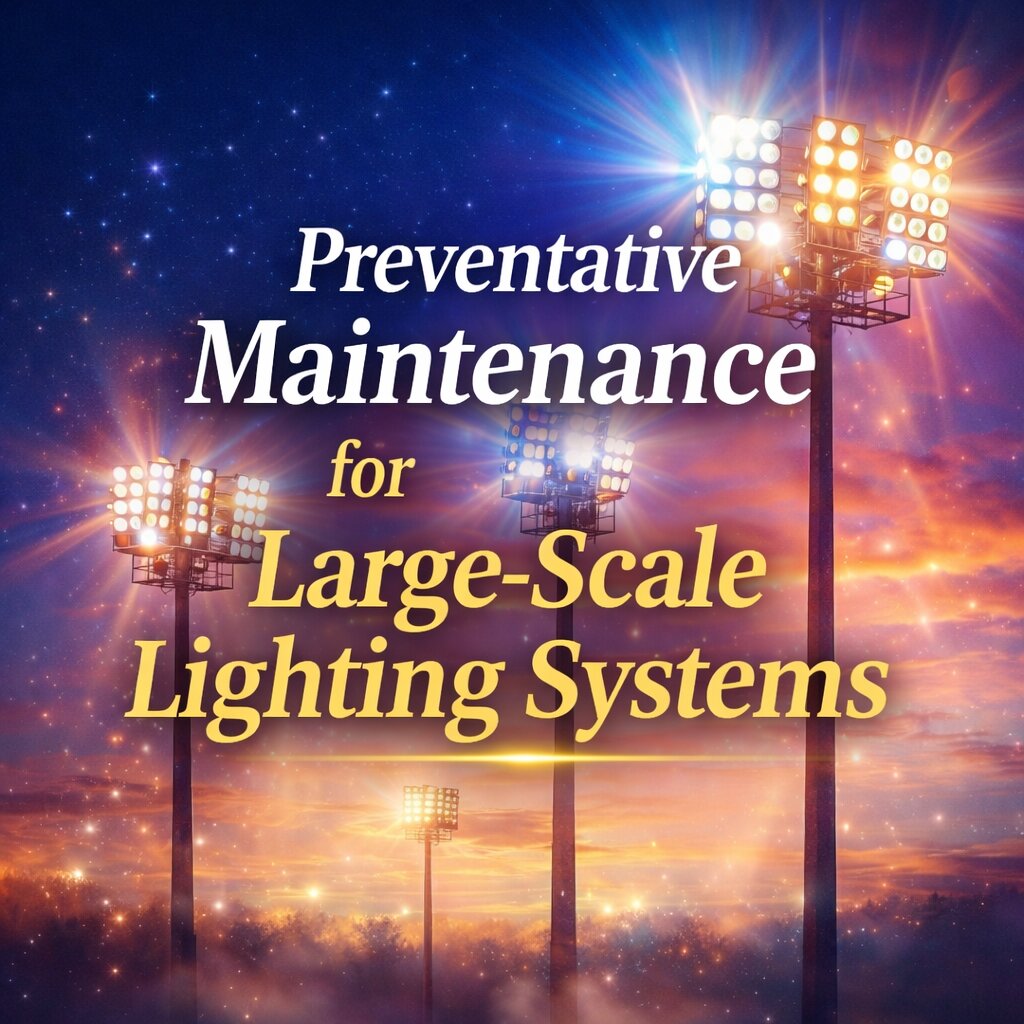
Large-scale lighting systems are critical to the safe and efficient operation of commercial buildings, industrial facilities, warehouses, shopping centres, and municipal infrastructure. Whether installed indoors or outdoors, these systems require structured preventative maintenance to ensure optimal performance, energy efficiency, and compliance with safety standards.
Without a proactive maintenance plan, lighting systems can suffer from reduced output, premature component failure, increased energy consumption, and safety risks. Preventative maintenance for large-scale lighting systems protects long-term investment while reducing downtime and unexpected repair costs.
Why Preventative Maintenance Matters

Lighting systems operate continuously in many environments. Over time, dust accumulation, electrical wear, voltage fluctuations, and environmental exposure can degrade performance.
Preventative maintenance ensures that lighting output remains consistent and aligned with required lux levels for safety and compliance. In industrial and commercial settings, insufficient lighting can increase accident risks and reduce productivity.
A scheduled maintenance programme also allows facility managers to forecast costs more accurately instead of reacting to emergency failures, which are often more expensive.
Key Components of a Lighting Maintenance Plan

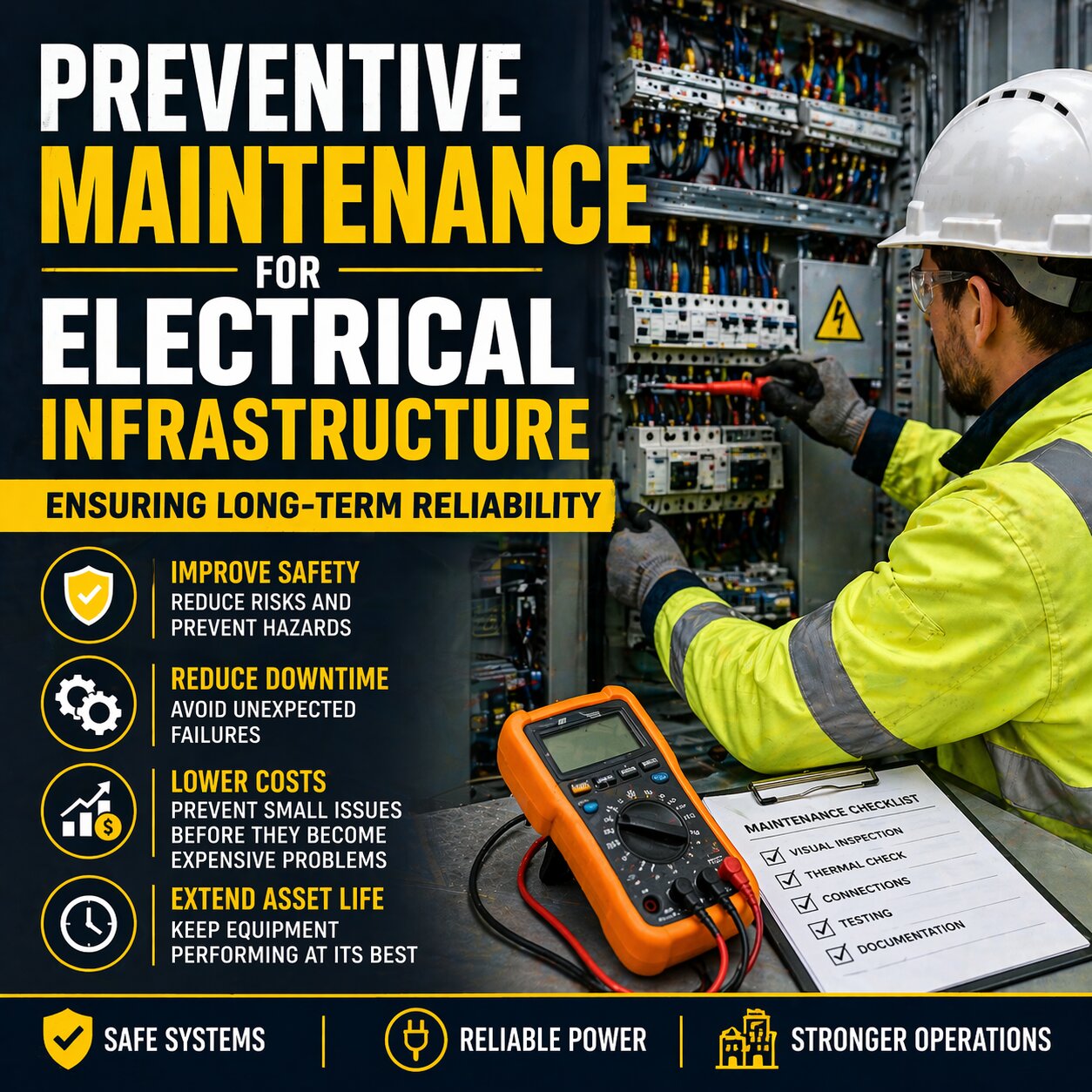
An effective preventative maintenance programme should include:
1. Routine Inspections
Visual inspections help identify flickering luminaires, damaged fixtures, loose fittings, or signs of overheating. Early detection prevents larger system failures.
2. Cleaning and Debris Removal
Dust and dirt significantly reduce light output. Cleaning luminaires, diffusers, and reflectors improves illumination efficiency and reduces strain on components.
3. Electrical Testing
Testing wiring, connections, drivers, ballasts, and control panels ensures the system remains electrically sound. Voltage irregularities can shorten equipment lifespan.
4. Lamp and Driver Replacement Scheduling
Rather than waiting for complete failure, components should be replaced based on manufacturer’s lifespan recommendations to avoid dark spots and uneven lighting.
5. Control System Calibration
For facilities using automated lighting controls, sensors and timers should be tested and recalibrated to maintain energy efficiency.
Benefits for Commercial and Municipal Facilities

Preventative maintenance for large-scale lighting systems delivers measurable operational benefits:
- Reduced energy waste
- Extended equipment lifespan
- Lower emergency repair costs
- Improved safety compliance
- Consistent illumination standards
- Better return on capital investment
For municipalities, particularly in street lighting systems, preventative strategies reduce public complaints and safety risks while improving service delivery reliability.
LED Systems and Long-Term Planning

Many facilities have transitioned to LED lighting systems due to their efficiency and long lifespan. While LEDs require less frequent replacement than traditional lamps, they still benefit from preventative inspections and driver testing.
Ignoring LED system maintenance can result in gradual lumen depreciation, unnoticed driver failures, and control malfunctions that reduce expected savings.
A structured preventative maintenance programme ensures that LED infrastructure continues delivering maximum performance over its full design life.
Proactive Lighting Management
Large-scale lighting systems are long-term infrastructure assets. Treating them reactively increases costs and operational disruption.
Preventative maintenance creates predictable performance, budget stability, and regulatory compliance. For commercial, industrial, and municipal clients, structured lighting maintenance is not just a technical necessity; it is a strategic investment.
Preventative maintenance for large-scale lighting systems requires expertise, proper equipment, and experienced technical teams. From commercial complexes to municipal infrastructure, structured maintenance ensures lighting systems remain safe, compliant, and cost-effective.
If you require professional support for large-scale lighting maintenance, contact us. We work with trusted industry partners who specialise in lighting inspections, testing, upgrades, and preventative maintenance programmes tailored to your facility’s needs.