Many people separate their waste at home without ever seeing what happens next. Understanding how a recycling centre works helps explain why correct sorting matters and how everyday waste is transformed into valuable reusable materials. Recycling centres sit at the heart of the circular economy, reducing landfill use and conserving natural resources.
This guide breaks down the recycling process step by step, showing what happens after recyclables are collected and why recycling centres are essential for a more sustainable future.
What is a recycling centre?
A recycling centre is a facility designed to receive, sort, process, and prepare recyclable materials for reuse in manufacturing. These facilities are often called Materials Recovery Facilities (MRFs), and they handle large volumes of waste collected from homes, businesses, and public spaces.
To understand how a recycling centre works, it helps to know that not all materials arrive clean or sorted. Recycling centres are built to separate mixed recyclables efficiently using a combination of machinery, technology, and manual labour. The goal is to recover as much usable material as possible while removing contamination.
How a Recycling Centre Works
To understand the full recycling journey, it helps to look at what happens once waste arrives at a recycling centre. The process follows a clear sequence, with each step designed to separate, clean, and prepare materials so they can be reused efficiently and safely.
Step one: collection and delivery
The recycling process begins with collection. Recyclables are picked up from kerbside bins, drop-off points, or commercial waste streams and transported to the recycling centre. At this stage, materials are still mixed and may contain non-recyclable items.
Once delivered, loads are weighed and inspected. This initial check is important, as heavily contaminated loads can slow down the entire system. Knowing how a recycling centre works highlights why correct sorting at home and work makes such a difference further down the line.
Step two: sorting and separation
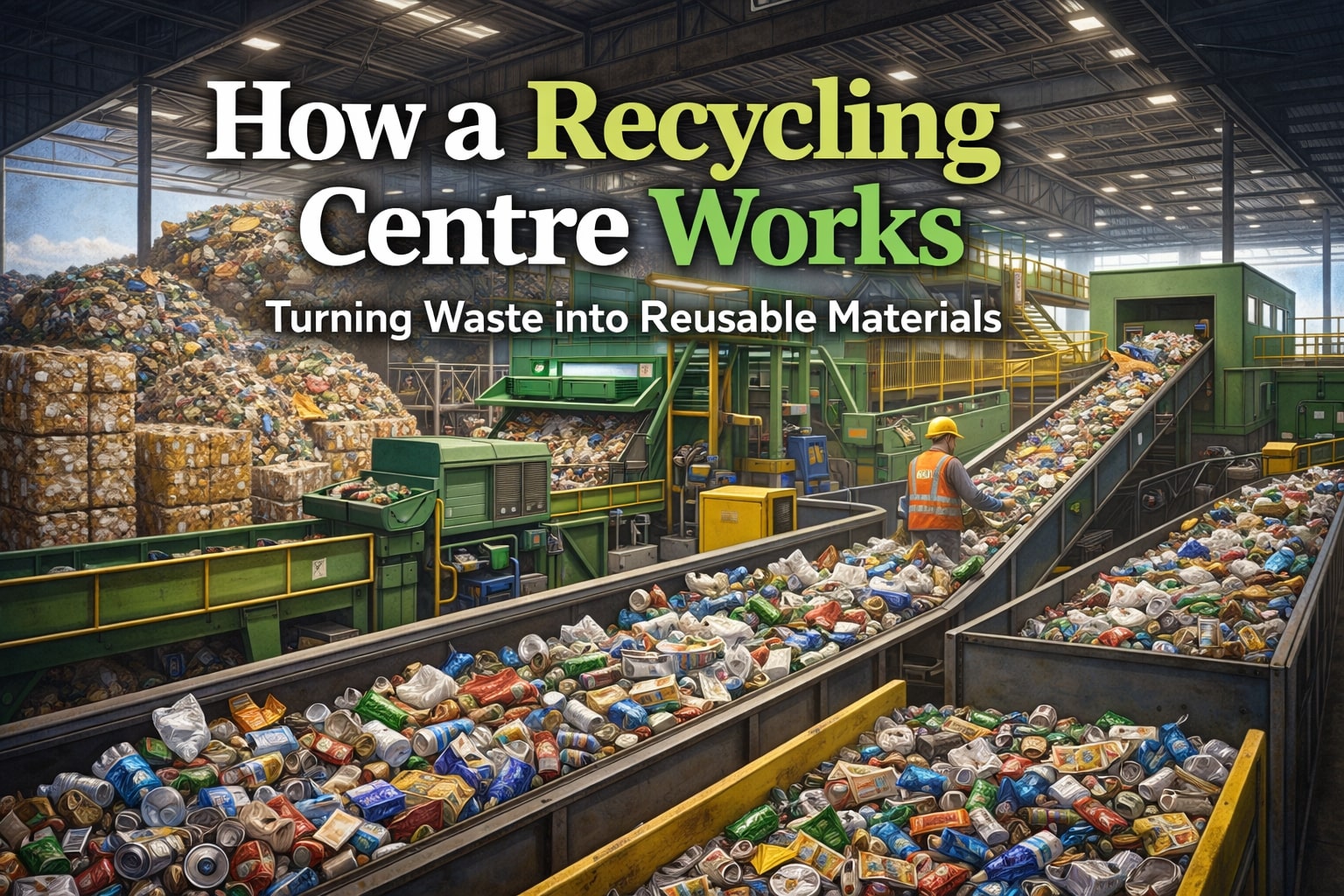
Sorting is the core of how a recycling centre works. Materials move along conveyor belts where they are separated into different streams. Large items are removed first, followed by cardboard, paper, plastics, metals, and glass.
Advanced recycling centres use magnets to remove steel, eddy current separators to extract aluminium, and optical scanners to identify different plastic types. Despite automation, human sorters remain crucial, removing contaminants and ensuring quality control throughout the process.
Step three: processing materials
After sorting, materials are processed to prepare them for reuse. Paper and cardboard are compacted into bales. Plastics are often shredded, washed, and sorted further by polymer type. Metals are cleaned and compressed, while glass is crushed into cullet.
This processing stage is a key part of how a recycling centre works, as it turns loose waste into standardised raw materials. Manufacturers rely on this consistency when using recycled content to produce new products.
Step four: quality control and storage
Before materials leave the recycling centre, they undergo quality checks. Contaminants such as food residue, plastic bags, or incorrect materials can lower the value of recyclables or make them unusable.
Once approved, materials are stored on-site until enough volume is collected for transport. Understanding how a recycling centre works at this stage shows why contamination can lead to entire batches being rejected or sent to landfill.
Where recycled materials go next

Recycled materials are sold to manufacturers who use them to create new products. Recycled paper becomes packaging or tissue products. Plastics are turned into containers, piping, or textiles. Metals are melted down and reused indefinitely without losing quality.
By seeing how a recycling centre works, it becomes clear that recycling is not the end of the journey. It is a critical middle step in keeping materials in use and reducing reliance on virgin resources.
Why recycling centres matter
Recycling centres reduce landfill pressure, lower greenhouse gas emissions, and support local green economies. They also play an educational role, helping communities understand the impact of their waste habits.
As sustainability becomes a priority for municipalities, businesses, and property managers, knowing how a recycling centre works helps drive better waste practices and smarter infrastructure planning.
Turning waste into opportunity
Understanding how a recycling centre works reveals the complexity behind a process many people take for granted. Every correctly sorted item helps recycling centres operate more efficiently and keeps valuable materials in circulation.
Explore the related sustainability topics below to learn more about recycling systems, waste management, and how small changes can make a lasting environmental impact.