Humanity is edging closer to becoming a spacefaring civilisation, with Mars as the prime candidate for our first permanent settlement. But if we do start building on the Red Planet, what would those structures actually look like? The challenges of extreme temperatures, radiation, and limited resources mean Martian buildings will be very different from Earth’s skyscrapers.
The challenges of building on Mars
- Radiation exposure: Mars has a thin atmosphere and no magnetic field, exposing settlers to harmful cosmic rays.
- Thin atmosphere: It’s 100 times thinner than Earth’s, making breathable air impossible without sealed habitats.
- Extreme temperatures: Ranging from -125°C at night to 20°C during the day.
- Dust storms: Massive storms can last for weeks, requiring durable, dust-resistant structures.
- Resource limitations: Everything we use must be transported from Earth or manufactured on Mars.
Design concepts for Martian buildings

1. Inflatable habitats
Lightweight and easy to transport, inflatable domes reinforced with regolith (Martian soil) could provide the first shelters for astronauts.
2. Underground shelters
To protect against radiation, early Martian settlers may live in structures built inside caves or lava tubes. Natural shielding would make them safer and more stable.
3. 3D-printed buildings
Robotic 3D printers could use Martian regolith to build entire habitats, reducing the need to bring construction materials from Earth. NASA and ESA are already testing this technology.
4. Greenhouse habitats
Food production will be critical. Greenhouses with transparent shielding and hydroponic systems could provide fresh oxygen and sustainable crops.
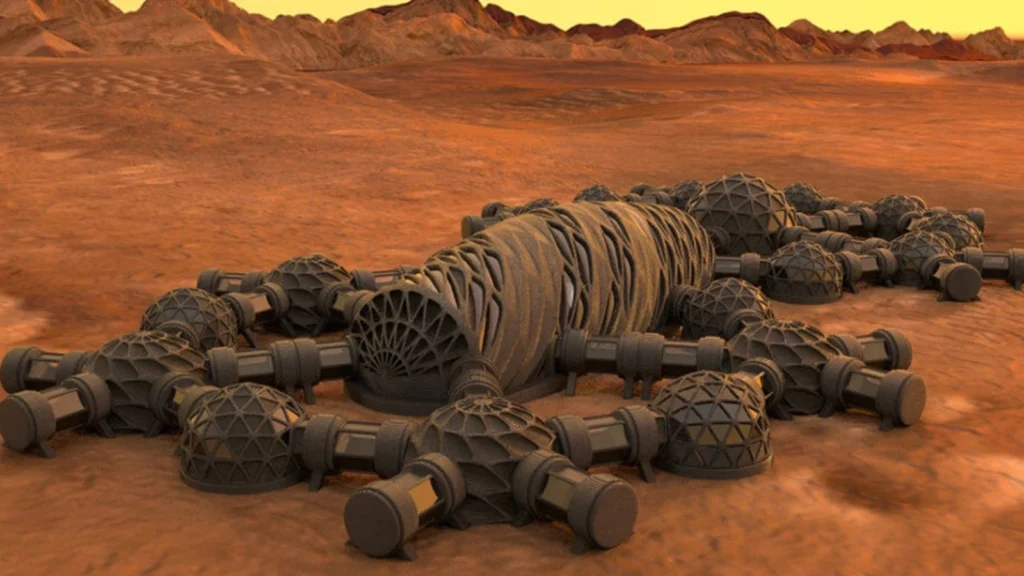
5. Modular cities
Instead of sprawling towns, Martian cities would likely grow as connected modules — clusters of domes or tunnels linked together as the colony expands.
What materials would we use?
- Martian regolith for bricks, shielding, and cement-like composites.
- Ice as both a water supply and a protective barrier against radiation.
- Metals and alloys from mined Martian ore.
- Advanced polymers brought from Earth for air-tight seals and insulation.
The vision of Martian architecture
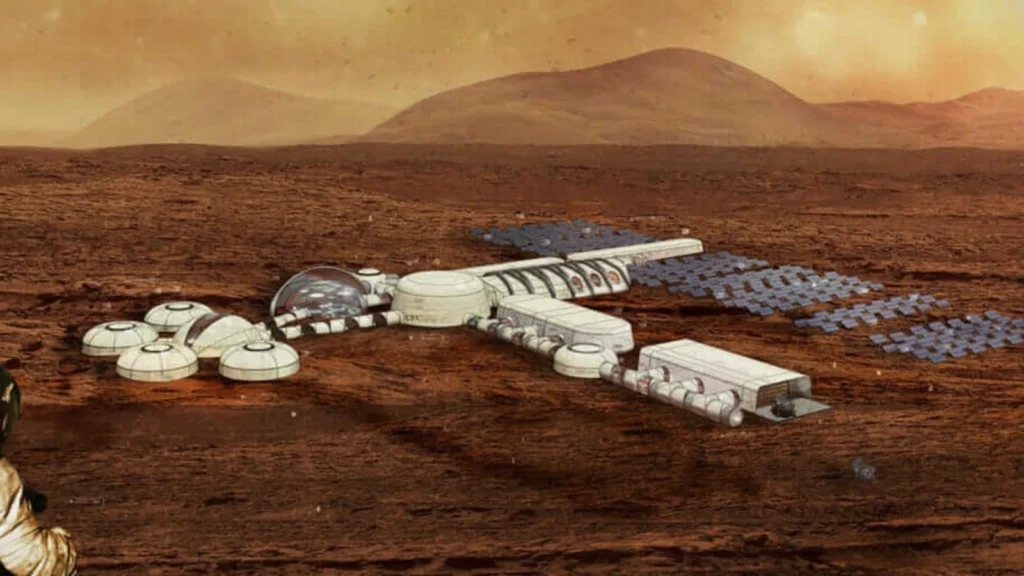
Unlike Earth, where buildings are designed for comfort and beauty, Martian architecture will prioritise function, safety, and sustainability. Over time, as technology improves, colonies may evolve into self-sufficient cities with energy-efficient designs powered by solar panels and nuclear microreactors.
Conclusion
Mars will demand a new era of architecture, one that combines cutting-edge science with resourcefulness. The first Martian buildings may be small and functional, but they’ll lay the foundation for the first human cities beyond Earth, a historic step toward becoming a multi-planetary species.