The role of lighting in public space accessibility is often underestimated in urban design. Proper lighting does more than simply illuminate streets and parks; it ensures that public environments remain safe, welcoming, and usable for everyone, including people with disabilities and mobility challenges.
Accessible public spaces are essential for inclusive cities. From pedestrian walkways and parks to transit stations and plazas, lighting plays a critical role in helping people navigate environments confidently and safely.
Poor lighting can create barriers for individuals with visual impairments, older adults, and anyone moving through public areas at night. Shadows, uneven illumination, and glare can make it difficult to identify pathways, obstacles, or signage.
By understanding the role of lighting in public space accessibility, city planners, facility managers, and infrastructure designers can create environments that support safety, independence, and equal access.
Improving Safety Through Accessible Lighting Design

One of the most important aspects of the role of lighting in public space accessibility is improving safety. Well-lit environments reduce the risk of accidents, help pedestrians identify hazards, and discourage criminal activity.
Clear visibility is especially important for people with limited vision or mobility challenges. Properly positioned lighting can highlight steps, ramps, pathways, and obstacles that might otherwise be difficult to see in low-light conditions.
Lighting also supports personal security. People are more likely to use public spaces such as parks, bus stops, and walkways when they feel safe in those environments.
Urban planners increasingly recognise that accessible lighting is a fundamental part of inclusive design strategies that encourage public participation and community engagement.
Supporting Wayfinding And Navigation

The role of lighting in public space accessibility also includes improving wayfinding and navigation. Lighting can help guide pedestrians through public spaces by highlighting pathways, entrances, and key landmarks.
Consistent lighting along sidewalks, cycle lanes, and pedestrian routes allows users to easily follow safe routes through an environment. Lighting can also emphasise directional signage, improving orientation for visitors and residents alike.
Public transport areas particularly benefit from accessible lighting design. Bus stops, train platforms, and transit hubs require clear illumination to ensure passengers can read schedules, identify boarding areas, and navigate safely.
When lighting supports intuitive navigation, public spaces become easier to use for everyone, including tourists and individuals unfamiliar with the area.
Key Lighting Strategies For Accessible Public Spaces
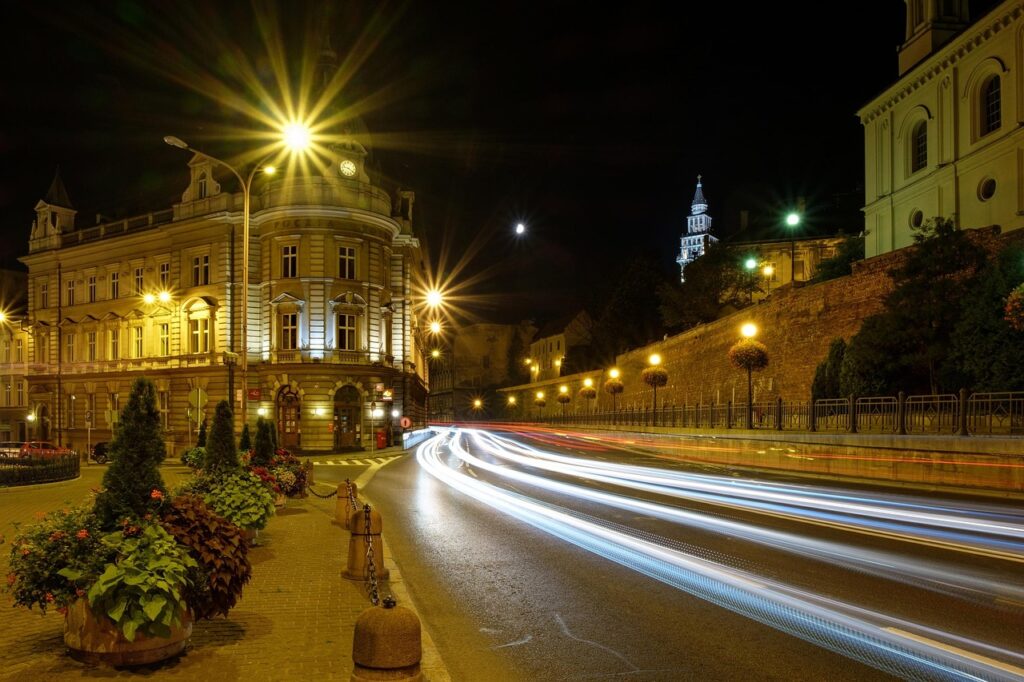
Several design strategies demonstrate the role of lighting in public space accessibility and how cities can create inclusive environments:
- Uniform lighting across pathways and walkways
- Reduced glare to improve visibility for visually impaired users
- Highlighting steps, ramps, and elevation changes
- Illuminating signage and directional markers
- Using energy-efficient LED lighting systems
- Integrating smart lighting controls for adaptive brightness
These strategies help ensure public spaces remain functional and accessible both during the day and at night.
Inclusive Design And Universal Accessibility

The role of lighting in public space accessibility is closely linked to the broader concept of universal design. Universal design aims to create environments that are usable by as many people as possible without requiring adaptation.
Lighting plays a major role in supporting universal accessibility. Properly illuminated environments allow individuals with different physical abilities to navigate spaces independently.
Urban design guidelines increasingly recommend combining lighting with other accessibility features such as tactile paving, clear signage, and barrier-free pathways.
When these elements work together, cities can create inclusive environments that encourage participation and mobility for all members of the community.
Smart Lighting And The Future Of Accessible Cities
Advances in technology are expanding the role of lighting in public space accessibility. Smart lighting systems can adjust brightness levels based on pedestrian movement, time of day, or environmental conditions.
Motion-activated lighting, adaptive brightness, and connected infrastructure can help cities reduce energy consumption while maintaining safe and accessible environments.
Smart lighting networks also allow municipalities to monitor lighting systems remotely, ensuring maintenance issues are resolved quickly and consistently.
As urban areas continue to grow, the role of lighting in public space accessibility will become even more important for creating safe, inclusive, and sustainable public environments.