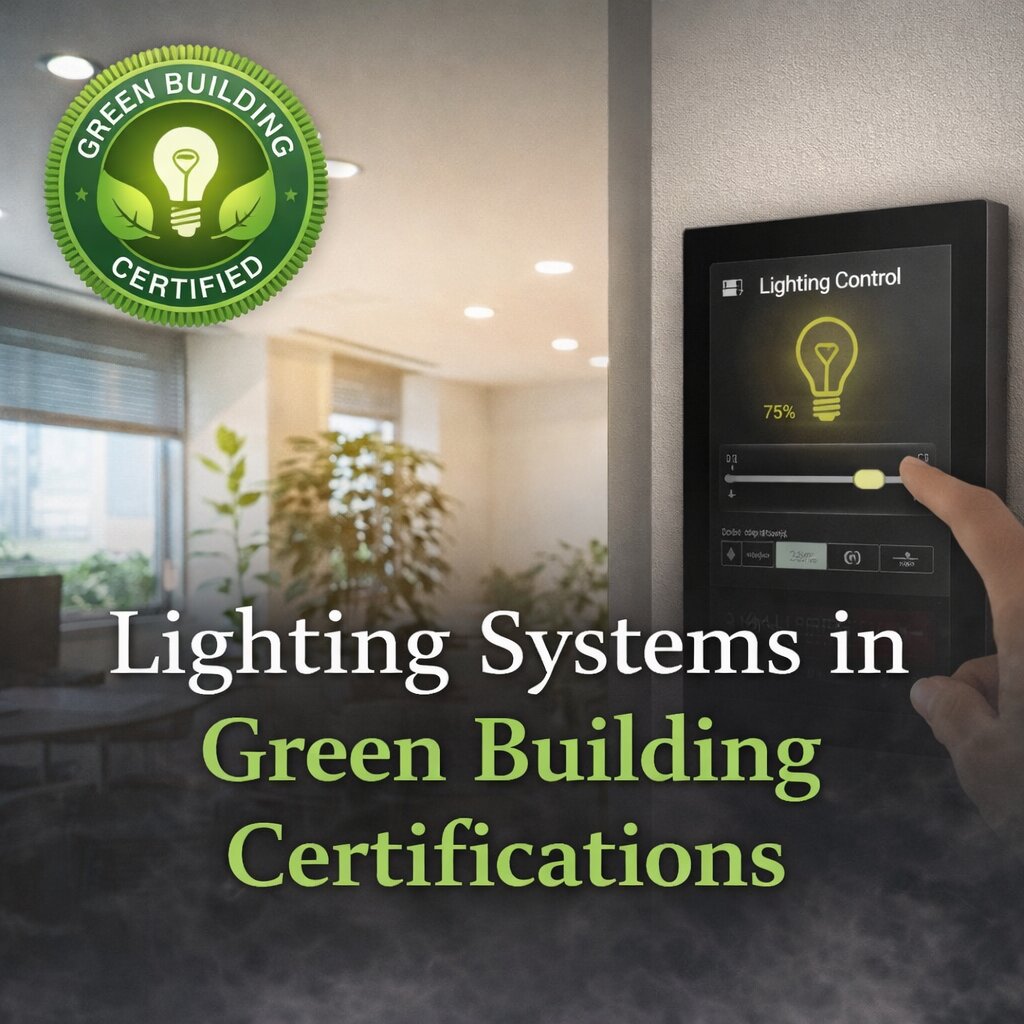
Modern sustainable construction is no longer just about insulation and renewable energy. Lighting systems play a major role in green building certifications, influencing energy consumption, occupant comfort, and overall environmental impact.
Efficient lighting design is now a critical component in achieving recognised sustainability certifications for commercial buildings, offices, and infrastructure projects.
The role of lighting in green building certifications

Lighting systems account for a significant portion of energy use in many buildings. Because of this, green building certification programmes evaluate lighting performance carefully when assessing sustainability standards.
A well-designed lighting system can reduce electricity consumption, improve working environments, and support long-term energy efficiency goals.
Key factors typically evaluated include:
- Energy efficiency of lighting fixtures
- Smart lighting controls and automation
- Daylight integration strategies
- Lighting quality and occupant comfort
- Maintenance efficiency and lifecycle impact
Buildings that meet these criteria can significantly improve their sustainability ratings.
Major green building certification programmes

Several global certification systems recognise the importance of efficient lighting systems.
LEED (Leadership in Energy and Environmental Design)
LEED is one of the most widely recognised green building certification programmes worldwide. Lighting systems contribute to several LEED categories, including:
- Energy and Atmosphere
- Indoor Environmental Quality
- Innovation in Design
Efficient lighting design, occupancy sensors, and daylight harvesting can help buildings earn valuable LEED points.
BREEAM (Building Research Establishment Environmental Assessment Method)
BREEAM also evaluates lighting efficiency, focusing on reducing energy consumption and improving occupant wellbeing.
Lighting strategies under BREEAM may include LED systems, automated lighting controls, and daylight-responsive lighting technologies.
Green Star (widely used in Africa)
The Green Star certification system, used in several African regions including South Africa, emphasises sustainable design, energy efficiency, and responsible resource use.
Lighting systems play a role in meeting the energy performance criteria required for Green Star certification.
Lighting technologies that support green certification

Modern lighting systems designed for green buildings typically incorporate advanced technologies.
LED lighting systems
LED lighting consumes far less energy than traditional lighting technologies while offering longer lifespans and lower maintenance requirements.
Because of their efficiency, LEDs are often a fundamental requirement for buildings seeking green certification.
Smart lighting controls
Lighting control systems allow buildings to automatically adjust lighting levels depending on occupancy and daylight availability.
Common technologies include:
- Motion sensors
- Daylight harvesting systems
- Timed lighting schedules
- Centralised lighting management systems
These technologies help reduce unnecessary energy use.
Daylight integration
Green building standards encourage the use of natural daylight wherever possible. Strategic building design can maximise daylight penetration, reducing the need for artificial lighting during daytime hours.
Benefits of certified lighting systems

Implementing lighting systems that support green building certification provides several advantages.
Reduced energy consumption
Efficient lighting systems can significantly lower electricity use, helping buildings reduce operating costs and carbon emissions.
Improved occupant wellbeing
Modern lighting design considers human health and comfort, improving productivity and reducing eye strain in workplaces.
Long-term operational savings
Energy-efficient lighting systems typically require less maintenance and have longer lifespans, lowering long-term costs for building owners.
Lighting and sustainable infrastructure in South Africa
In South Africa, sustainable building practices are becoming increasingly important in commercial construction, public infrastructure, and urban development.
Efficient lighting systems are now considered essential for projects aiming to meet green building certification standards while reducing energy demand and improving environmental performance.