
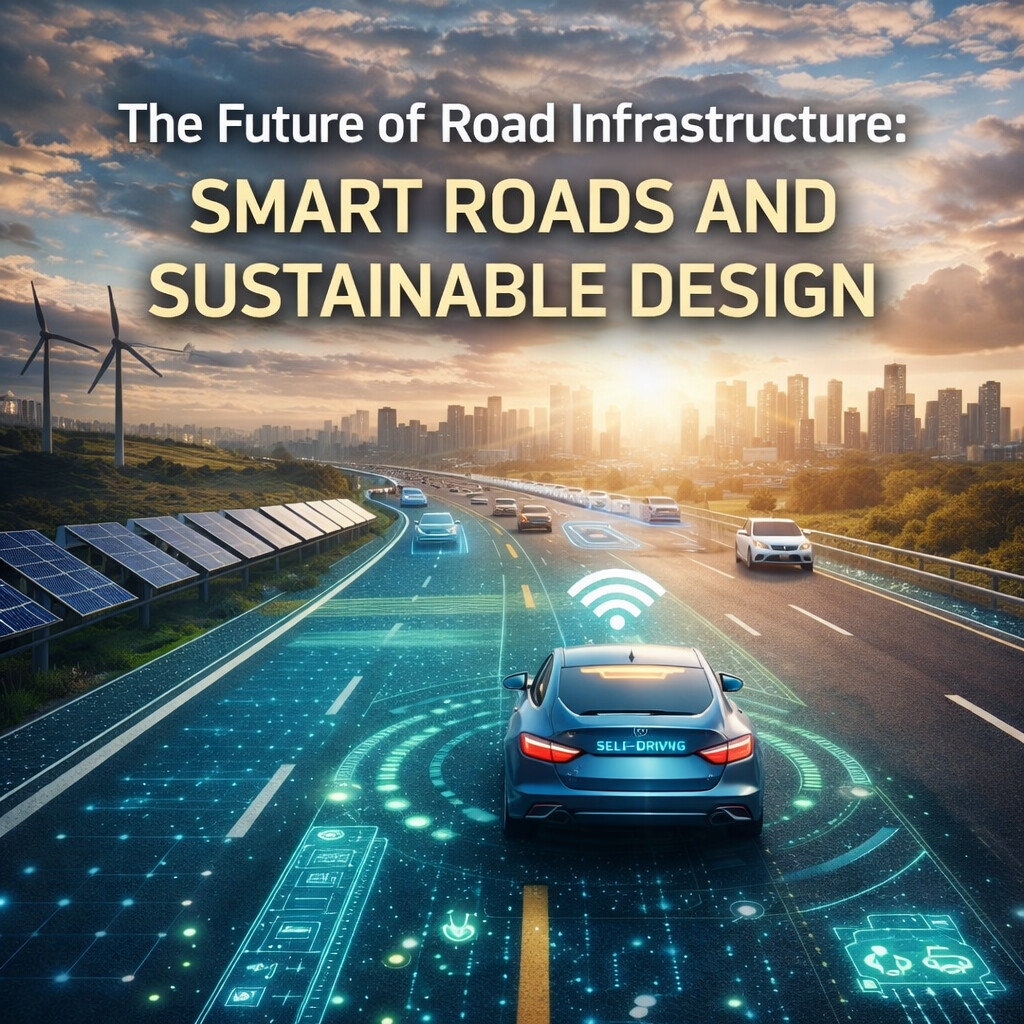
Road infrastructure is undergoing a fundamental transformation as cities and governments respond to climate change, population growth, and rapid advances in technology. Traditional road design, once focused primarily on durability and traffic flow, is now evolving toward smarter, more sustainable systems that integrate data, renewable energy, and environmentally responsible materials. The future of road infrastructure lies in smart roads and sustainable design, where efficiency, safety, and long-term resilience are built into every layer of development.
What Are Smart Roads?

Smart roads use embedded technologies to monitor conditions, manage traffic, and communicate with vehicles and infrastructure systems. These roads rely on sensors, connectivity, and data platforms to improve efficiency, safety, and maintenance planning.
Key features often include:
- Traffic and congestion monitoring sensors
- Weather and surface condition detection
- Vehicle-to-infrastructure (V2I) communication
- Real-time data collection for maintenance and planning
Sustainable Design in Modern Road Infrastructure

Sustainable road design focuses on reducing environmental impact while extending lifespan and performance. This approach considers materials, construction methods, and long-term operational efficiency.
Common sustainable design elements include:
- Recycled and low-carbon construction materials
- Permeable surfaces for improved water management
- Reduced heat absorption to limit urban heat islands
- Designs that support non-motorised transport
How Smart Roads Improve Safety and Efficiency

By combining real-time data with intelligent systems, smart roads can actively respond to changing conditions. This improves safety for motorists, pedestrians, and cyclists while reducing congestion and emissions.
Benefits include:
- Faster response to accidents and hazards
- Optimised traffic flow through adaptive signalling
- Early detection of road surface degradation
- Better planning for future infrastructure upgrades
The Role of Renewable Energy in Road Design

Future road infrastructure increasingly integrates renewable energy solutions directly into design. Solar road surfaces, energy-harvesting pavements, and roadside renewable installations are being tested globally.
These innovations aim to:
- Power street lighting and traffic systems
- Reduce dependence on external energy sources
- Support electric vehicle charging infrastructure
Challenges Facing Smart and Sustainable Roads
Despite the benefits, smart road implementation faces challenges such as high upfront costs, system integration complexity, and long-term maintenance requirements. Data security, standardisation, and infrastructure compatibility also remain critical considerations.
Successful deployment requires:
- Strong public-private partnerships
- Long-term funding models
- Clear regulatory frameworks
- Skilled infrastructure management
What This Means for the Future of Transport

As transport systems become more connected and environmentally conscious, smart roads will play a central role in supporting autonomous vehicles, electric mobility, and sustainable urban development. Road infrastructure will no longer be passive but will actively contribute to safer, cleaner, and more efficient transport networks.
Building Roads for a Smarter, Greener Tomorrow
The future of road infrastructure is defined by innovation, sustainability, and adaptability. By embracing smart road technologies and sustainable design principles, governments and developers can create transport networks that meet modern demands while protecting the environment and supporting long-term economic growth.


