Modern libraries are evolving far beyond traditional book storage spaces. In 2026, libraries are increasingly designed as community hubs, educational centres, digital learning spaces, and environmentally responsible public facilities. As sustainability becomes a growing priority in architecture and facilities management, the use of sustainable building materials for library construction is becoming an important focus for municipalities, schools, universities, and private developers worldwide.
Sustainable building materials help reduce environmental impact while improving energy efficiency, durability, indoor air quality, and long-term operational costs. Libraries often serve communities for decades, making material selection especially important during the planning and construction process. From recycled materials and responsibly sourced timber to low-emission finishes and energy-efficient insulation systems, sustainable design choices can significantly improve both environmental and user outcomes.
As governments and organisations continue investing in green infrastructure, sustainable building materials for library construction are helping create spaces that support education, conservation, and future-focused urban development.
Why Sustainable Materials Matter In Modern Library Construction

Libraries typically operate as long-term public facilities with high daily occupancy rates. Because of this, construction materials play a major role in determining operational efficiency, maintenance requirements, and environmental impact over the lifespan of the building.
Sustainable building materials help reduce carbon emissions during construction while also improving the overall efficiency of the facility. Many modern green materials are designed to provide better insulation, lower maintenance demands, and healthier indoor environments for visitors and staff.
Indoor air quality is especially important in libraries because these facilities often accommodate students, children, researchers, and large groups of people for extended periods. Low-emission paints, adhesives, flooring systems, and composite materials can reduce exposure to harmful volatile organic compounds while creating healthier learning environments.
Durability is another major consideration. Libraries experience constant daily use, requiring materials that can withstand heavy foot traffic, regular cleaning, and changing environmental conditions without frequent replacement.
Popular Sustainable Building Materials For Library Construction
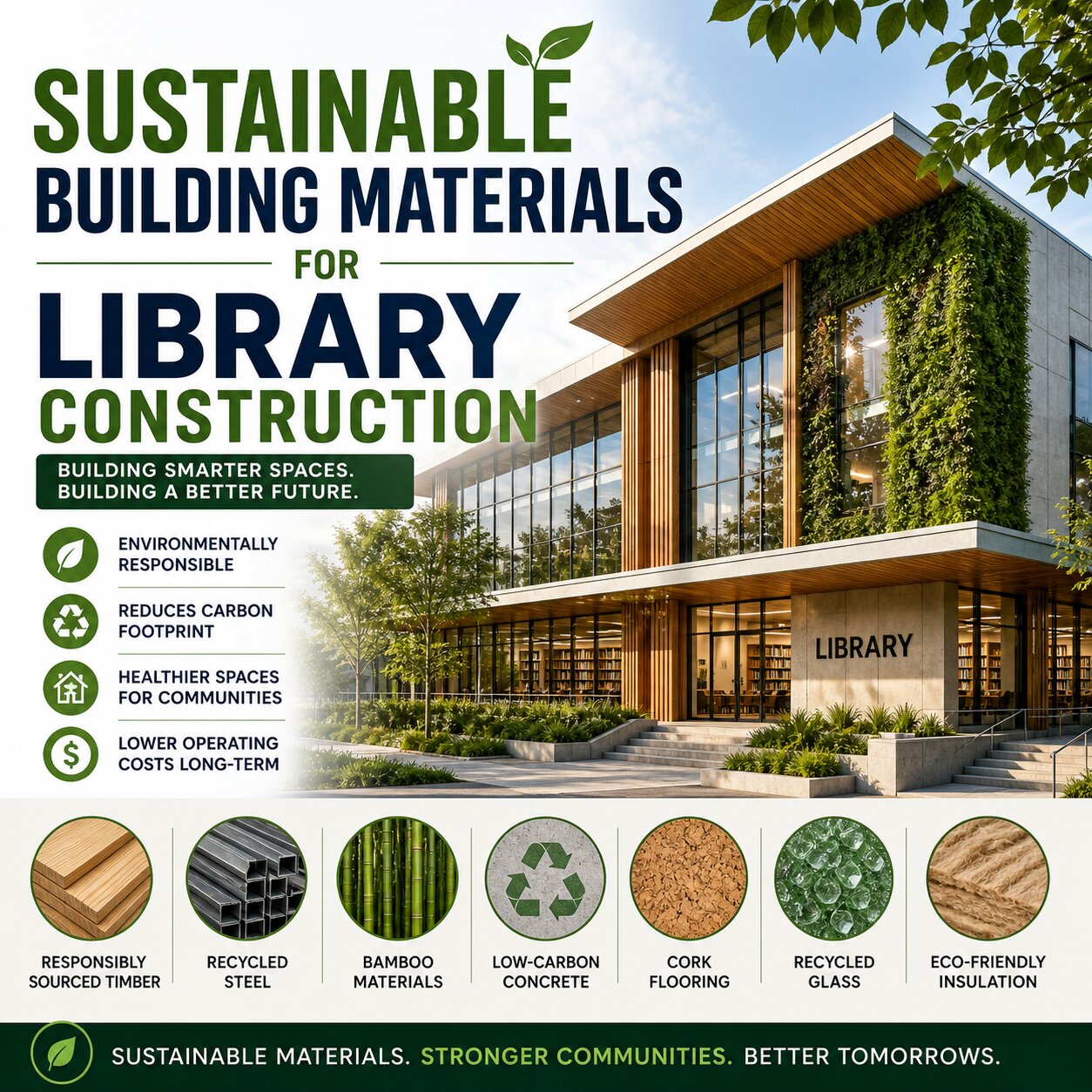
One of the most widely used sustainable building materials for library construction is responsibly sourced timber. Certified wood products from sustainable forestry programmes offer strong structural performance while helping reduce the carbon footprint associated with traditional concrete and steel-heavy designs.
Recycled steel is also becoming increasingly common in modern library construction projects. Steel remains highly durable and recyclable, making it a practical option for structural frameworks, roofing systems, and support infrastructure.
Bamboo materials are gaining attention for both interior and exterior applications. Bamboo grows rapidly compared to traditional timber and can be used for flooring, wall panels, furniture, and decorative elements within library spaces.
Recycled concrete and low-carbon concrete alternatives are helping reduce emissions linked to cement production. Some modern concrete mixes include recycled industrial by-products or supplementary materials that lower overall environmental impact while maintaining structural performance.
Other sustainable building materials commonly used in library projects include:
- Recycled glass panels
- Reclaimed wood features
- Cork flooring systems
- Low-VOC paints and coatings
- Recycled acoustic insulation
- Energy-efficient glazing systems
- Green roofing materials
- Composite panels made from recycled plastics
These materials contribute to improved sustainability while often enhancing the visual appeal and comfort of library environments.
Energy Efficiency And Thermal Performance Benefits
Sustainable building materials for library construction do more than reduce environmental impact during construction. They also contribute significantly to long-term energy efficiency and operational savings.
High-performance insulation systems help regulate indoor temperatures more effectively, reducing heating and cooling requirements throughout the year. Energy-efficient windows and glazing systems improve natural lighting while minimising heat gain and loss.
Natural lighting strategies are especially important in libraries because they reduce electricity consumption while creating more welcoming reading and study environments. Sustainable architectural materials often work together with passive design principles to maximise daylight usage throughout the building.
Thermal mass materials such as certain concrete systems and insulated wall assemblies can help stabilise indoor temperatures during changing weather conditions. This improves comfort levels while reducing pressure on HVAC systems.
As energy costs continue to rise globally, these efficiency improvements can provide substantial financial savings over the lifespan of a library facility.
Sustainable Libraries Support Community And Environmental Goals
Libraries often serve as symbols of education, knowledge, and social development within communities. Sustainable library construction reinforces these values by demonstrating environmental responsibility and long-term planning.
Green building practices can also improve public perception and help facilities qualify for environmental certifications or sustainability incentives. Many municipalities and educational institutions now prioritise sustainable development strategies when planning new public infrastructure projects.
Incorporating sustainable building materials for library construction may also support educational opportunities within the facility itself. Libraries can showcase renewable materials, green technologies, and energy-efficient systems as part of community awareness and environmental education initiatives.
Some modern libraries now integrate rooftop gardens, rainwater harvesting systems, solar panels, and green outdoor spaces alongside sustainable construction materials to create fully integrated environmentally conscious facilities.
Building The Future Of Sustainable Libraries
The demand for sustainable building materials for library construction will likely continue growing as cities, schools, universities, and developers pursue greener infrastructure solutions. Modern libraries are no longer simply quiet spaces filled with books. They are becoming multifunctional facilities designed to support digital learning, collaboration, research, and community engagement for future generations.
By investing in sustainable materials, developers and facilities managers can reduce environmental impact while improving operational efficiency, durability, and visitor experience. From recycled materials and renewable resources to energy-efficient systems and healthier indoor environments, sustainable construction strategies are helping redefine what modern libraries can become.
As sustainability standards continue evolving in 2026 and beyond, environmentally responsible library construction will remain an important part of building smarter and more resilient communities.