Lighting is one of the most powerful yet underestimated tools in urban infrastructure. Beyond visibility, effective lighting design directly influences pedestrian safety, crime prevention, and public confidence in shared spaces. When properly implemented, lighting transforms streets, parks, pathways, and transport nodes into environments that feel secure and accessible at all hours.
In South Africa, and particularly in urban centres facing safety challenges, lighting design must move beyond aesthetics and into strategic planning. It is not simply about installing brighter lights. It is about designing systems that improve visibility, eliminate blind spots, enhance surveillance capability, and create psychologically safer environments for communities.
Why Lighting Matters for Pedestrian Safety

Pedestrian safety relies heavily on visibility. Poorly lit sidewalks, crossings, and transport hubs increase the risk of accidents and create environments where individuals feel vulnerable. Strategic lighting reduces trip hazards, clarifies pathways, and improves reaction time for both pedestrians and drivers.
Uniform light distribution is far more important than raw brightness. High contrast between light and dark areas can create shadows where potential threats may hide. Proper spacing, mounting height, and beam angles ensure even illumination across pedestrian routes.
In addition, colour rendering plays a role in safety. Lighting with a higher colour rendering index (CRI) allows individuals to distinguish faces, clothing, and surroundings more accurately. This improves situational awareness and enhances identification in security monitoring systems.
Lighting as a Crime Prevention Strategy

Lighting design is a recognised element of Crime Prevention Through Environmental Design (CPTED). Well-lit areas discourage opportunistic crime by increasing natural surveillance. When people feel visible, they are less likely to engage in unlawful behaviour.
Eliminating dark corners, recessed doorways, and concealed walkways reduces hiding opportunities. Strategic placement of luminaires near entrances, parking areas, staircases, and alleyways improves territorial reinforcement and perceived control of space.
Lighting also supports CCTV effectiveness. Cameras perform significantly better in environments with consistent illumination. Flickering lights, excessive glare, or deep shadows reduce image clarity and limit evidence usability. Integrated planning between lighting engineers and security designers produces far stronger outcomes.
Key Design Considerations for Public Infrastructure
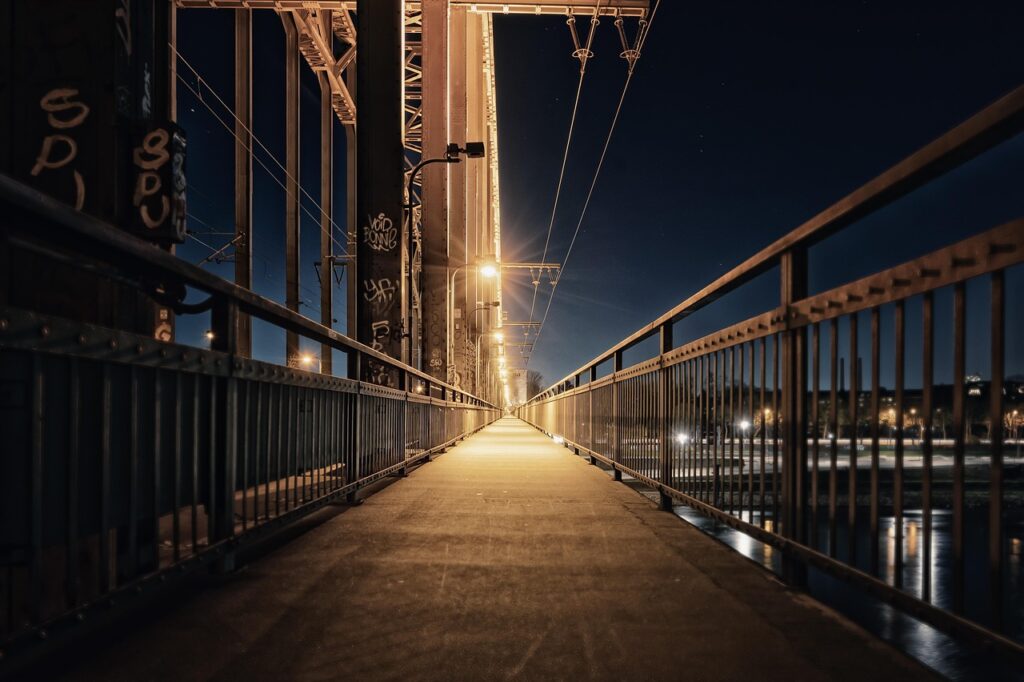
Effective pedestrian lighting design begins with a site-specific risk assessment. Areas with high foot traffic, public transport access, schools, hospitals, or commercial activity require layered lighting strategies rather than single-source illumination.
Mounting height should balance coverage and glare control. Overly high poles can create dark gaps between luminaires, while overly low fixtures may produce harsh brightness and shadowing. Shielding and directional optics prevent light spill into adjacent properties while maintaining pathway clarity.
Energy efficiency is equally critical. LED systems with smart controls allow dimming during low-traffic periods while increasing brightness when movement is detected. Adaptive lighting systems reduce operational costs without compromising safety.
Maintenance planning must also be considered. A well-designed system that is poorly maintained becomes ineffective quickly. Regular inspections, cleaning, and prompt replacement of faulty units are essential for long-term performance.
Integrating Lighting into Broader Urban Safety Planning

Lighting should not be treated as an afterthought in urban design. It must form part of an integrated safety framework that includes landscaping, signage, pathway layout, and surveillance systems.
For example, dense vegetation can obstruct light distribution. Poor pathway design can create bottlenecks where lighting is ineffective. Coordinated planning between urban designers, engineers, and safety consultants ensures that lighting enhances, rather than compensates for, infrastructure weaknesses.
Community engagement also plays a role. Understanding where residents feel unsafe allows municipalities and property managers to prioritise high-risk zones. Data-driven lighting upgrades in these areas can significantly improve both safety outcomes and public confidence.
Building Safer Spaces Through Smarter Lighting
Lighting design for pedestrian safety and crime prevention is not about increasing wattage. It is about increasing visibility, reducing vulnerability, and reinforcing public trust in shared spaces.
From municipal infrastructure to commercial developments and residential estates, well-planned lighting systems are a long-term investment in safety and social stability.
At Sustainable Systems Technologies, we believe infrastructure must serve people first. Smarter lighting design is one of the most practical and impactful steps toward safer communities.