Lighting technology is evolving rapidly as cities and buildings move towards smarter, more sustainable infrastructure. Traditional lighting systems are being replaced with intelligent solutions that combine energy efficiency, automation, and data-driven management.
In modern smart cities, lighting systems do more than illuminate streets and buildings. They are becoming part of connected urban networks that support safety, sustainability, and improved quality of life. From adaptive streetlights to integrated sensors, lighting is now a core component of urban digital infrastructure.
Understanding the future trends in lighting systems helps municipalities, property developers, and facility managers prepare for the next generation of smart city technology.
The role of lighting in smart city infrastructure

Smart cities rely on interconnected systems that improve urban management and resource efficiency. Lighting systems are one of the most widespread and visible elements of this infrastructure.
Modern street lighting networks are increasingly connected through Internet of Things (IoT) platforms. These systems allow city authorities to monitor and control lighting remotely, adjust brightness levels based on traffic conditions, and detect faults before they become serious issues.
Beyond illumination, smart lighting infrastructure can support additional urban technologies. Sensors installed on lighting poles can collect environmental data, monitor traffic flow, or even assist with public safety initiatives.
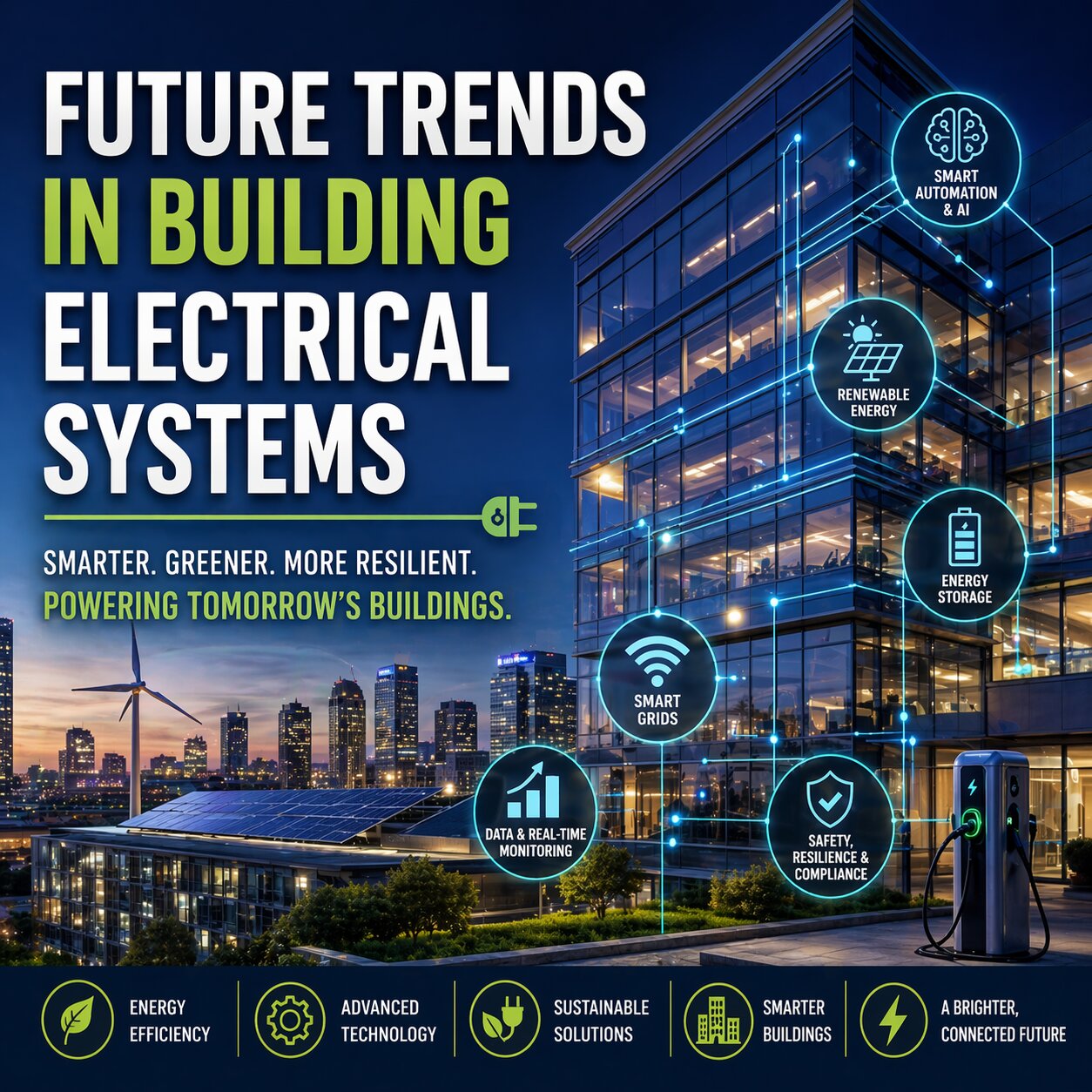
As cities expand and energy demands increase, integrating lighting systems into broader smart city networks will become essential for sustainable urban development.
Key technologies shaping the future of lighting systems

Several technological innovations are driving the transformation of lighting systems in smart cities and modern buildings.
LED lighting has already revolutionised energy efficiency, reducing power consumption while providing longer operational lifespans compared to traditional lighting technologies. LEDs are now the standard foundation for most smart lighting systems.
Advanced sensors and automation technologies allow lighting systems to respond dynamically to environmental conditions. Motion sensors, daylight harvesting systems, and occupancy detection can automatically adjust lighting levels to reduce unnecessary energy use.
Connectivity technologies are also playing a critical role. Wireless networks, cloud-based management platforms, and IoT devices allow lighting systems to communicate with other building systems such as security, HVAC, and traffic management infrastructure.
Together, these technologies are transforming lighting from a simple utility into an intelligent, adaptive urban service.
Emerging lighting trends in smart cities

Cities around the world are experimenting with new lighting solutions designed to improve sustainability, safety, and urban efficiency.
Key emerging trends include:
- Adaptive street lighting that adjusts brightness based on traffic levels and pedestrian activity
- Integrated smart poles that combine lighting with cameras, sensors, and communication equipment
- Solar-powered lighting systems that reduce dependence on conventional electricity grids
- Data-driven lighting management that uses analytics to optimise energy consumption and maintenance schedules
- Human-centric lighting that adjusts colour temperature to support health and wellbeing
These trends highlight how lighting infrastructure is becoming a multifunctional platform that supports multiple aspects of smart city operations.
Sustainability and energy efficiency in future lighting systems
One of the most important goals of smart lighting technology is improving sustainability. Cities consume large amounts of electricity through public lighting systems, making efficiency improvements particularly valuable.
LED technology has already reduced energy consumption significantly compared to older lighting systems such as sodium vapour or fluorescent lighting. When combined with smart controls, these savings can increase even further.
Lighting systems that respond to real-time conditions help eliminate unnecessary energy use. For example, streetlights can dim automatically during periods of low traffic or brighten when pedestrians or vehicles are detected.
Renewable energy integration is also becoming more common. Solar-powered lighting installations and energy storage systems allow cities to reduce reliance on centralised power grids while supporting sustainable infrastructure development.
Lighting systems as the foundation of future smart cities

Lighting infrastructure is becoming a key foundation of modern smart city development.
By integrating lighting systems with sensors, connectivity platforms, and energy-efficient technologies, cities can improve safety, reduce environmental impact, and optimise urban management.
As technology continues to evolve, lighting systems will play an even greater role in supporting sustainable, connected, and intelligent urban environments.
For facility managers, urban planners, and infrastructure developers, understanding these future trends is essential to building the cities of tomorrow.
Lighting the path to smarter cities
The future of lighting systems goes far beyond simple illumination. Intelligent lighting networks are becoming part of a larger digital ecosystem that supports smart city infrastructure, sustainability goals, and improved urban living.
As innovations in LED technology, IoT connectivity, and renewable energy continue to develop, lighting systems will remain at the centre of urban transformation.
Cities that invest in smart lighting today are laying the groundwork for safer, more efficient, and more sustainable communities in the years ahead.