Lighting plays a crucial role in modern zoo design, influencing not only how exhibits are presented to visitors but also how animals experience their environment. In both indoor and outdoor enclosures, carefully designed lighting systems help replicate natural conditions, support animal wellbeing, and enhance visibility for staff and guests.
When it comes to nighttime animal care, lighting becomes even more important. Zoos must strike a delicate balance between maintaining safe working conditions and preserving the natural behaviours of nocturnal and diurnal species.
In this article, we explore how lighting systems are designed for zoo exhibits, with a focus on energy efficiency, animal welfare, and operational functionality.
The Role Of Lighting In Zoo Environments
Lighting in zoo exhibits goes far beyond simple illumination. It is a critical environmental factor that influences animal health, behaviour, and biological rhythms. Proper lighting helps simulate natural day-night cycles, which are essential for regulating sleep, feeding, and breeding patterns.
For diurnal animals, consistent daylight simulation ensures normal activity levels and reduces stress. For nocturnal species, controlled low-light environments allow them to remain active while still being visible to visitors in a minimally intrusive way.
Additionally, lighting enhances the visual experience for guests. Strategic placement of lights can highlight key features of an exhibit, create immersive environments, and guide visitor movement throughout the zoo.
Key Lighting Technologies Used In Zoos
Modern zoo lighting systems rely on advanced technologies to meet both environmental and operational demands. Energy efficiency, durability, and controllability are all key considerations.
- LED Lighting Systems: Highly energy-efficient, long-lasting, and capable of producing a wide range of colour temperatures
- Smart Lighting Controls: Automated systems that adjust brightness and timing to mimic natural daylight cycles
- Infrared And Low-Light Lighting: Used for nocturnal exhibits without disturbing animals
- Solar-Powered Lighting: Sustainable solutions for outdoor pathways and remote enclosures
- Motion-Activated Lighting: Reduces energy consumption while ensuring safety in low-traffic areas
These technologies allow zoo operators to fine-tune lighting conditions based on species-specific needs while also managing energy costs effectively.
Designing Lighting For Animal Welfare
Animal welfare is the top priority when designing lighting systems for zoo exhibits. Each species has unique requirements, and lighting must be tailored to suit their natural habitat and behavioural patterns.
Exposure to incorrect lighting can disrupt circadian rhythms, leading to stress, reduced appetite, and long-term health issues. For this reason, lighting designers often work closely with veterinarians and animal behaviour specialists.
Colour temperature and intensity are particularly important. Warmer tones may be used to replicate sunrise and sunset, while cooler tones simulate daylight. Gradual transitions between light levels help avoid sudden changes that could startle animals.
By carefully managing these elements, zoos can create environments that feel natural and supportive for the animals in their care.
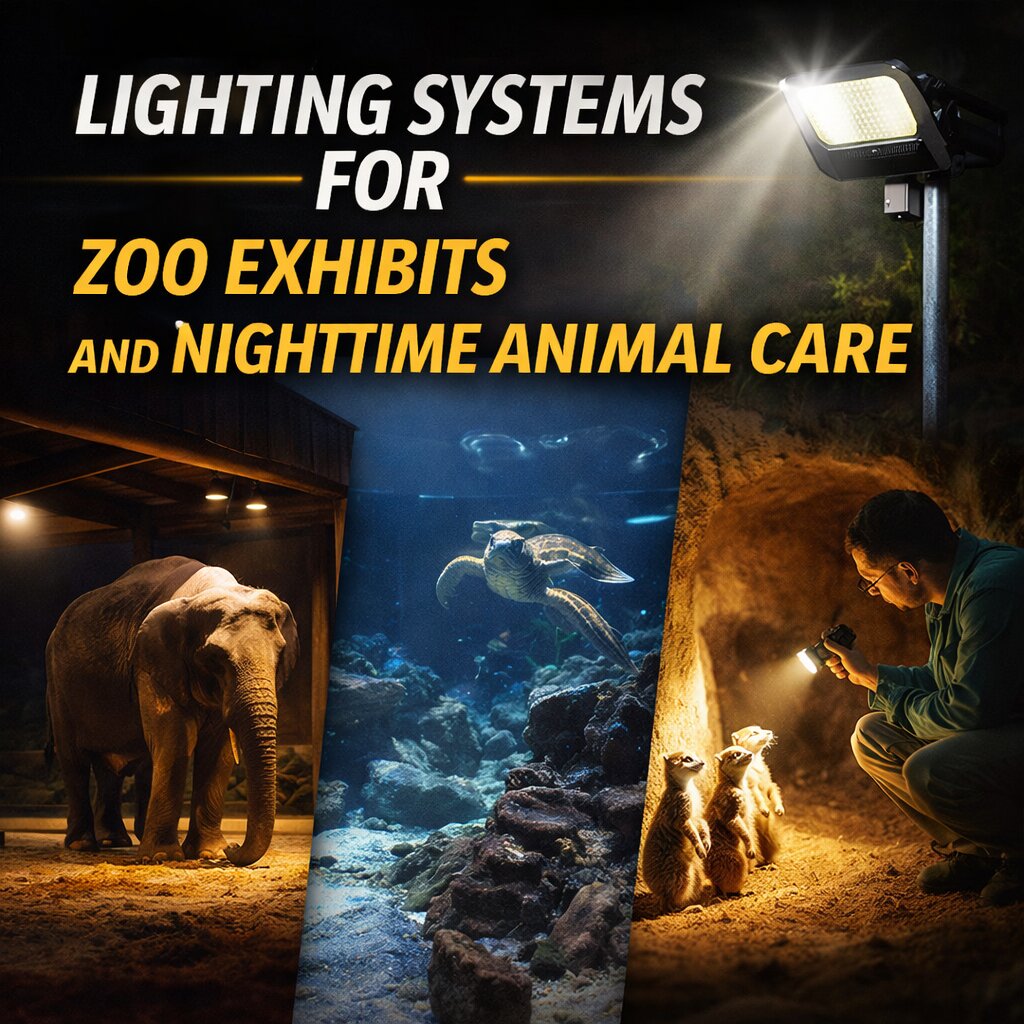
Lighting Systems For Nighttime Animal Care
Nighttime operations require specialised lighting solutions that allow staff to monitor and care for animals without disrupting their natural behaviours. This is especially important for nocturnal species that are most active after dark.
Low-intensity lighting and infrared systems are commonly used to observe animals without altering their environment. These systems enable staff to perform checks, provide care, and respond to emergencies while maintaining a calm setting.
Safety is also a key consideration. Pathways, service areas, and access points must be well-lit to prevent accidents, but without spilling excessive light into animal enclosures.
Balancing visibility with minimal disturbance is the core challenge of nighttime lighting design in zoos.
Energy Efficiency And Sustainability Considerations
Zoos operate large facilities with extensive lighting requirements, making energy efficiency a critical factor. Sustainable lighting solutions not only reduce operational costs but also align with broader environmental goals.
LED technology has become the standard due to its low energy consumption and long lifespan. Combined with smart control systems, zoos can significantly reduce their energy usage by adjusting lighting based on time of day and occupancy.
Solar lighting and other renewable energy solutions are increasingly being integrated into outdoor areas. These systems provide reliable illumination while reducing dependence on traditional power sources.
By prioritising sustainability, zoos can create environmentally responsible facilities that support both conservation efforts and operational efficiency.
Integration With Exhibit Design And Visitor Experience
Lighting is an integral part of exhibit design, shaping how visitors perceive and interact with each space. Well-designed lighting can create dramatic effects, highlight key features, and enhance storytelling within exhibits.
For example, dimmed environments with focused lighting can create a sense of mystery in nocturnal exhibits, while bright, natural lighting can simulate open savannah landscapes.
Wayfinding is another important aspect. Lighting can guide visitors along pathways, highlight entrances, and improve overall navigation throughout the zoo.
When combined with architectural and landscape elements, lighting becomes a powerful tool for creating immersive and educational experiences.
Final Thoughts On Zoo Lighting Systems
Lighting systems for zoo exhibits and nighttime animal care are far more complex than traditional illumination. They require a careful balance between animal welfare, operational needs, energy efficiency, and visitor experience.
With advancements in lighting technology, zoos now have the tools to create environments that closely mimic natural habitats while maintaining safe and efficient operations.
As these systems continue to evolve, lighting will play an even greater role in supporting conservation, education, and the wellbeing of animals in managed environments.