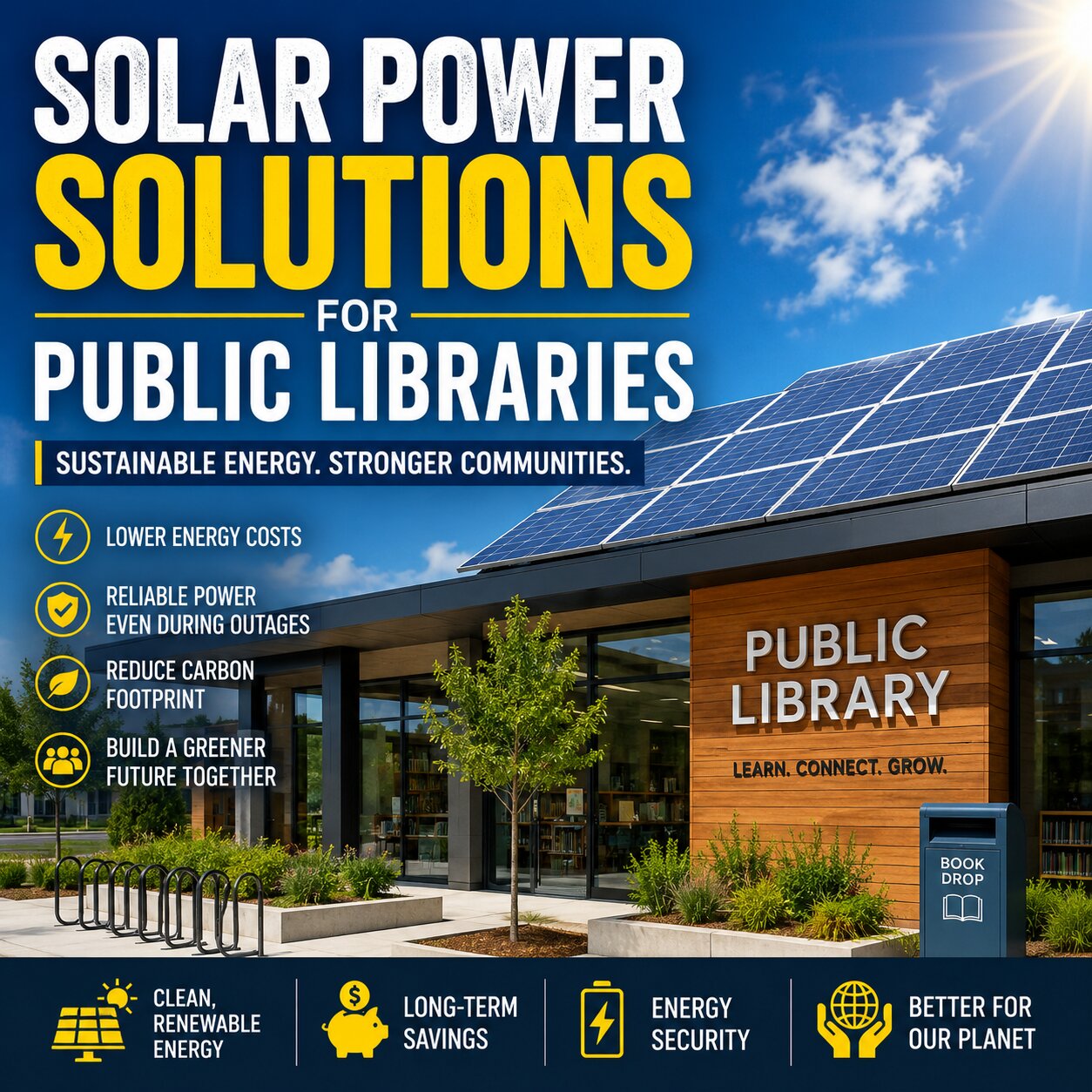
Public libraries continue to play an essential role in education, research, digital access, and community engagement. However, rising electricity costs and growing concerns about energy reliability are placing increasing pressure on library facilities and operational budgets. As a result, many institutions are exploring solar power solutions as a practical and sustainable alternative.
Solar energy systems allow libraries to generate electricity directly from sunlight using photovoltaic panels installed on rooftops, parking structures, or nearby land. These systems can reduce dependence on traditional power grids while lowering monthly operating expenses over time.
For public libraries in South Africa and around the world, solar power also helps address concerns surrounding load shedding, power outages, and unstable energy supply. Maintaining electricity is critical for preserving digital services, lighting, security systems, internet access, and climate-sensitive collections.
Beyond cost savings and operational stability, solar power solutions also align with broader sustainability initiatives. Libraries adopting renewable energy systems can demonstrate environmental responsibility while educating communities about green infrastructure and energy conservation.
Key Solar Power Systems Used in Libraries

Modern solar power solutions for public libraries can range from small supplementary systems to large-scale installations capable of powering significant portions of a facility’s daily operations. The size and complexity of the system often depend on the building’s energy demands, available installation space, and long-term sustainability goals.
Photovoltaic solar panels form the core of most systems. These panels convert sunlight into electricity that can be used immediately within the building or stored for later use. Battery storage systems are increasingly important because they allow libraries to continue operating during power interruptions or peak demand periods.
Libraries may also integrate intelligent energy management systems that monitor electricity usage and optimise energy distribution throughout the facility. These systems can help reduce unnecessary consumption while improving overall efficiency.
Common solar-related components found in modern library facilities include:
- Rooftop photovoltaic solar panels
- Battery storage systems
- Inverters and power conversion equipment
- Smart energy monitoring systems
- Solar-powered outdoor lighting
- Backup energy integration systems
- EV charging infrastructure powered by solar energy
In some cases, libraries combine solar systems with other sustainable technologies such as energy-efficient lighting, passive cooling systems, and smart climate control solutions to maximise long-term energy performance.
Benefits of Solar Power for Public Libraries

One of the biggest advantages of solar power solutions for public libraries is long-term operational savings. Electricity costs can place significant strain on municipal and institutional budgets, especially for larger facilities with extensive lighting, computer systems, and climate control requirements.
By generating renewable energy on-site, libraries can reduce their monthly utility expenses while improving financial predictability. Over time, these savings can be redirected towards educational programmes, facility improvements, technology upgrades, or expanded public services.
Solar power also improves resilience during power disruptions. Libraries increasingly function as community hubs for internet access, digital learning, and public services. Maintaining electricity during outages allows these facilities to continue supporting local communities when other services may be interrupted.
Environmental sustainability is another major benefit. Reducing reliance on fossil-fuel-generated electricity helps decrease carbon emissions and supports broader environmental goals. Public institutions that visibly invest in renewable energy can also inspire community awareness and encourage sustainable thinking among visitors.
Additionally, solar installations can enhance a library’s public image by positioning the institution as forward-thinking, environmentally conscious, and committed to long-term sustainability.
Challenges and Planning Considerations
While solar power offers significant benefits, successful implementation requires careful planning and infrastructure assessment. Public libraries must evaluate roof conditions, building orientation, available sunlight exposure, and overall structural suitability before installation begins.
Initial installation costs can be substantial, particularly for larger facilities requiring battery storage and advanced energy management systems. However, many organisations offset these expenses through government incentives, grants, financing programmes, or phased implementation strategies.
Maintenance requirements should also be considered. Solar panels generally require minimal maintenance, but regular inspections, cleaning, and monitoring remain important for maintaining efficiency and long-term performance.
Energy demand analysis is another essential factor. Libraries must carefully assess their electricity consumption patterns to determine the most suitable system size and storage requirements. Facilities operating extensive computer labs, climate-controlled archives, or long opening hours may require larger and more advanced systems.
Future expansion should also be taken into account during the planning process to ensure that systems remain scalable as technology and facility requirements evolve over time.
Building Sustainable Library Infrastructure

Solar power solutions are becoming an increasingly valuable investment for modern public libraries seeking greater energy independence, operational resilience, and environmental sustainability. As energy challenges continue affecting public infrastructure, renewable energy systems offer libraries a practical path towards long-term stability and efficiency.
By integrating solar technology into library facilities, institutions can reduce operating costs, improve reliability, and demonstrate meaningful commitment to sustainable development. In many ways, solar-powered libraries represent not only an investment in cleaner energy but also an investment in stronger, more resilient communities.