Modern fleet operations rely on far more than vehicles and drivers alone. Businesses managing transport fleets now depend heavily on advanced technologies and operational standards to improve safety, reduce accidents, maintain legal compliance, and protect both employees and assets. As regulations continue evolving, companies are increasingly investing in better fleet safety systems to stay competitive and responsible.
From AI-powered monitoring tools to driver behaviour tracking and maintenance management, safety technologies now form a critical part of fleet management strategies. Organisations operating commercial fleets must also comply with national transportation regulations, workplace safety laws, insurance requirements, and environmental standards that influence how fleets are managed daily.
Implementing strong fleet safety systems helps businesses lower operational risks while creating safer roads for everyone. Companies that fail to prioritise safety often face rising insurance costs, vehicle downtime, reputational damage, and expensive legal consequences.
Why fleet safety systems matter in modern transport operations

Strong fleet safety systems help reduce accidents by improving driver awareness, vehicle monitoring, and operational oversight. Many modern systems use real-time data to identify unsafe driving habits such as harsh braking, speeding, distracted driving, or fatigue. Fleet managers can then intervene before risky behaviour leads to incidents.
These technologies also improve vehicle maintenance management. A poorly maintained fleet creates serious safety risks, especially for logistics, transport, and service businesses operating vehicles daily. Fleet safety systems can automatically track maintenance schedules, tyre conditions, engine diagnostics, and mechanical warnings to reduce the likelihood of breakdowns or failures on the road.
Another major benefit is operational visibility. Fleet managers can monitor vehicle locations, route efficiency, driver performance, and compliance requirements from centralised platforms. This level of visibility allows businesses to make faster decisions during emergencies or incidents while improving overall operational efficiency.
Insurance providers are also placing greater emphasis on safety technologies. Businesses using advanced fleet safety systems often qualify for lower insurance premiums because they present reduced risk profiles. Over time, this can create significant financial savings for companies operating large fleets.
Technologies transforming fleet safety systems

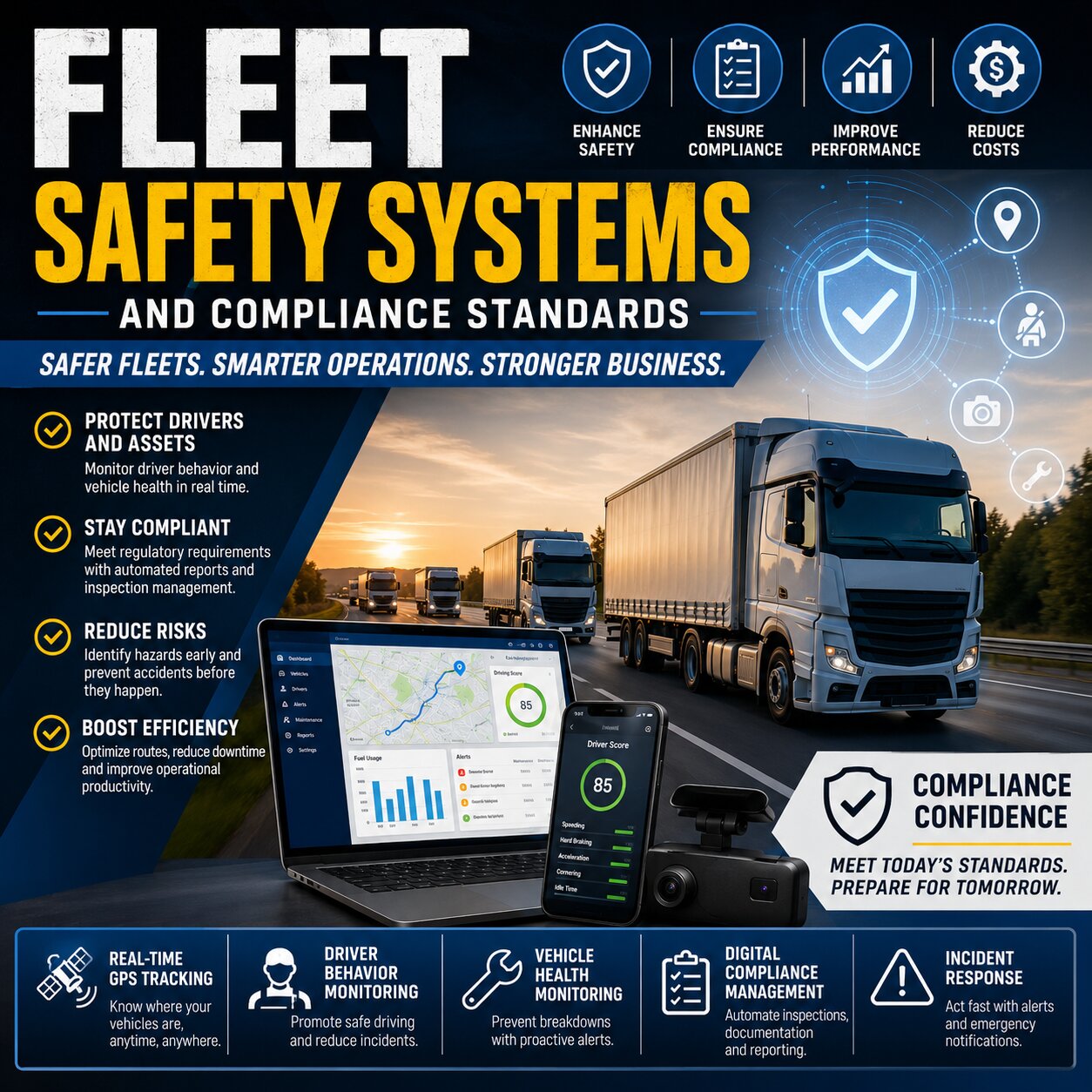
Modern fleet safety systems include a wide range of technologies designed to improve both driver and vehicle safety. Telematics systems are among the most common solutions, collecting real-time data from vehicles and transmitting it to management platforms for monitoring and analysis.
Dash cameras have become increasingly important as well. Forward-facing and driver-facing cameras help companies investigate incidents, protect drivers from false claims, and identify risky behaviours that require additional training. Some systems now use artificial intelligence to detect distracted driving, mobile phone usage, or signs of fatigue.
Advanced driver assistance systems are also becoming standard in many commercial fleets. These include lane departure warnings, collision avoidance systems, adaptive cruise control, blind spot monitoring, and automatic emergency braking technologies. These features significantly improve road safety and help reduce accident severity.
Fleet safety systems are also integrating more closely with compliance and reporting tools. Digital inspection checklists, automated reporting, and cloud-based record management help businesses maintain accurate compliance records while reducing administrative workloads.
Compliance standards fleets must follow
Commercial fleet operators must comply with multiple safety regulations depending on their industry and operating region. These regulations are designed to protect drivers, passengers, cargo, and the public while ensuring vehicles remain roadworthy and safe.
Driver licensing and training standards remain one of the most important compliance areas. Businesses must ensure drivers hold the correct licences, certifications, and ongoing training required for the vehicles they operate. Regular driver assessments also help maintain high safety standards across fleet operations.
Vehicle inspection and maintenance compliance is another critical area. Many regions require routine safety inspections, emissions testing, and maintenance documentation for commercial vehicles. Fleet safety systems help automate these processes by tracking inspection dates and maintenance histories.
Workplace health and safety laws also affect fleet operations. Companies have legal responsibilities to manage driver fatigue, reduce workplace risks, and provide safe operating conditions for employees. Failing to meet these standards can result in heavy fines, legal liability, and operational disruptions.
Key components of effective fleet safety systems
- Real-time telematics monitoring
- GPS tracking and route management
- Driver behaviour analysis
- AI-powered fatigue and distraction detection
- Dash camera integration
- Preventive maintenance tracking
- Digital compliance reporting
- Vehicle inspection management
- Emergency response communication systems
- Advanced driver assistance technologies
Building a stronger safety culture in fleet management

Technology alone cannot solve every safety challenge. Successful businesses combine advanced fleet safety systems with strong organisational safety cultures that prioritise responsible driving and operational accountability.
Driver education plays a major role in this process. Continuous training programmes help drivers understand new technologies, improve defensive driving skills, and stay updated on changing regulations. Employees are more likely to follow safety protocols when they understand their importance and receive ongoing support from management.
Communication is equally important. Fleet managers should regularly review safety data with drivers, discuss incident trends, and identify opportunities for improvement. Open communication helps create a collaborative environment where safety becomes a shared responsibility rather than simply a compliance requirement.
Leadership commitment also influences safety outcomes. Businesses that actively invest in modern fleet safety systems and prioritise safety initiatives often experience fewer accidents, lower turnover rates, and stronger operational performance overall.
Safer fleets create stronger businesses
As transport operations continue evolving, the importance of effective fleet safety systems will only continue growing. Businesses that embrace modern monitoring technologies, preventive maintenance tools, and compliance-focused management strategies position themselves for greater long-term success.
Strong safety systems not only protect drivers and vehicles but also improve operational efficiency, reduce costs, and strengthen customer confidence. In an industry where reliability and accountability matter greatly, investing in fleet safety systems has become an essential part of sustainable fleet management.