Libraries are evolving far beyond rows of books and silent reading spaces. Modern facilities now rely heavily on smart technology and automation to improve efficiency, reduce operational costs, and create better experiences for visitors. As digital transformation continues across industries, library management systems are becoming increasingly important for educational institutions, public facilities, and research centres.
Today’s library management systems help staff manage everything from inventory and member records to digital resources, room bookings, and automated lending processes. These systems reduce manual workloads while improving accuracy and accessibility for both librarians and visitors.
Automation also allows libraries to adapt to changing user expectations. Visitors now expect faster checkouts, digital catalogues, online reservations, and seamless access to information through connected systems and mobile platforms.
For libraries aiming to remain competitive and efficient in a modern environment, investing in smart automation and integrated library management systems is becoming essential.
How library management systems improve operations

Modern library management systems centralise multiple administrative functions into one connected platform. Instead of relying on separate manual processes, libraries can handle circulation, acquisitions, cataloguing, reporting, and user management through a unified system.
One of the biggest advantages is improved efficiency. Automated check-in and checkout systems significantly reduce queues while freeing up staff to focus on customer service, educational programmes, and resource support instead of repetitive administrative tasks.
Digital cataloguing also improves accessibility. Visitors can quickly search for physical or digital materials online, reserve books remotely, and receive automated notifications regarding due dates or availability. This creates a far more convenient experience compared to traditional manual systems.
In larger libraries, automation additionally helps track inventory movement, monitor resource usage, and generate detailed operational reports. These insights assist management teams with budgeting, collection planning, and long-term facility development.
Key automation features in modern libraries

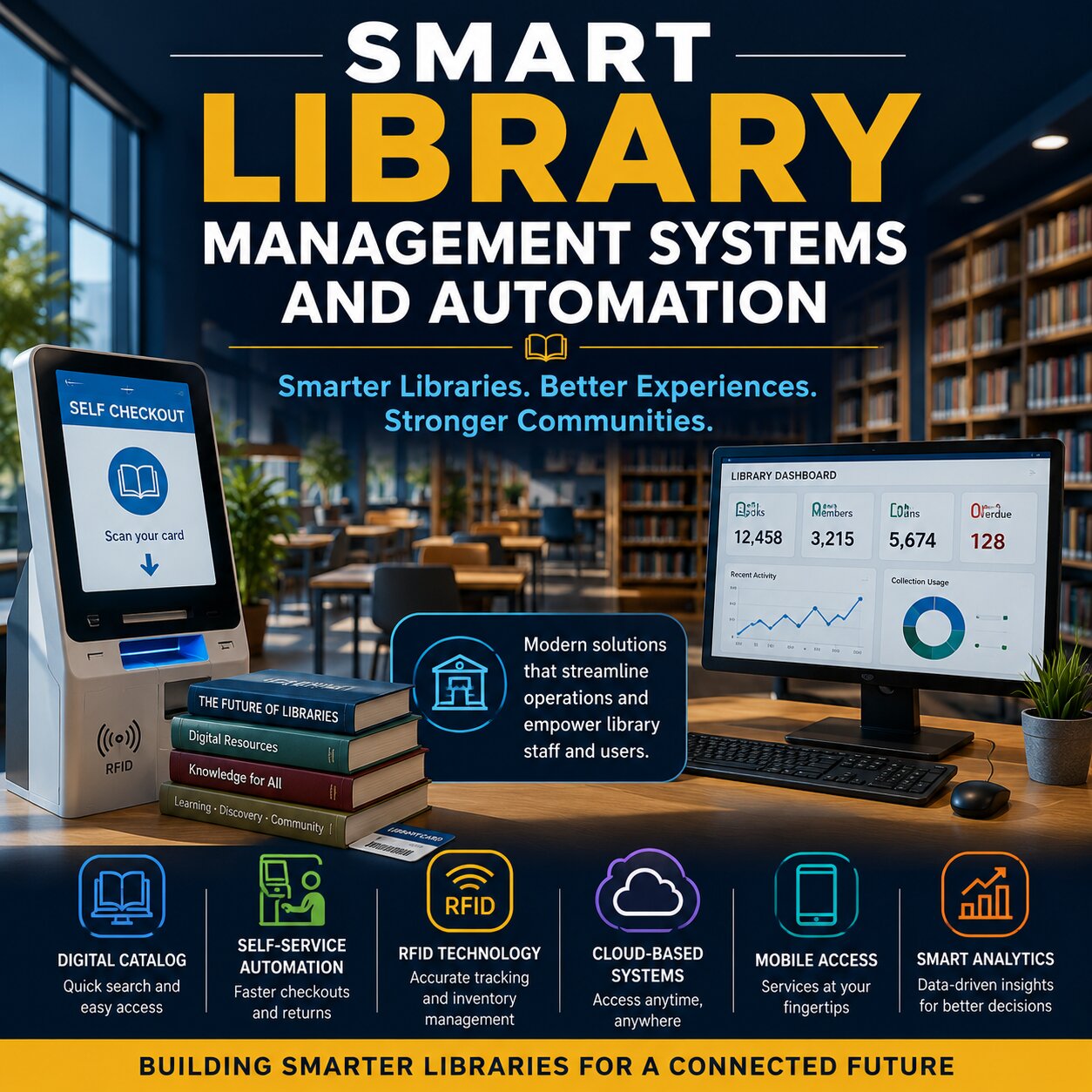
Many advanced library management systems now include smart automation tools designed to streamline operations and improve visitor experiences.
Common features include:
- Self-service checkout kiosks
- RFID book tracking systems
- Automated overdue notifications
- Digital catalogue integration
- Online membership management
- Smart room and equipment booking systems
- Cloud-based resource management
- Mobile app access for visitors
- Digital lending for ebooks and media
- Usage analytics and reporting dashboards
RFID technology has become especially valuable in large facilities. Books can be tracked automatically as they move throughout the building, reducing losses and speeding up inventory audits dramatically.
Cloud-based systems also provide flexibility for multi-branch libraries, allowing staff across different locations to access the same database and operational tools in real time.
The role of automation in visitor experience

Automation is not only about improving backend administration. It also transforms how visitors interact with library services on a daily basis. Faster systems create a smoother and more user-friendly environment that encourages greater community engagement.
Self-service kiosks, for example, reduce waiting times and allow visitors to borrow or return materials independently. Many users appreciate the convenience and flexibility these systems provide, especially during busy periods.
Digital platforms also allow libraries to extend services beyond physical buildings. Visitors can access online catalogues, download digital materials, reserve study rooms, or attend virtual educational events from anywhere. This expands the reach and relevance of modern library facilities.
Automation additionally supports accessibility initiatives. Voice-assisted technology, multilingual interfaces, and digital accessibility tools help libraries serve a broader range of users with different needs and abilities.
As technology continues advancing, libraries are becoming more connected, data-driven, and community-focused than ever before.
Building Smarter Libraries For The Future
The future of library operations increasingly depends on smart library management systems and automation. From improving efficiency and reducing manual workloads to enhancing visitor experiences and accessibility, these technologies are helping libraries modernise successfully.
Facilities that embrace automation today position themselves to deliver faster, smarter, and more sustainable services for future generations while remaining valuable community resources in an increasingly digital world.