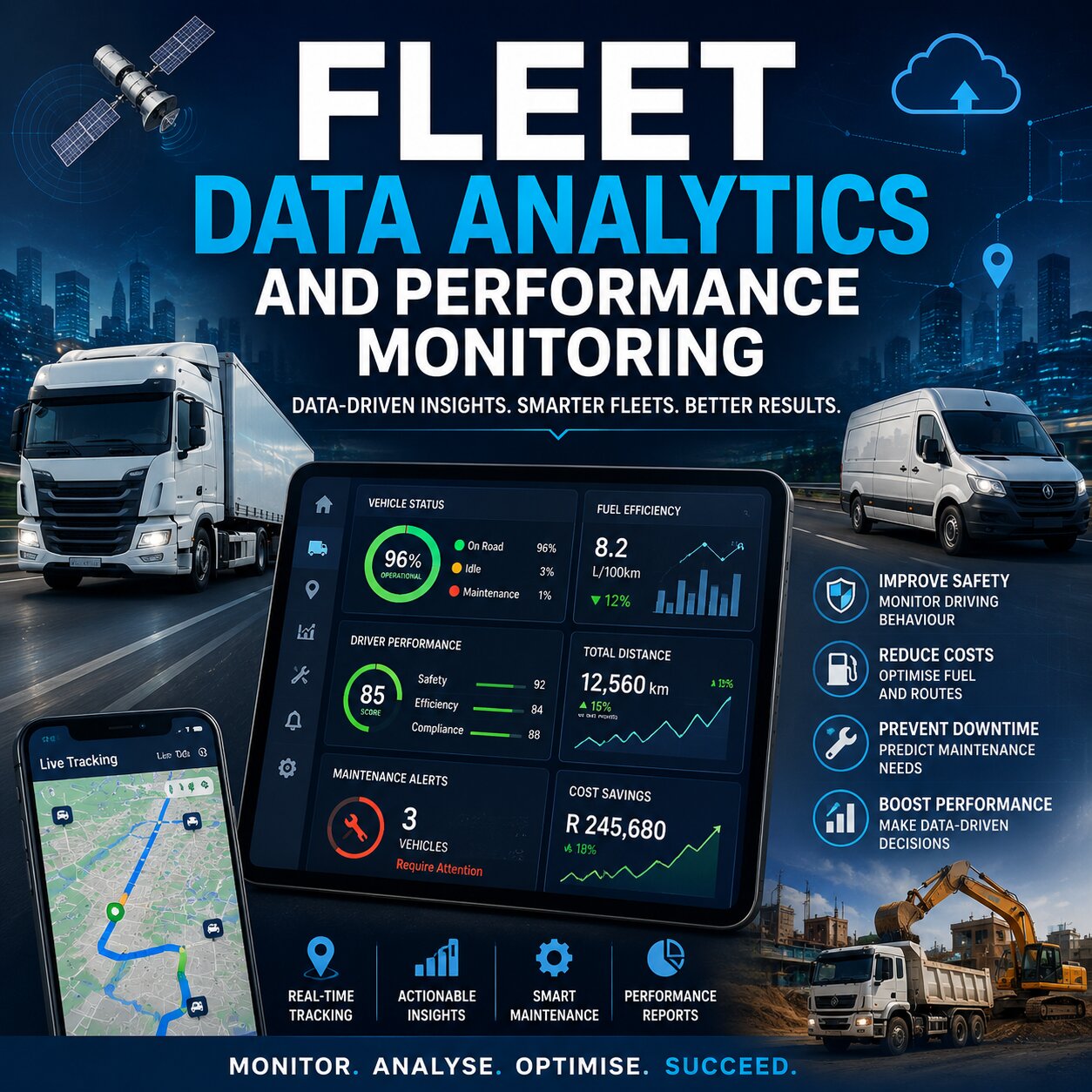
Fleet data analytics and performance monitoring have become essential tools for businesses managing transport operations, logistics services, delivery vehicles, and commercial fleets. Modern fleet systems now collect vast amounts of real-time information that helps companies improve efficiency, reduce operational costs, enhance driver safety, and optimise vehicle performance.
From fuel consumption tracking and route efficiency to maintenance alerts and driver behaviour analysis, fleet data analytics gives managers a clearer understanding of how their vehicles operate every day. As industries increasingly adopt smart technology and automation, performance monitoring systems are transforming the way fleets are managed across the world.
For organisations handling large vehicle operations, data-driven fleet management is no longer a luxury but a critical business advantage.
Understanding fleet data analytics systems

Fleet data analytics involves collecting and analysing information generated by vehicles, drivers, GPS systems, sensors, telematics platforms, and operational software. These systems work together to provide valuable insights that help businesses make smarter decisions.
Modern telematics systems continuously monitor vehicle activity. Information such as speed, braking patterns, fuel usage, engine diagnostics, idle time, and route performance can all be tracked in real time. Fleet managers can then use this information to identify inefficiencies or operational risks.
One of the biggest advantages of fleet data analytics is predictive maintenance. Instead of waiting for a vehicle to fail, monitoring systems can detect warning signs early and schedule maintenance before costly breakdowns occur.
Performance monitoring also improves operational visibility. Businesses can track vehicle locations, delivery progress, driver productivity, and route efficiency from centralised dashboards. This allows managers to respond faster to delays, emergencies, or operational disruptions.
As cloud technology and AI systems continue advancing, fleet analytics platforms are becoming more intelligent, automated, and easier to integrate into existing business systems.
Improving efficiency through performance monitoring

Performance monitoring helps businesses identify opportunities to improve fleet productivity and reduce unnecessary expenses. Small operational improvements across an entire fleet can result in significant long-term savings.
Fuel management remains one of the most important areas of monitoring. Analytics systems can identify excessive idling, inefficient driving habits, and poor route planning that contribute to increased fuel costs. By correcting these issues, businesses can reduce fuel consumption and lower emissions.
Driver behaviour monitoring also improves safety and operational performance. Systems can detect harsh braking, speeding, rapid acceleration, fatigue risks, and unsafe driving patterns. This helps companies provide targeted driver training while reducing accident risks and insurance costs.
Route optimisation is another major advantage. Real-time traffic data and GPS analytics help fleets identify faster and more efficient routes, improving delivery times and reducing vehicle wear.
Businesses using fleet data analytics often gain improvements in:
- Fuel efficiency and reduced operational costs
- Driver safety and compliance monitoring
- Preventative maintenance scheduling
- Vehicle uptime and reliability
- Route optimisation and delivery performance
These benefits become even more valuable for logistics companies, public transport systems, construction fleets, and emergency vehicle operations.
The role of AI and automation in fleet analytics
Artificial intelligence and automation are rapidly changing how fleet data is analysed and applied. AI-driven systems can process massive amounts of operational data far faster than traditional manual monitoring methods.
Machine learning algorithms can identify patterns that may go unnoticed by human operators. These systems help predict maintenance failures, identify inefficient operational trends, and improve long-term planning strategies.
Automated alerts and reporting systems also reduce administrative workload for fleet managers. Instead of manually reviewing large amounts of data, managers receive targeted notifications about specific issues requiring attention.
Some advanced platforms now use AI-powered video analytics with onboard cameras. These systems can detect distracted driving, unsafe following distances, fatigue, and accident risks in real time.
Automation is also improving compliance management. Digital reporting tools can automatically track driving hours, vehicle inspections, maintenance records, and regulatory requirements, helping businesses remain compliant with industry standards.
As smart fleet technologies continue evolving, AI and automation will likely become standard components of future fleet management systems.
Smarter fleet operations through data-driven decisions
Fleet data analytics and performance monitoring are transforming modern transport operations by providing businesses with deeper operational insight and greater control over their fleets. Real-time monitoring, predictive analytics, AI integration, and automation all contribute to safer, more efficient, and more cost-effective fleet management.
As vehicle technology continues advancing, businesses that invest in smart analytics systems will gain stronger operational efficiency, improved sustainability, and better long-term performance. From logistics and public transport to emergency services and construction operations, data-driven fleet management is becoming a vital part of the future transport industry.