Libraries have long been associated with silence, concentration, and peaceful learning spaces. However, modern libraries are no longer just rooms filled with bookshelves. They now function as community hubs, digital learning centres, collaborative workspaces, and multimedia environments. This evolution has made acoustic design solutions more important than ever for maintaining quiet library environments while still supporting a wide range of activities.
Without proper sound management, noise from conversations, technology, HVAC systems, foot traffic, and collaborative areas can quickly disrupt concentration and reduce user comfort. Acoustic planning allows libraries to create spaces that remain calm and functional without sacrificing flexibility or accessibility.
Modern acoustic design solutions help libraries balance silence with usability by controlling sound transmission, reducing echo, and improving overall audio comfort for visitors and staff alike.
Why acoustic design matters in modern libraries

Noise control directly affects the quality of the library experience. Students, researchers, remote workers, and casual readers often rely on libraries as quiet environments for focus and productivity. Excessive sound levels can negatively impact concentration, reading comprehension, and overall user satisfaction.
Modern libraries frequently include open-plan layouts, collaborative study zones, event areas, cafés, and digital workstations. While these additions improve functionality, they also create new acoustic challenges that traditional library layouts did not face.
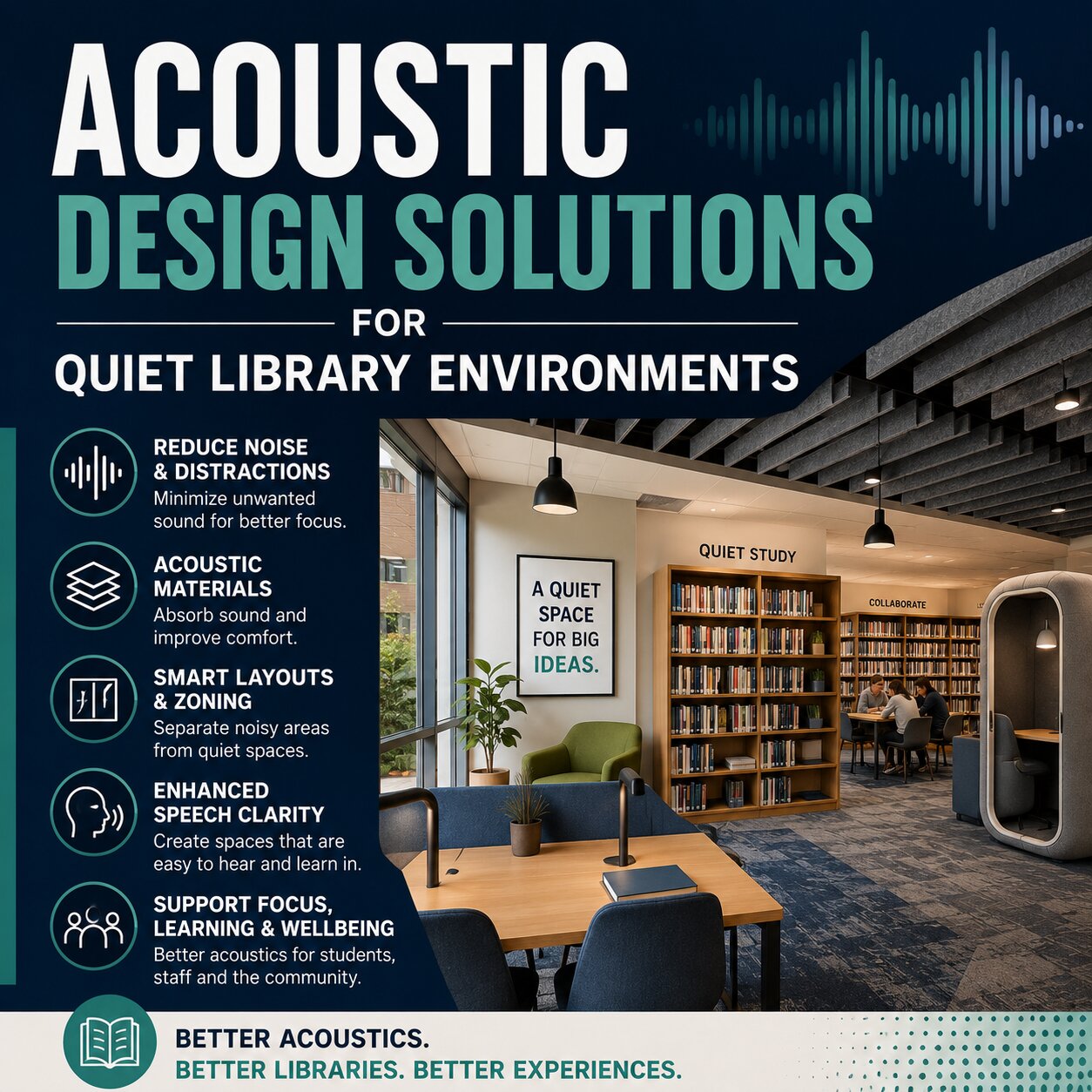
Acoustic design solutions help separate noisy and quiet activities through intelligent space planning and sound control materials. By carefully managing how sound travels within the building, libraries can accommodate diverse user needs without creating disruptive environments.
Proper acoustics also improve accessibility. Visitors with hearing sensitivities or auditory processing challenges benefit greatly from spaces with reduced echo and controlled background noise.
Acoustic materials that improve quiet library environments

One of the most effective ways to reduce noise in libraries is through the use of specialised acoustic materials. These materials absorb, diffuse, or block sound waves to improve comfort and reduce distractions.
Acoustic ceiling panels are commonly used to absorb sound reflections and minimise echo in large reading rooms. Soft flooring materials such as carpet tiles also reduce noise from footsteps and moving furniture.
Wall-mounted acoustic panels can significantly improve sound control in collaborative areas and study rooms. Many modern designs blend aesthetics with functionality, allowing libraries to maintain visually appealing interiors while improving acoustics.
Furniture also plays a role in sound management. Upholstered seating, acoustic booths, and fabric dividers help contain conversations and reduce sound transmission between spaces.
Glass partitions with acoustic properties are increasingly popular for separating meeting rooms and collaborative zones without making the library feel closed or cramped.
Smart layout planning for sound control
Acoustic design solutions are not limited to materials alone. The layout of a library plays a major role in controlling sound levels and preserving quiet library environments.
Strategic zoning allows libraries to separate silent study spaces from collaborative and social areas. Quiet reading rooms are often positioned away from entrances, cafés, and event spaces to minimise disruption.
Technology areas can also generate significant noise through printers, keyboards, and conversations. Placing these facilities in designated zones helps contain sound and improve comfort elsewhere in the building.
Libraries increasingly use enclosed study pods and private meeting rooms to support group work without affecting silent areas. These flexible spaces help maintain balance between community interaction and individual concentration.
Effective circulation planning further reduces noise by limiting congestion in key areas and directing visitor movement more efficiently throughout the building.
Technologies supporting modern acoustic design solutions

Modern technology is helping libraries manage acoustics more effectively than ever before. Advanced simulation software allows designers to model sound behaviour within a space before construction even begins.
Sound masking systems are also becoming more common in larger libraries. These systems introduce subtle background sounds that help reduce the impact of distracting conversations and sudden noises.
Smart HVAC systems can minimise mechanical noise while maintaining comfortable indoor air quality. Quiet ventilation design is especially important in reading rooms and study areas where low ambient noise levels are essential.
Digital booking systems for study rooms and collaborative spaces also contribute indirectly to noise management by helping distribute users more evenly throughout the facility.
Some modern libraries are even integrating adaptive acoustic technologies that adjust sound control measures depending on occupancy levels and activity patterns.
Creating comfortable spaces for learning and focus
The demand for peaceful learning environments remains strong despite the changing role of libraries in modern society. Acoustic design solutions help libraries evolve into multifunctional spaces without losing the calm atmosphere that visitors value most.
By combining intelligent layouts, sound-absorbing materials, modern technology, and thoughtful zoning strategies, libraries can successfully support both quiet study and community engagement within the same building.
As libraries continue adapting to digital transformation and changing user expectations, acoustic planning will remain a critical part of creating welcoming, productive, and comfortable public spaces for everyone.