Libraries are designed to provide safe, comfortable, and quiet environments for reading, studying, research, and community engagement. However, maintaining healthy indoor conditions has become increasingly important as modern buildings grow more energy-efficient and enclosed. This is where indoor air quality systems play a major role in modern library management.
Poor indoor air quality can negatively affect visitors, staff, archives, books, and electronic systems. Dust accumulation, humidity imbalance, mould growth, airborne pollutants, and insufficient ventilation can all create long-term problems inside library buildings.
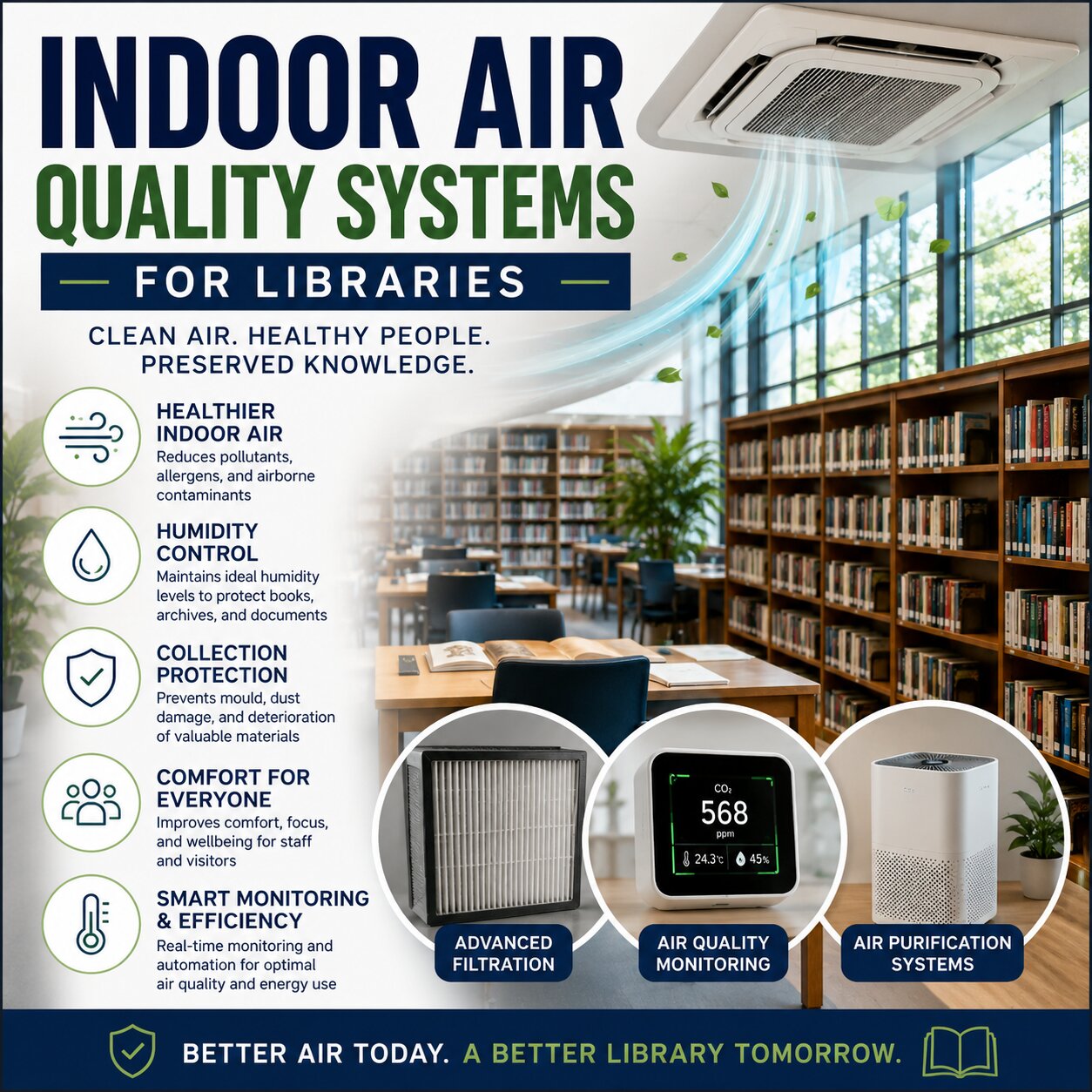
Modern indoor air quality systems help libraries maintain healthier environments while protecting valuable collections and improving overall visitor comfort.
Why indoor air quality matters in libraries

Libraries experience constant foot traffic throughout the day, which increases the amount of airborne particles circulating through the building. Dust, allergens, bacteria, and carbon dioxide levels can rise quickly without proper ventilation and filtration systems in place.
Indoor air quality also directly affects the preservation of books, historical records, and archived materials. Excess humidity can encourage mould growth and paper deterioration, while extremely dry conditions may damage fragile documents and bindings.
Staff and visitors are equally impacted by poor air conditions. Headaches, fatigue, respiratory irritation, and allergies can all become more common in poorly ventilated library spaces.
Modern indoor air quality systems help maintain balanced humidity levels, proper airflow, and cleaner air circulation throughout the facility.
Key components of indoor air quality systems

Modern libraries often combine multiple technologies to improve air quality and environmental stability throughout the building.
Common indoor air quality systems include:
- Advanced HVAC ventilation systems
- HEPA and fine-particle air filtration
- Humidity control systems
- Carbon dioxide monitoring sensors
- Smart building air monitoring platforms
- Air purification and sanitisation technologies
- Zoned airflow management systems
These systems work together to create safer indoor environments while protecting both occupants and library collections.
Many newer systems also integrate with smart building automation platforms, allowing facilities managers to monitor indoor conditions in real time and adjust settings automatically when conditions change.
Protecting archives and valuable collections

One of the most critical reasons for installing indoor air quality systems in libraries is long-term collection preservation. Rare books, manuscripts, newspapers, photographs, and archived records are highly sensitive to environmental fluctuations.
Humidity and temperature instability can accelerate deterioration over time. Excess moisture may lead to mould growth, while airborne pollutants can damage paper fibres, inks, and delicate materials.
Proper filtration systems help remove contaminants before they settle on collections, while humidity control systems maintain stable environmental conditions year-round.
For libraries housing historical archives or special collections, maintaining stable indoor air quality becomes a vital part of conservation strategy and asset protection.
Smart systems are improving library environments
Modern smart building technologies are transforming how libraries manage indoor environments. Advanced sensors can now monitor air quality levels continuously, detecting issues such as rising carbon dioxide concentrations, airborne particles, or humidity imbalances before they become serious problems.
Automated systems can then adjust airflow, filtration intensity, or humidity levels in response to changing occupancy levels throughout the day.
These technologies also improve operational efficiency by reducing unnecessary energy consumption. Instead of running systems at maximum output constantly, smart indoor air quality systems optimise performance based on real-time conditions inside the library.
As libraries continue evolving into multifunctional community spaces, indoor air quality systems will remain essential for creating healthier, safer, and more sustainable environments for visitors and staff alike.