Modern libraries are evolving into more sustainable, technology-driven spaces that support education, research, collaboration, and community engagement. One of the most important aspects of this transformation is the adoption of energy-efficient lighting systems for libraries. Proper lighting not only improves visibility and comfort for visitors but also helps facilities reduce operational costs and environmental impact.
Libraries often operate for long hours and contain multiple zones with different lighting requirements. Reading spaces, computer stations, archives, study areas, meeting rooms, and public corridors all require carefully planned illumination. Traditional lighting systems can consume significant amounts of electricity, especially in older facilities that still rely on outdated fluorescent or incandescent technology.
By investing in energy-efficient lighting systems for libraries, facility managers can create brighter, more comfortable environments while supporting sustainability goals and reducing maintenance expenses over time.
Why lighting efficiency matters in library environments

Lighting plays a major role in the functionality and atmosphere of a library. Visitors need clear and comfortable visibility for reading, studying, research, and computer use. Poor lighting can contribute to eye strain, discomfort, and reduced productivity.
Energy-efficient systems help libraries balance illumination quality with lower energy consumption. Modern LED technology provides excellent brightness while using far less electricity than older lighting systems. LEDs also generate less heat, which can reduce pressure on cooling systems in larger buildings.
Another important factor is the preservation of books, documents, and archival materials. Excessive heat and ultraviolet exposure from older lighting technologies can contribute to long-term deterioration. Many modern energy-efficient lighting systems reduce these risks while still maintaining high-quality visibility.
Sustainability has also become a growing priority for municipalities, educational institutions, and public facilities. Libraries adopting greener technologies demonstrate environmental responsibility while often benefiting from long-term financial savings.
Key features of modern library lighting systems

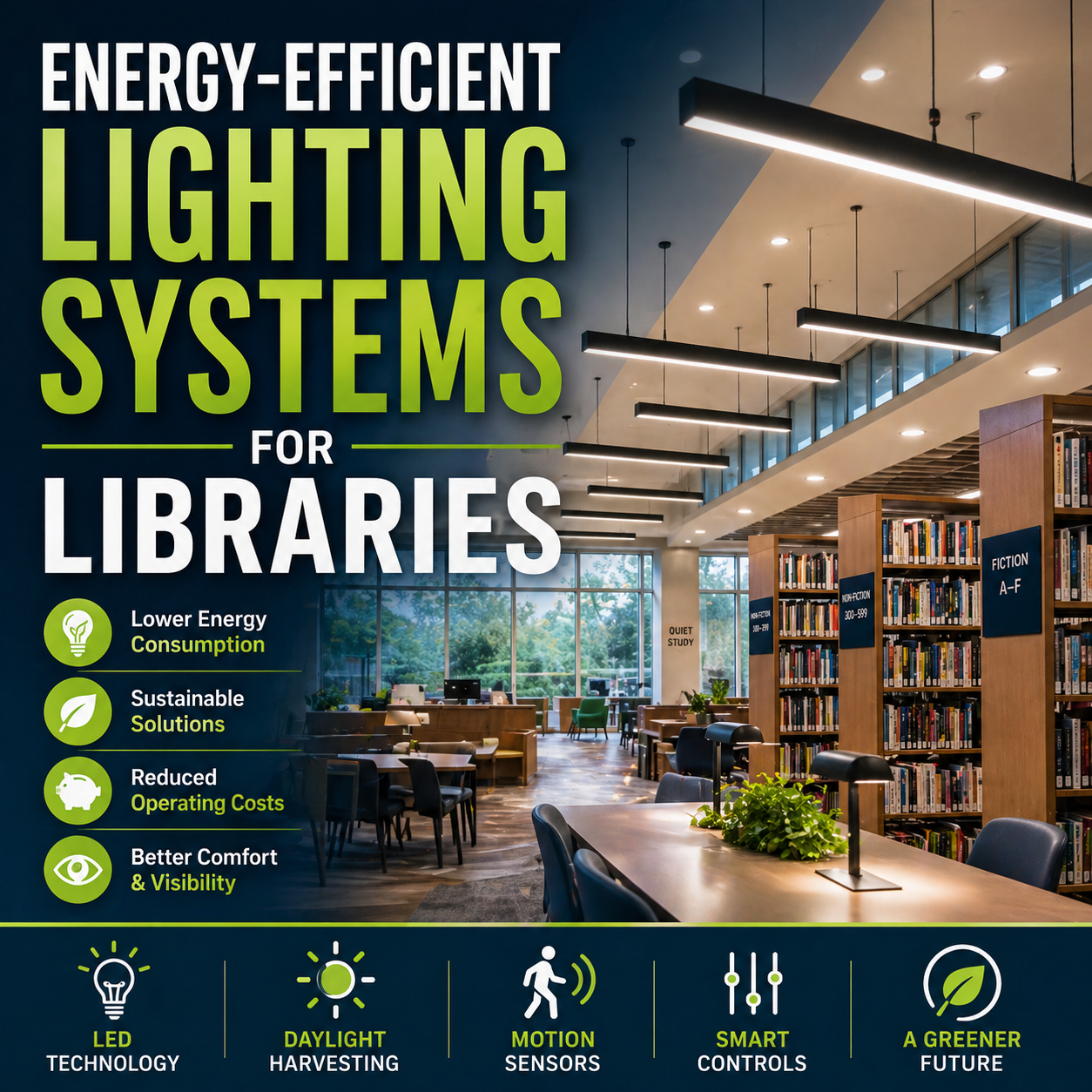
Modern energy-efficient lighting systems for libraries often combine multiple technologies and strategies to improve performance and reduce waste.
LED lighting remains one of the most important upgrades for libraries. These systems offer long operational lifespans, lower power consumption, and reduced maintenance requirements. Smart LED systems can also adjust brightness levels automatically based on natural daylight conditions.
Motion sensors and occupancy controls help reduce unnecessary electricity use in low-traffic areas. Lights can automatically dim or switch off when rooms or sections are unoccupied.
Lighting design also plays an important role in user comfort. Libraries benefit from balanced lighting layouts that minimise glare and shadows while creating welcoming study environments.
Common features found in modern systems include:
- LED lighting technology
- Daylight harvesting systems
- Motion and occupancy sensors
- Smart lighting controls
- Zoned lighting management
- Reduced glare and eye strain designs
- Emergency backup lighting integration
- Low-maintenance lighting infrastructure
These technologies work together to improve efficiency without sacrificing user experience.
Supporting sustainable library infrastructure
As libraries continue modernising their facilities, energy-efficient lighting systems for libraries are becoming a key part of broader sustainability initiatives. Efficient lighting contributes to reduced carbon emissions, lower operating costs, and more environmentally responsible public spaces.
Smart lighting infrastructure can also support future technology integration. Many modern systems connect with building management platforms, allowing facility teams to monitor energy consumption and optimise performance in real time.
Beyond the operational advantages, visitors also benefit from improved comfort and accessibility. Bright, evenly distributed lighting creates more welcoming spaces for students, researchers, and the wider community.
Sustainable infrastructure investments often produce long-term benefits that extend well beyond energy savings alone. For libraries, efficient lighting represents an opportunity to improve both environmental performance and visitor experience at the same time.
At Sustainable Systems Technologies, we continue exploring practical infrastructure solutions that support smarter, greener, and more efficient public facilities for the future.