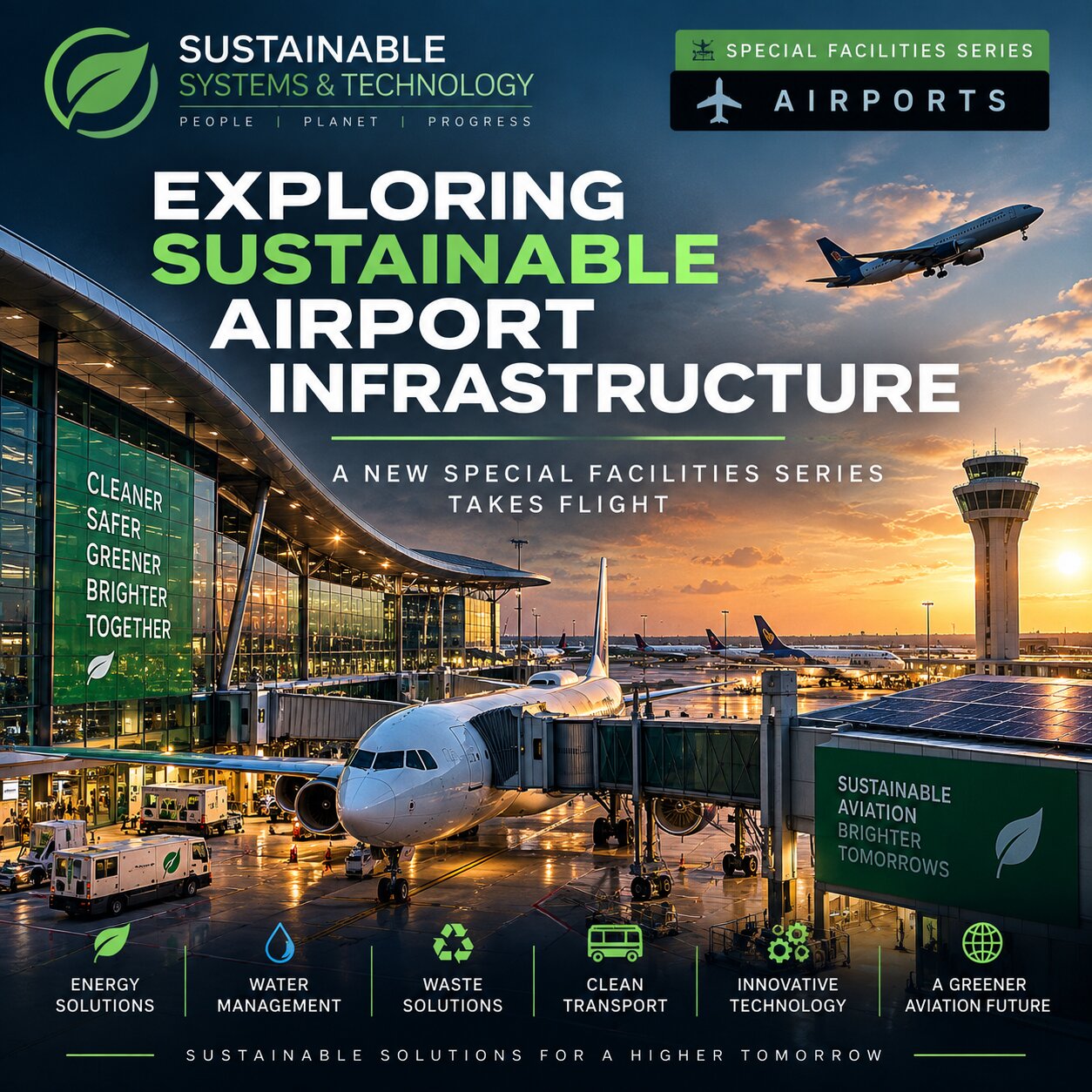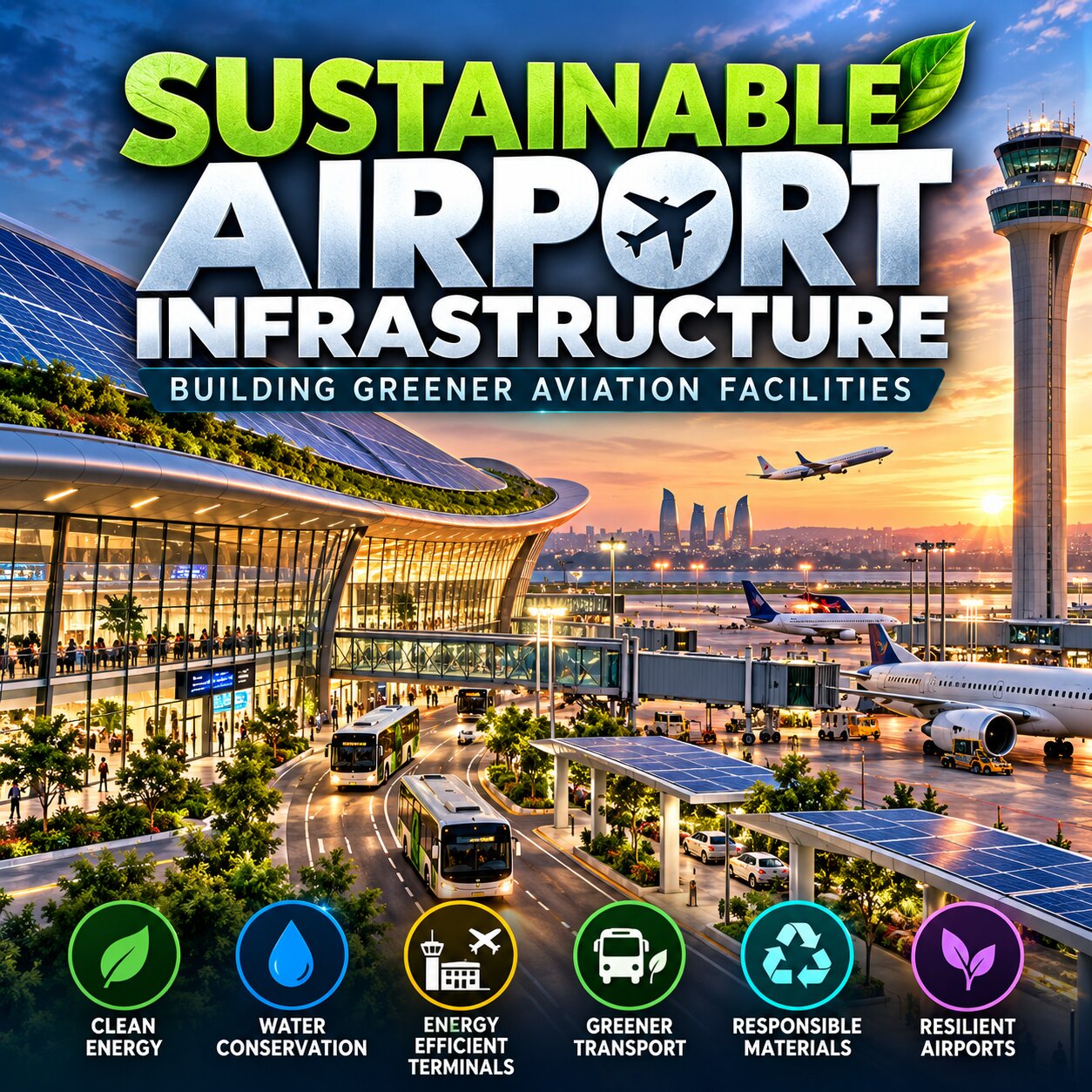
Airports are among the most complex facilities modern society operates. They function as transport hubs, commercial centres, logistics facilities, workplaces and gateways connecting cities with the rest of the world. Keeping all of those systems operational requires enormous quantities of energy, water, materials and supporting infrastructure. Sustainable airport infrastructure aims to reduce that environmental burden without compromising safety, capacity or reliability.
The challenge extends far beyond making aircraft themselves more efficient. While aviation emissions remain an important sustainability issue, airports have direct control over many systems operating on the ground.
From terminal buildings and renewable energy to water management and ground transportation, airports have numerous opportunities to improve their environmental performance.
Why Sustainable Airport Infrastructure Matters

An international airport can resemble a small city.
Thousands of passengers and employees may move through the facility every day. Restaurants prepare food, retailers operate stores, baggage systems transport luggage, security systems run continuously and enormous buildings require lighting, ventilation and temperature control.
Outside the terminal, the infrastructure expands even further.
Runways, taxiways, aprons, hangars, maintenance facilities, fuel systems, car parks, access roads, public transport connections and cargo terminals all contribute to an airport’s physical footprint.
Developing sustainable airport infrastructure therefore requires planners to consider the entire facility rather than treating individual buildings as isolated projects.
Energy-Efficient Airport Terminals
Terminal buildings provide one of the most obvious opportunities for sustainability improvements.
Large glass façades can introduce natural light, reducing dependence on artificial lighting during daylight hours. However, designers also need to consider the additional heat entering buildings through extensive glazing.
Modern building-management systems can automatically adjust lighting, ventilation and climate-control systems according to occupancy and environmental conditions.
LED lighting provides another relatively straightforward improvement. Airports contain thousands of lights operating across terminals, offices, car parks and operational areas. Improving lighting efficiency across such large facilities can significantly reduce electricity consumption.
Building insulation, efficient HVAC equipment and intelligent temperature management can further reduce the energy required to keep terminals comfortable.
Renewable Energy at Airports

Airports often possess something particularly valuable for renewable energy development: space.
Large terminal roofs, maintenance buildings, car parks and surrounding airport property can potentially accommodate solar photovoltaic installations.
Solar carports are especially interesting because they can perform several functions simultaneously. They generate electricity while providing shade for parked vehicles and can potentially support electric vehicle charging infrastructure.
Some airports may also investigate other renewable energy sources depending on local geography, weather conditions and regulatory requirements.
Renewable generation can form part of broader sustainable airport infrastructure strategies that reduce dependence on conventional electricity sources while improving long-term energy resilience.
Water Management and Conservation
Airports can consume substantial quantities of water.
Passengers use bathrooms and restaurants, cleaning teams maintain facilities, landscaping requires irrigation and numerous operational activities require reliable water supplies.
Water-efficient taps, toilets and other fixtures can reduce consumption inside terminals.
Rainwater harvesting may provide another opportunity. Captured water can potentially support irrigation, cleaning or other non-potable applications where regulations allow.
Stormwater management is particularly important because airports contain enormous paved surfaces.
Runways, taxiways, aprons, roads and car parks prevent rainfall from naturally soaking into the ground. Drainage infrastructure therefore needs to manage large quantities of runoff while preventing pollutants from entering surrounding waterways.
Sustainable Ground Transportation
An airport’s environmental footprint doesn’t stop at its perimeter fence.
Thousands of passengers and employees need to travel to and from the facility, making ground transportation an important part of sustainable airport infrastructure.
Several measures can help reduce this impact:
- Rail and rapid public transport connections
- Electric buses and airport shuttle fleets
- Electric vehicle charging facilities
- Safe pedestrian connections between nearby airport facilities
- Efficient taxi and ride-hailing collection systems
- Improved transport planning for airport employees
Reducing private vehicle dependence can simultaneously lower emissions and decrease pressure on airport roads and parking infrastructure.
Sustainable Materials and Construction
Airports continuously evolve.
Terminals are expanded, runways rehabilitated, taxiways modified and new facilities constructed as passenger and cargo requirements change.
Material selection therefore plays an important role in long-term sustainability.
Designers can consider recycled materials, locally sourced construction products and materials with lower embodied carbon. Existing buildings may also be renovated rather than demolished where practical.
Durability is equally important.
Infrastructure that survives longer before requiring major replacement can reduce resource consumption and construction waste over its operational life.
Waste Management Across Airport Facilities
Airports generate diverse waste streams from passengers, restaurants, retailers, offices, aircraft operations and maintenance facilities.
Effective waste-management programmes can separate recyclable materials while reducing the quantity sent to landfill.
Food waste presents another challenge, particularly at large international airports containing numerous restaurants and catering operations.
Construction and maintenance activities create additional waste streams requiring their own management strategies.
Successful sustainable airport infrastructure therefore requires coordination between airport operators, airlines, tenants, contractors and service providers rather than relying on passengers alone.
Resilient Airports for a Changing Climate
Sustainability is not only about reducing environmental impact. Infrastructure must also remain functional as environmental conditions change.
Airports located near coastlines may need to consider rising sea levels and storm surges. Facilities in hotter regions could face increasing cooling requirements and extreme temperatures capable of affecting infrastructure.
Heavy rainfall and flooding can disrupt ground operations, damage equipment and interrupt access routes.
Future airport planning therefore needs to combine environmental sustainability with climate resilience.
Building the Airports of Tomorrow
There is no single technology capable of making an airport sustainable.
Instead, sustainable airport infrastructure emerges from hundreds of interconnected decisions involving buildings, electricity, water, transportation, construction materials, waste management and long-term planning.
The scale of airports makes the challenge considerable, but it also creates enormous opportunities.
A small efficiency improvement repeated across thousands of lights, vehicles, passengers or square metres of terminal space can produce substantial results.
As our Sustainable Systems & Tech airport series continues, we’ll explore the individual systems that keep these enormous facilities operating and examine how technology, engineering and sustainable design can reshape them for the future.
The airport of tomorrow won’t simply move people around the world. It will need to demonstrate that increasingly complex transport infrastructure can operate more intelligently, efficiently and responsibly.