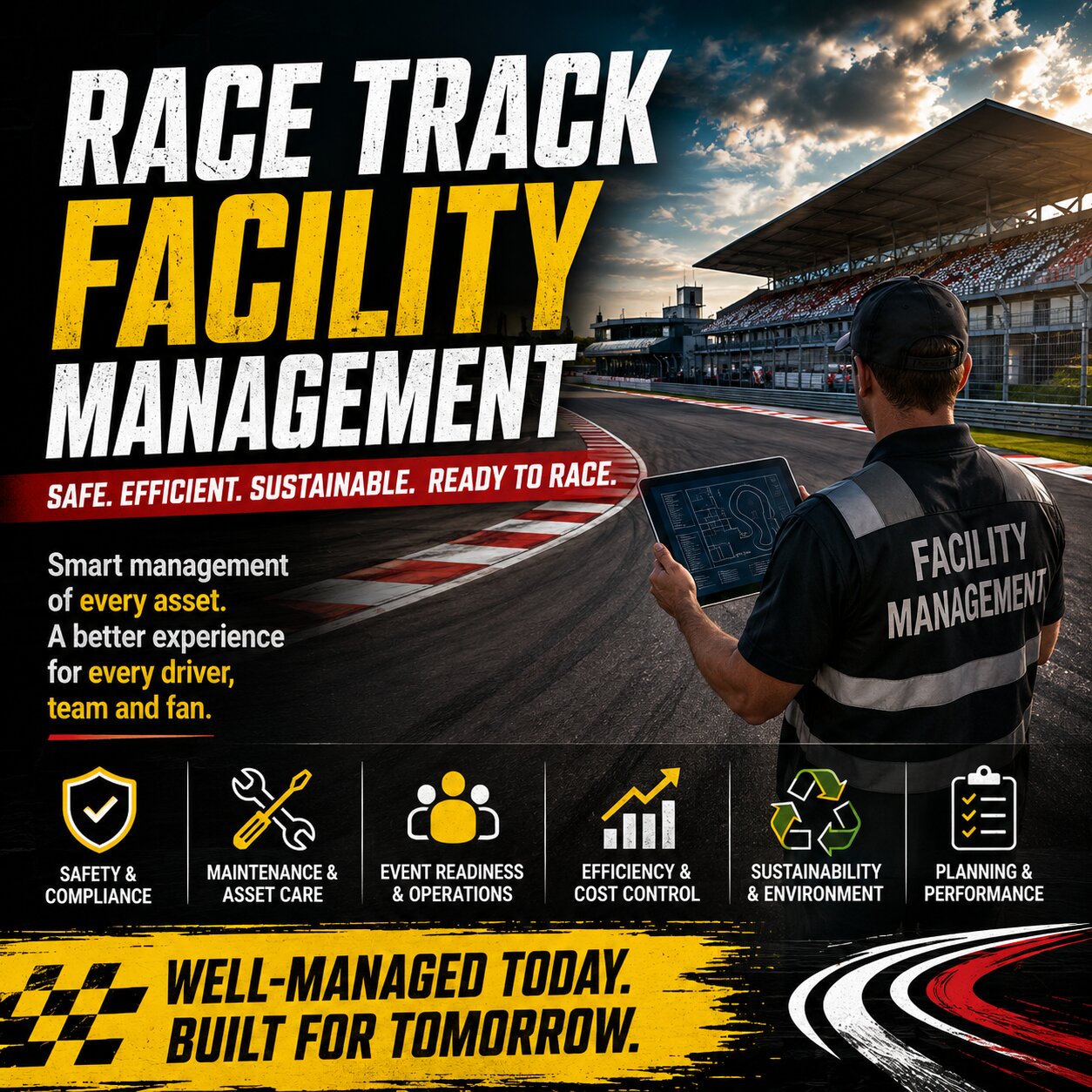
A modern motorsport venue is far more than a strip of asphalt surrounded by grandstands. It is a complex facility that must support racing teams, spectators, officials, emergency services, media crews, contractors, and commercial partners, often within a tightly controlled event schedule.
Effective Race Track Facility Management brings these different requirements together. It ensures that the venue remains safe, functional, compliant, financially sustainable, and ready to host everything from club racing to international motorsport events.
For race track owners and operators, strong facility management can improve the lifespan of infrastructure, reduce operating risks, enhance the visitor experience, and create more opportunities for year-round revenue.
Understanding Race Track Facility Management
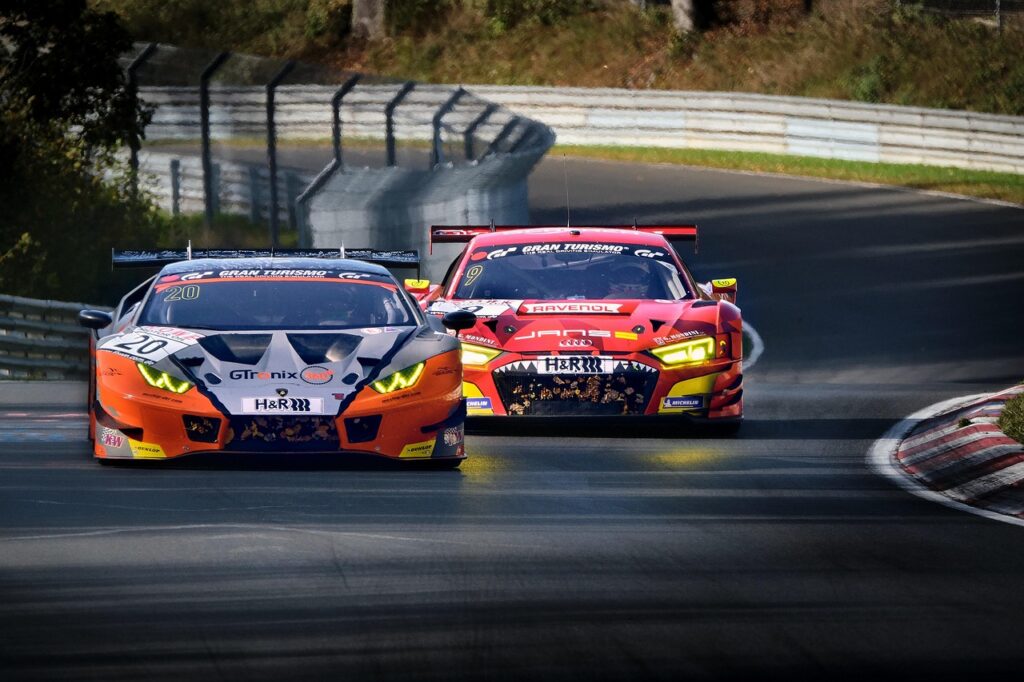
Race Track Facility Management covers the coordinated operation, maintenance, and improvement of the entire motorsport venue. This includes the circuit itself, pit buildings, paddock areas, garages, grandstands, hospitality suites, access roads, parking areas, utilities, safety systems, and public facilities.
Unlike ordinary commercial property management, race track operations must account for high-speed vehicles, large temporary crowds, noise, fuel handling, emergency access, and strict sporting regulations. Even a relatively small failure can disrupt an event or create a serious safety concern.
The facility management team therefore needs to work closely with race control, event organisers, security providers, engineering teams, cleaning contractors, medical services, and local authorities.
Success depends on planning well before an event begins and maintaining the venue consistently throughout the year.
Core Areas of Track Facility Management
The racing surface is naturally one of the most important assets. Track inspections should identify cracking, surface wear, drainage problems, damaged kerbs, loose debris, and areas where barriers or fencing may require attention.
Pit lanes, garages, paddocks, and service roads also require regular maintenance. These areas experience heavy vehicle movement, equipment handling, and temporary installations during events.
Building systems must remain reliable too. Electrical supply, water, sanitation, lighting, ventilation, fire protection, communications, and backup power can all affect whether an event runs smoothly.
A comprehensive facility management programme may include:
- Routine inspection and maintenance of track surfaces, kerbs, barriers, and fencing
- Management of garages, paddocks, pit buildings, and hospitality areas
- Testing of fire systems, emergency lighting, alarms, and evacuation routes
- Cleaning, waste handling, sanitation, and public-area preparation
- Utility monitoring, including water, electricity, fuel, and backup systems
- Contractor coordination before, during, and after events
- Asset registers, maintenance records, and lifecycle replacement planning
These tasks need to be documented and assigned clearly so that problems are corrected before they affect operations.
Safety, Compliance, and Event Readiness

Safety is central to Race Track Facility Management. Every part of the venue must support the safe movement of competitors, officials, staff, and visitors.
Emergency routes must remain unobstructed, fire equipment must be accessible, barriers must be correctly positioned, and public areas must be inspected before gates open. Temporary infrastructure such as stages, marquees, generators, signage, and catering points should also be checked.
Compliance requirements may differ depending on the level of competition, local building regulations, environmental permissions, occupational health and safety rules, and the standards of the relevant motorsport authority.
Event readiness inspections help bring these requirements together. A structured checklist can confirm that critical facilities are available, hazards have been addressed, and responsible teams know how to respond if something goes wrong.
The strongest approach is preventative rather than reactive. Fixing a problem during a live event is usually more expensive, disruptive, and dangerous than identifying it beforehand.
Improving the Spectator and Competitor Experience
Facility management has a direct influence on how people experience a race venue. Visitors may remember the racing, but they also notice parking delays, dirty toilets, poor signage, limited seating, long queues, or inaccessible facilities.
Clear pedestrian routes, reliable amenities, visible information, shaded areas, clean public spaces, and efficient entry systems can significantly improve visitor satisfaction.
Competitors have equally important needs. Teams require functional garages, secure paddocks, suitable power connections, clean working spaces, reliable communications, and efficient access to technical and administrative services.
A well-managed venue supports both groups without allowing their activities to interfere with each other. Careful zoning and movement planning can separate race operations, commercial deliveries, emergency vehicles, spectators, and team traffic.
This improves safety while helping the entire event feel more professional.
Sustainability and Long-Term Asset Performance
Race tracks can consume significant amounts of electricity, water, fuel, and materials. They can also generate noise, wastewater, tyre waste, packaging, and large volumes of general refuse during major events.
Sustainable Race Track Facility Management should therefore include energy efficiency, water conservation, responsible procurement, recycling, stormwater control, and environmental monitoring.
Solar installations, LED lighting, low-flow fixtures, smart meters, rainwater harvesting, waste separation stations, and electric vehicle infrastructure may all contribute to lower operating costs and environmental impact.
Asset lifecycle planning is equally important. Instead of waiting for expensive systems to fail, operators can forecast when surfaces, roofs, pumps, electrical equipment, barriers, and public facilities will need refurbishment or replacement.
This allows capital spending to be prioritised and helps protect the venue’s long-term value.
Building a Better-Managed Motorsport Venue
Successful Race Track Facility Management requires a combination of property expertise, technical knowledge, event planning, safety awareness, and financial control.
The best results come from treating the race track as an active asset throughout the year, not merely preparing it shortly before an event. Regular inspections, preventive maintenance, accurate records, trained teams, and clear operating procedures create a far more reliable venue.
Strong facility management can also support new revenue opportunities. A well-maintained circuit may host driver training, corporate events, product launches, exhibitions, festivals, filming, and community activities when major racing is not taking place.
For owners and operators, investing in professional Race Track Facility Management is ultimately an investment in safety, reputation, operational continuity, and the future commercial potential of the venue.