Recycling centres have evolved significantly over the past few decades, yet many still rely on long conveyor belts, manual inspections and sequential sorting systems that struggle with increasingly complex waste streams. As artificial intelligence and automation continue to mature, there is an opportunity to rethink how recyclable materials move through an entire facility rather than simply improving individual sorting machines.
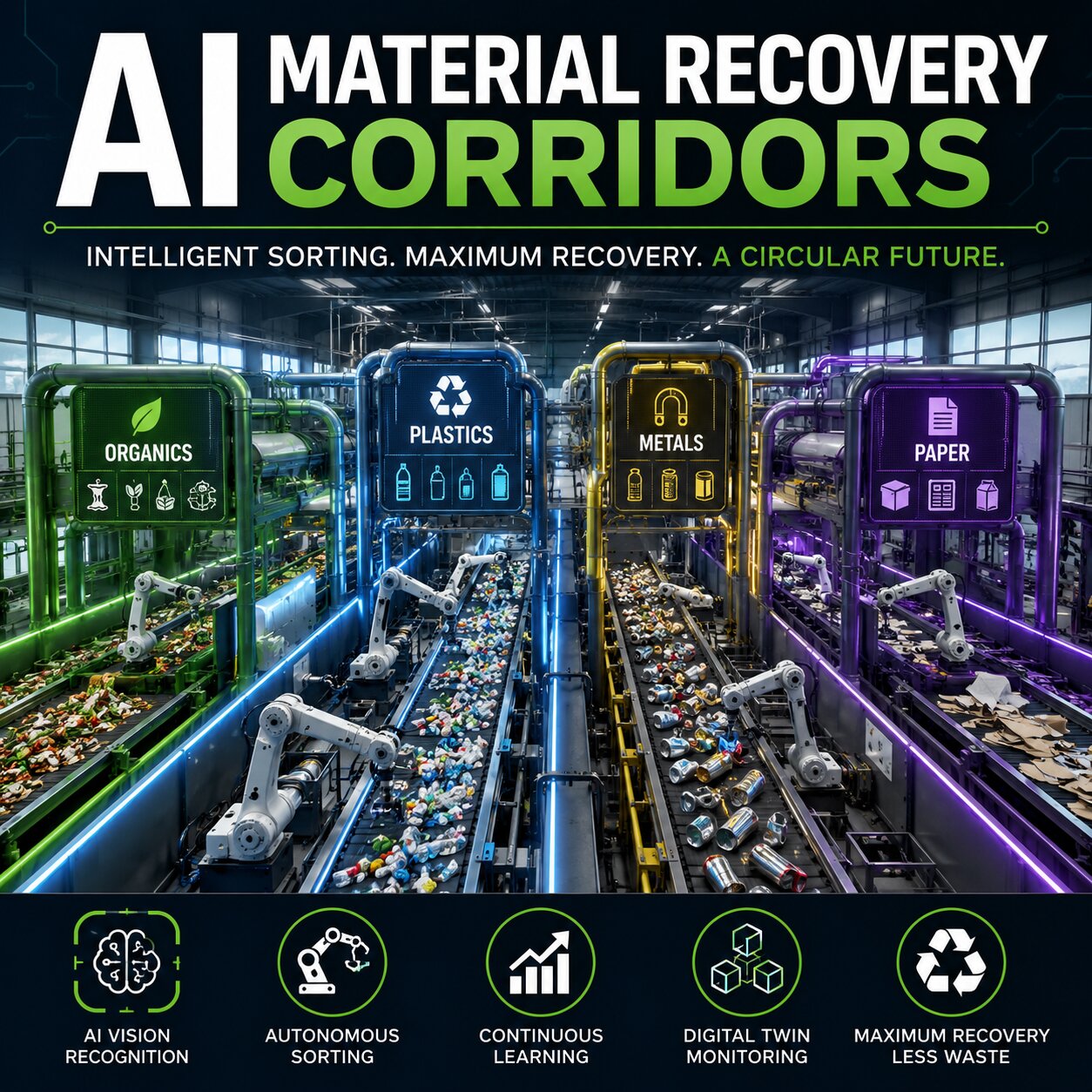
Our proposed concept, AI Material Recovery Corridors, reimagines the recycling centre as a network of intelligent processing corridors instead of traditional production lines. Each corridor specialises in analysing, identifying and recovering specific material types while continuously learning from operational data. The result is a smarter, more adaptable facility capable of increasing recovery rates, reducing contamination and improving overall operational efficiency.
Rethinking Traditional Material Flow
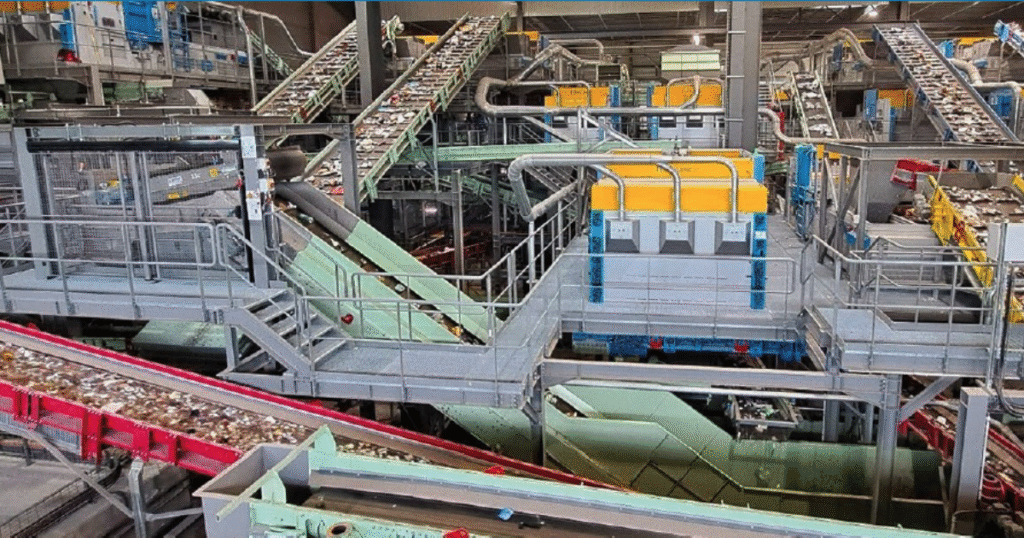
Conventional recycling plants typically process all incoming materials along one primary conveyor before diverting items to various separation systems. While effective, this linear approach can create bottlenecks whenever contamination levels increase or equipment requires maintenance.
AI Material Recovery Corridors replace this single processing pathway with multiple intelligent corridors that operate simultaneously. Each corridor focuses on a dedicated category such as plastics, metals, paper products, construction waste or electronic components.
Advanced computer vision systems positioned throughout each corridor would analyse every object entering the system. Artificial intelligence models could evaluate material composition, dimensions, condition, contamination levels and recovery potential within milliseconds before directing each item toward the most appropriate processing route.
Rather than forcing every recyclable through identical equipment, the AI Material Recovery Corridors facility adapts dynamically to the waste entering the building, creating a more efficient and flexible operation.
AI Material Recovery Corridors That Learn Continuously
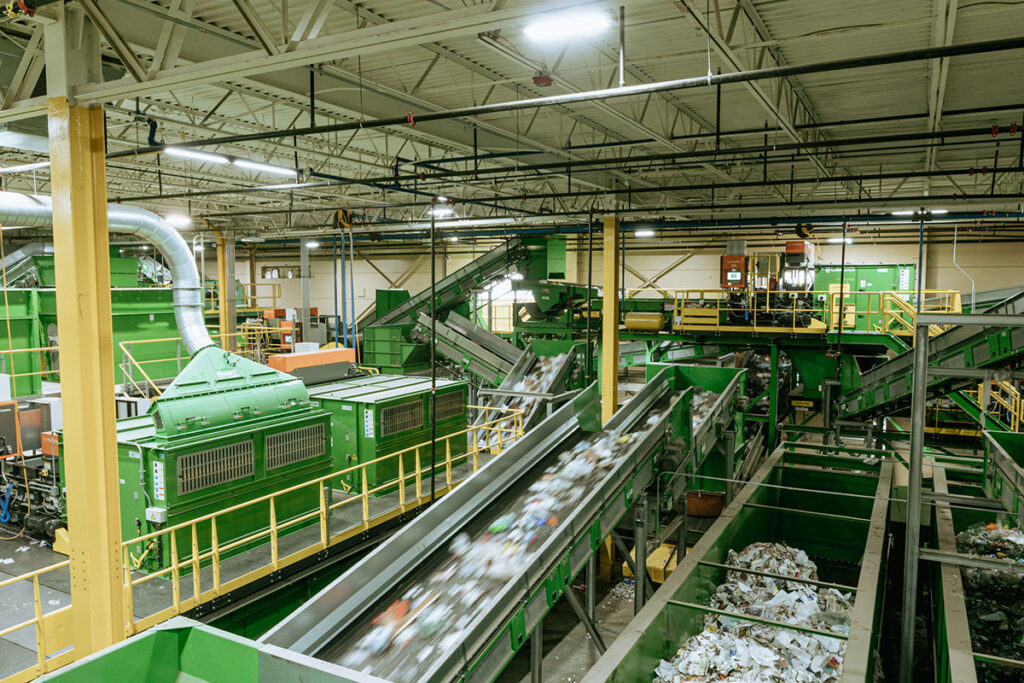
Each AI Material Recovery Corridor functions as an independent yet connected processing environment. Machine learning algorithms constantly analyse operational data, allowing the system to improve sorting accuracy over time.
As recyclable materials move through a corridor, several intelligent technologies work together. High-speed cameras classify objects, robotic arms recover valuable materials, air jet systems separate lightweight items, magnetic and eddy current systems remove metals, while sensor arrays monitor moisture, contamination and material quality.
The corridors also communicate with one another. If one corridor reaches capacity or detects an unusual waste stream, materials can automatically be redirected to another suitable corridor, minimising downtime and maintaining steady throughput across the facility.
Key features of the concept include:
- Dedicated AI corridors specialising in different material categories.
- Real-time computer vision and material recognition.
- Autonomous routing based on contamination and recovery value.
- Continuous machine learning to improve sorting accuracy.
- Digital twins monitoring corridor performance and maintenance requirements.
Building A Truly Adaptive Recycling Facility
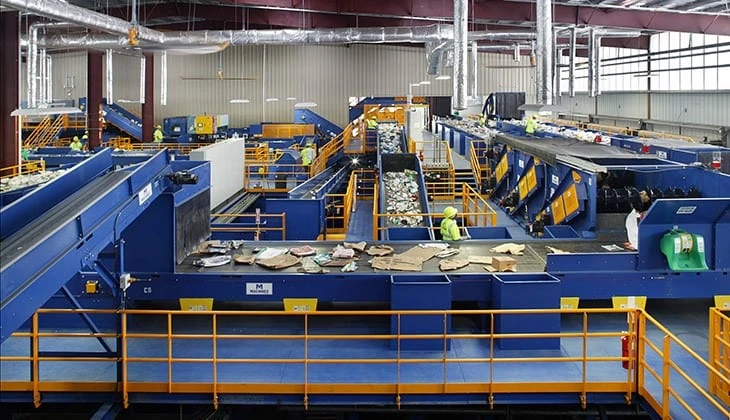
One of the greatest advantages of AI Material Recovery Corridors is adaptability. Recycling centres must continually respond to changing packaging designs, emerging materials and evolving consumer products. Traditional equipment often requires expensive upgrades whenever waste compositions change.
An AI-driven corridor system can update its recognition models through software rather than extensive hardware modifications. New packaging materials, composite products and recyclable innovations could be incorporated into the system by training the artificial intelligence to recognise additional characteristics.
Predictive maintenance would further improve reliability by analysing equipment performance across every corridor. Sensors monitoring vibration, temperature, motor loads and operational efficiency could identify potential failures long before breakdowns occur, allowing maintenance teams to intervene proactively.
This adaptive approach enables recycling centres to remain technologically relevant while reducing operational interruptions and extending equipment life cycles.
A Vision For The Recycling Centre Of Tomorrow
AI Material Recovery Corridors represent more than an equipment upgrade. They propose an entirely new philosophy for material recovery infrastructure, where intelligent processing replaces rigid production lines and facilities continuously improve through artificial intelligence.
As urban populations grow and waste streams become increasingly diverse, future recycling centres will require systems capable of making millions of rapid decisions every day. Intelligent corridors offer a scalable framework that can evolve alongside advances in robotics, machine learning and sustainable engineering.
While currently a conceptual design, AI Material Recovery Corridors illustrate how tomorrow’s recycling centres could become highly adaptive resource recovery hubs that maximise recycling efficiency, minimise contamination and support the broader transition towards a truly circular economy.