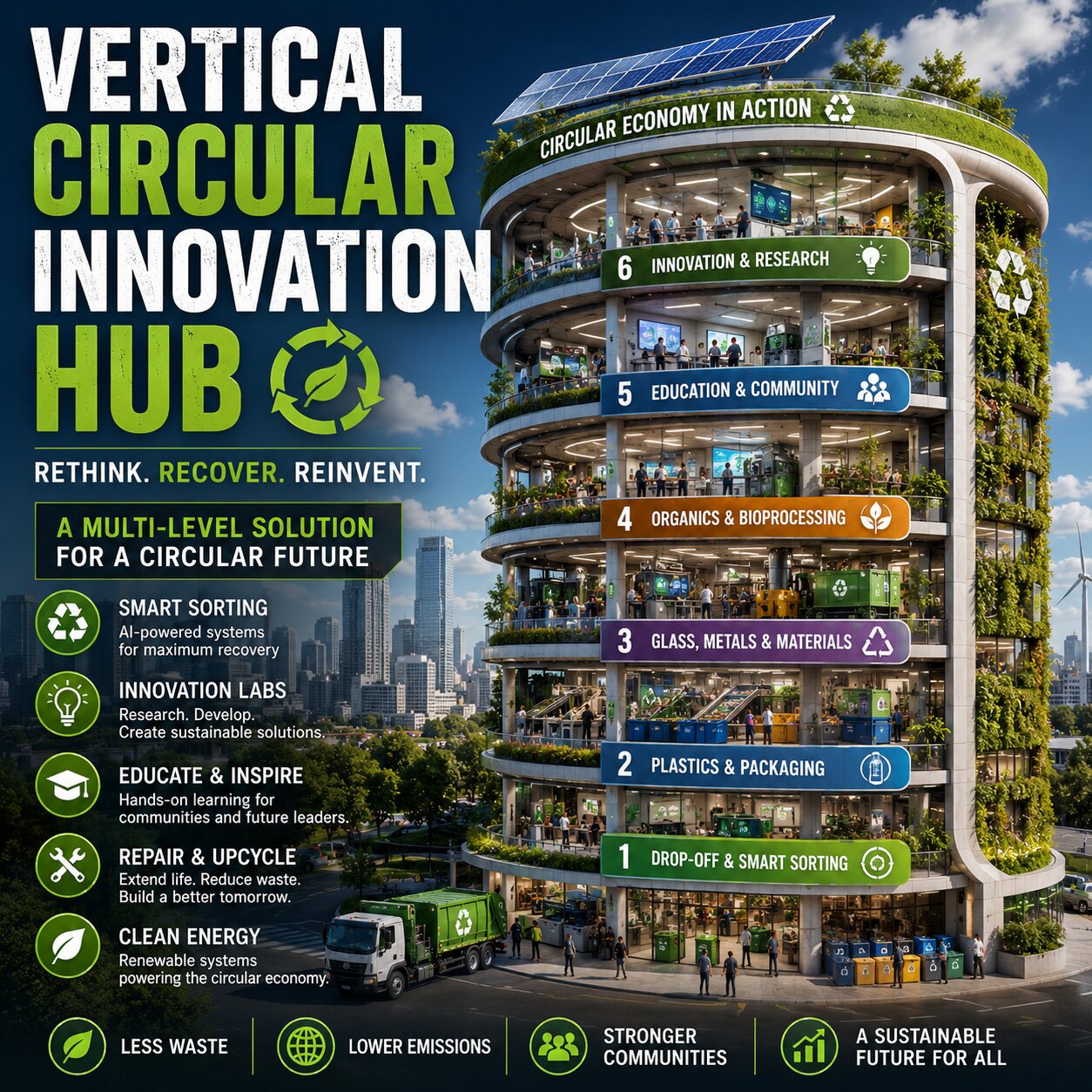
As cities continue to grow while available land becomes increasingly limited, the need for smarter recycling infrastructure has never been greater. The Vertical Circular Innovation Hub is a concept that reimagines traditional recycling centres by building upwards instead of outwards, creating a multi-storey facility where every level contributes to the circular economy.
Rather than simply collecting waste, these hubs would become centres of innovation, education and resource recovery. By combining advanced technology with community engagement, they could transform how cities manage materials while reducing environmental impact.
The Vertical Circular Innovation Hub represents a bold vision for making recycling more efficient, accessible and sustainable.
A Multi-Level Approach to Resource Recovery
Unlike conventional recycling facilities, a Vertical Circular Innovation Hub would dedicate different floors to specialised material streams and processing technologies.
The ground level would focus on public drop-off zones and intelligent sorting systems, allowing residents and businesses to quickly dispose of recyclable materials. Automated conveyors would transport materials to upper levels for detailed processing.
Separate floors could be dedicated to plastics, metals, electronics, glass, construction materials and organic waste. This organised approach improves workflow while reducing cross-contamination between recyclable materials.
Rooftop solar panels, rainwater harvesting systems and energy-efficient building technologies would further reduce the environmental footprint of the facility itself.
Innovation Beyond Recycling

The true strength of the Vertical Circular Innovation Hub lies in expanding beyond simple waste management.
Each hub could include research laboratories where universities, start-ups and engineers develop new recycling methods and sustainable materials. Prototype manufacturing spaces would allow innovators to test products made entirely from recovered resources.
Educational facilities could welcome schools, businesses and community organisations, giving visitors first-hand experience of how the circular economy works.
Key features could include:
- AI-powered material identification and sorting
- Public education and training facilities
- Research and product development laboratories
- Community repair and upcycling workshops
- Renewable energy systems integrated throughout the building
Strengthening Local Circular Economies
Instead of transporting recyclable materials long distances, Vertical Circular Innovation Hubs could process many resources close to where they are collected. This reduces transportation costs, emissions and delays while creating new local employment opportunities.
Recovered materials could be supplied directly to nearby manufacturers, creating shorter supply chains and strengthening regional industries. Small businesses could also purchase recycled materials for product development, encouraging innovation across multiple sectors.
The hubs would become valuable community assets, connecting citizens, researchers, manufacturers and environmental organisations within a shared ecosystem focused on resource recovery.
As cities continue pursuing sustainability goals, facilities like the Vertical Circular Innovation Hub could demonstrate how modern engineering, artificial intelligence and community participation can work together to build cleaner, more resilient urban environments.