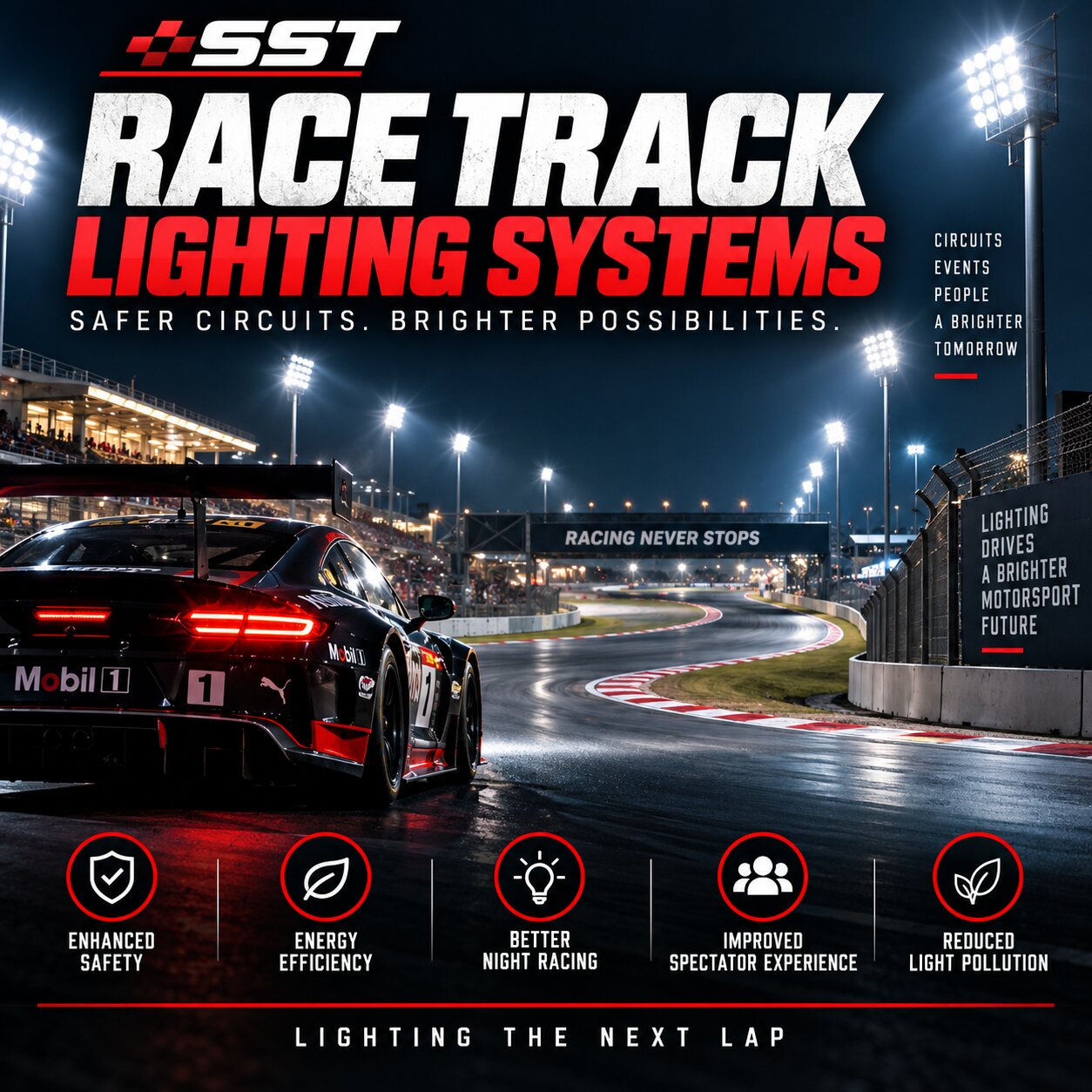
Modern motorsport does not stop when the sun goes down. From endurance races continuing deep into the night to evening events deliberately scheduled beneath floodlights, race track lighting systems have become an important part of circuit infrastructure.
Effective lighting involves far more than installing powerful floodlights around a track. Circuit operators need to consider driver visibility, glare, shadows, spectator areas, television coverage, energy consumption and the environmental effects of artificial light.
When designed correctly, race track lighting can improve safety while allowing circuits to operate more efficiently and host a wider variety of events.
Why Race Track Lighting Systems Matter
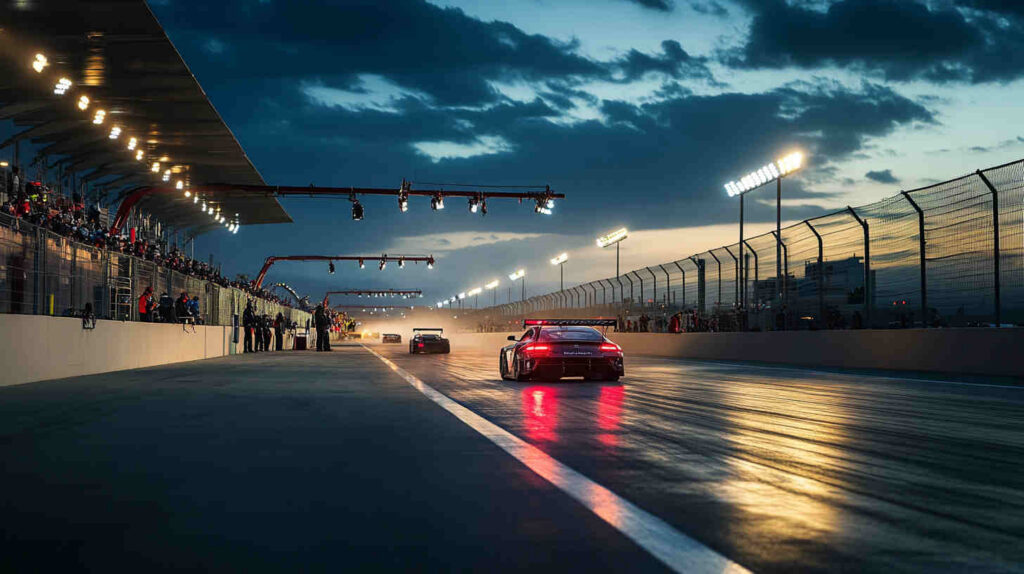
Drivers travelling at racing speeds need consistent visibility. Sudden transitions between brightly illuminated sections and darker areas can make it more difficult for their eyes to adapt, particularly when approaching braking zones, corners or elevation changes.
Lighting design should therefore focus on uniform coverage rather than simply maximum brightness. Track surfaces, kerbs, barriers, marshal posts and other important features need to remain clearly visible without excessive glare affecting competitors.
Emergency operations also depend on reliable illumination. Marshal stations, pit lanes, paddocks, medical facilities and evacuation routes may require dedicated lighting independent of the main circuit system.
LED Technology and Energy Efficiency
LED technology has transformed large-scale outdoor lighting because it can deliver strong illumination while consuming considerably less electricity than many older lighting technologies.
For motorsport facilities, modern LED systems can also provide greater control over where and when light is used. Different areas of the venue can be operated independently, allowing circuits to illuminate only the infrastructure required for a particular event or activity.
Smart controls can further reduce unnecessary consumption by adjusting lighting schedules and output levels. When combined with renewable electricity generation or battery storage, efficient race track lighting systems can form part of a broader circuit sustainability strategy.
Reducing Glare and Light Pollution
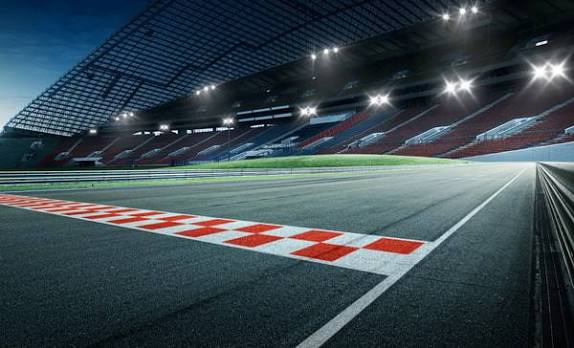
Powerful circuit lighting can create problems beyond the track boundary. Poorly positioned fixtures may illuminate neighbouring properties, contribute to skyglow and disrupt nocturnal wildlife.
Directional luminaires, shielding and carefully calculated mounting angles can help concentrate illumination where it is actually required. Circuit designers should also consider the colour temperature and intensity of lighting, particularly near environmentally sensitive areas.
A practical lighting strategy may include:
- Directing fixtures towards the racing surface rather than surrounding land.
- Using shielding to reduce upward and sideways light spill.
- Creating lower-light buffer zones near sensitive habitats.
- Dimming or switching off unnecessary lighting after events.
- Monitoring neighbouring areas for unwanted light intrusion.
These measures can reduce environmental disturbance without compromising the safety requirements of motorsport operations.
Lighting the Pit Lane, Paddock and Spectator Areas
The racing surface is only one part of the facility requiring illumination. Pit crews need excellent visibility when servicing vehicles, while paddocks, garages and technical inspection areas must support safe working conditions.
Spectator areas present different requirements. Grandstands, stairways, pedestrian routes, parking areas and entrances should provide enough illumination for people to move safely without competing visually with the track itself.
Lighting these areas independently can improve efficiency. A circuit does not necessarily need its full competition lighting system operating when only paddock activities, maintenance work or smaller events are taking place.
Supporting Broadcasts and Night Racing
Night racing can create spectacular television imagery, but broadcast requirements add another layer to lighting design. Cameras need consistent illumination to capture fast-moving vehicles without excessive flicker, harsh shadows or major exposure differences around the circuit.
Modern lighting systems can therefore serve several purposes simultaneously. They support drivers, officials, spectators, trackside workers and broadcasters while helping venues extend their usable operating hours.
This can create new commercial opportunities through evening races, testing sessions, driving experiences and other activities that would otherwise be limited by daylight.
Building More Sustainable Race Track Lighting Systems
The best race track lighting systems balance performance with efficiency and environmental responsibility. Simply flooding an entire venue with artificial light is neither an efficient nor necessarily effective solution.
Instead, circuits can combine LED fixtures, targeted illumination, intelligent controls and careful environmental planning to provide light precisely where it is needed.
As motorsport venues continue modernising their infrastructure, lighting offers a clear opportunity to reduce electricity consumption while improving operational flexibility. A well-designed system can support safer racing, better spectator experiences and spectacular night events without ignoring the communities and ecosystems surrounding the circuit.
For modern motorsport facilities, sustainable lighting is ultimately about achieving something deceptively simple: putting the right amount of light in the right place at the right time.