As businesses and communities search for more sustainable ways of using resources, the concept of the circular economy has become increasingly important. Rather than following the traditional pattern of making, using and discarding products, a circular economy aims to reduce waste by keeping materials in use for as long as possible. It is an approach that benefits both the environment and the economy.
Why Circular Economy Principles Matter
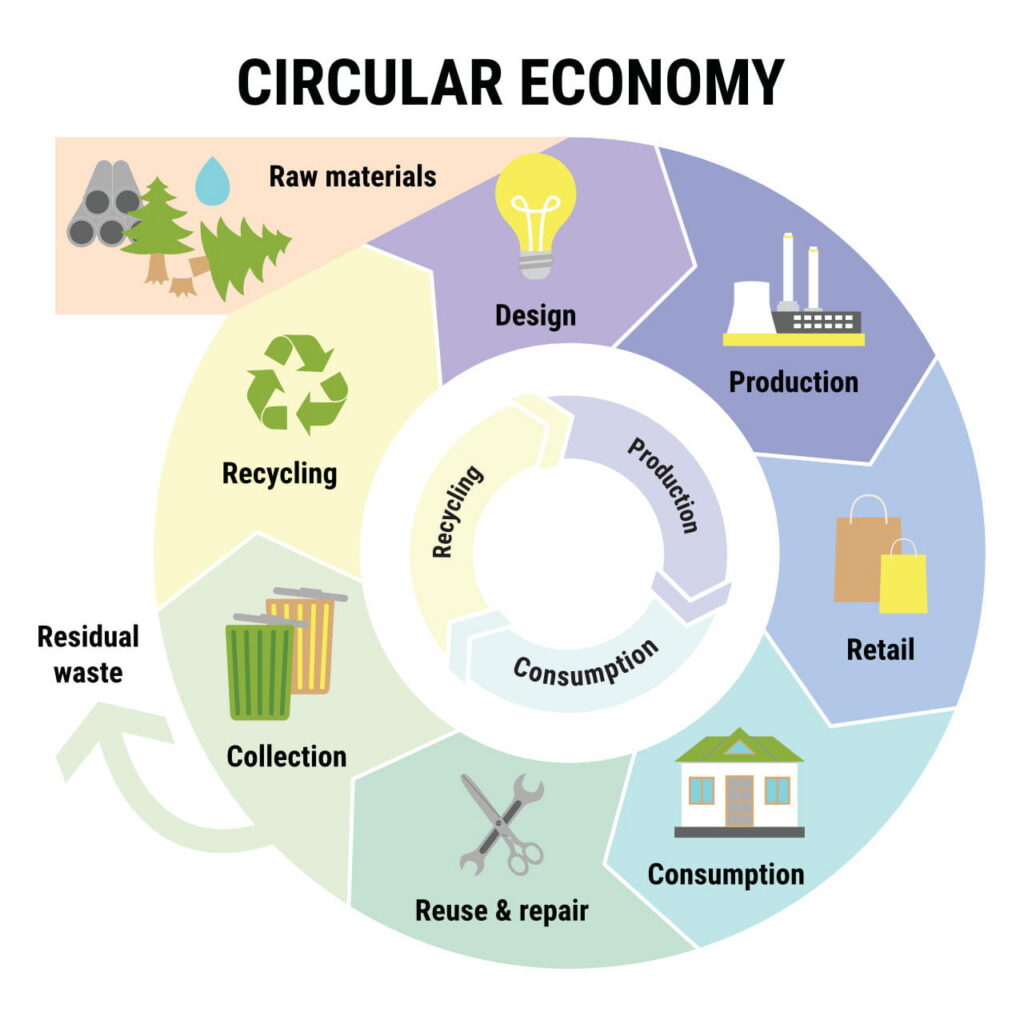
A circular economy is an economic system designed to minimise waste and maximise the value of resources. Instead of disposing of products after they reach the end of their initial use, materials are repaired, reused, refurbished or recycled so they can continue serving a purpose.
Traditional linear economies typically follow a simple path of extracting raw materials, manufacturing products, using them and then sending them to landfill. This process consumes large amounts of natural resources while creating significant waste and pollution.
In contrast, circular economy principles encourage smarter product design, longer product lifespans and improved recycling systems. Manufacturers may design products that are easier to repair, replace individual components or recover valuable materials at the end of a product’s life.
The construction industry is increasingly adopting circular economy practices through the reuse of building materials, responsible demolition methods and sustainable design principles. Similar approaches are being applied across industries including manufacturing, technology, packaging and consumer goods.
By reducing waste and making better use of existing resources, organisations can lower costs, improve environmental performance and contribute to a more sustainable future.
Final Thoughts
A circular economy represents a shift in how society thinks about products and resources. By focusing on reuse, repair and recycling instead of disposal, businesses and individuals can help create a future where economic growth and environmental responsibility work hand in hand.