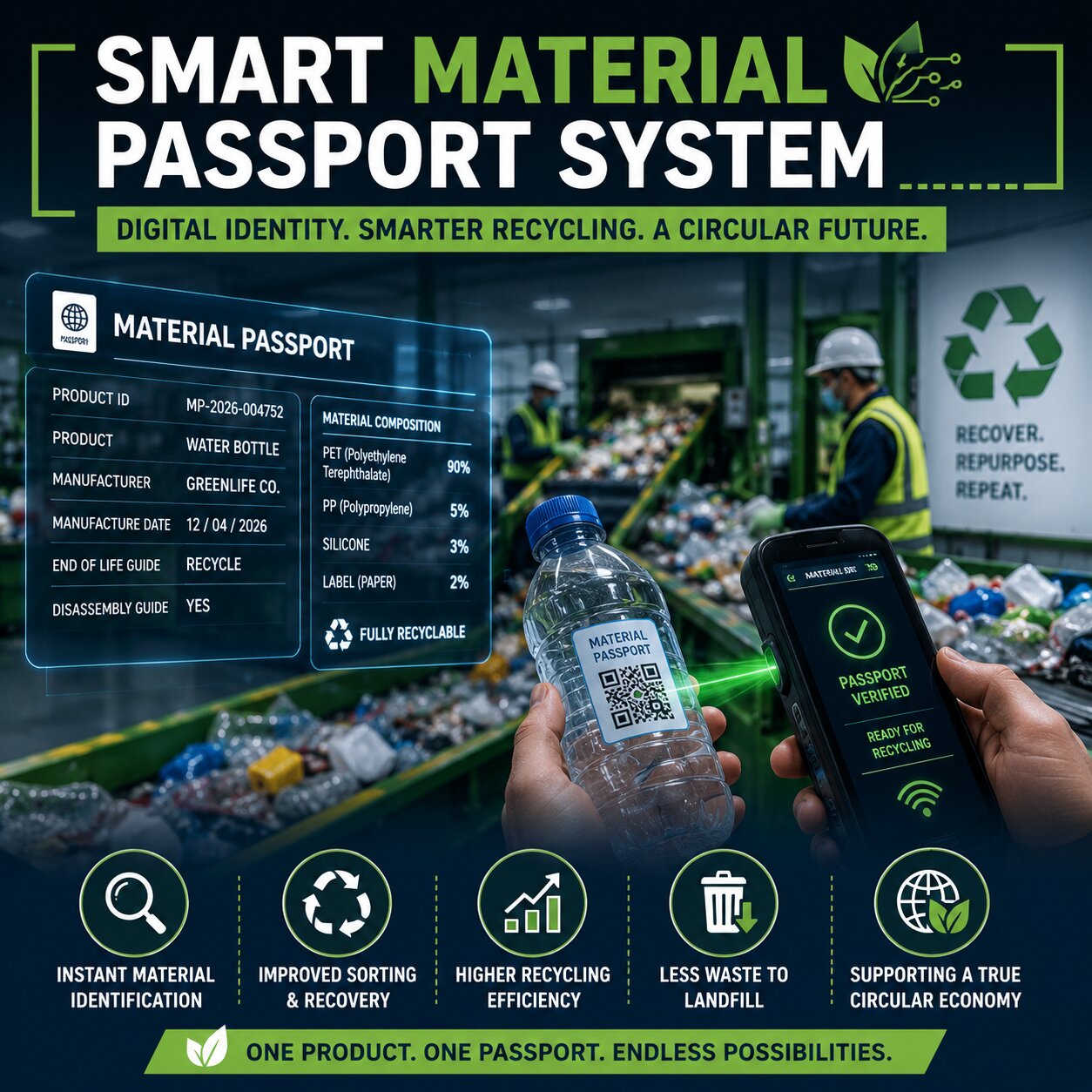
As industries embrace the circular economy, one challenge continues to limit recycling efficiency: identifying exactly what products are made from. Many items contain multiple materials, making sorting and recovery time-consuming and costly. A Smart Material Passport System could change that by giving every manufactured product a digital identity that records its material composition throughout its entire lifecycle.
Rather than relying solely on visual inspections or complex sorting technology, recycling facilities could instantly access detailed information about an item’s materials, improving recovery rates and reducing contamination.
What Is a Smart Material Passport?
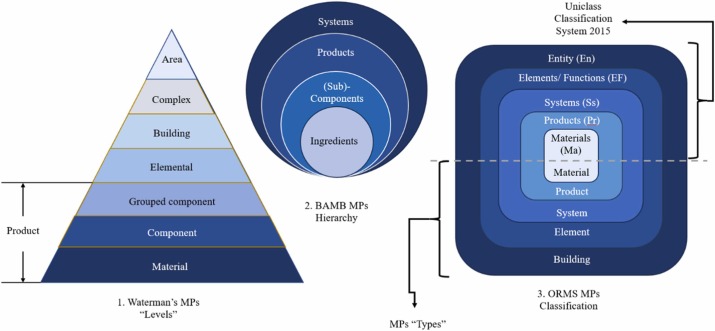
A Smart Material Passport is a digital record assigned to a product during manufacturing. Linked through technologies such as QR codes, RFID tags, NFC chips, or future digital identifiers, the passport would store valuable information about the product’s components.
Manufacturers could record the types of plastics, metals, glass, textiles, electronic components, adhesives, coatings, and other materials used during production.
When the product reaches the end of its useful life, recycling facilities would simply scan its passport to determine the safest and most efficient recycling process.
Improving Recycling Efficiency
Today’s recycling systems often depend on manual sorting, optical scanners, magnets, and other technologies to identify materials. While highly effective, these methods can still struggle with complex products made from mixed materials.
A Smart Material Passport System could provide recycling operators with immediate access to accurate material data, allowing automated equipment to separate components with far greater precision.
This would reduce contamination, improve material purity, increase recycling yields, and lower processing costs across the recycling industry.
Key Benefits of a Smart Material Passport System
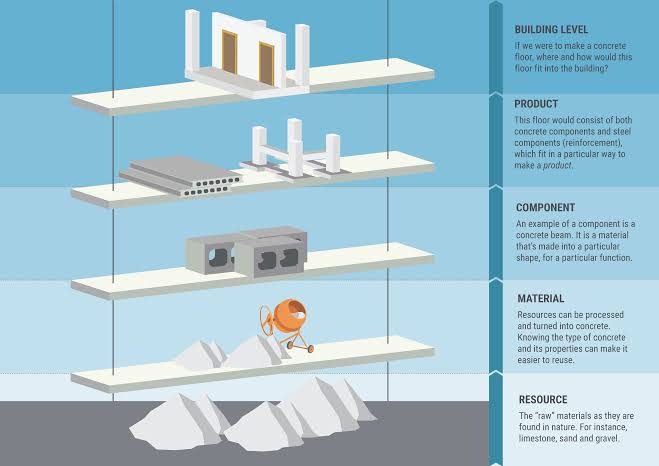
A successful Smart Material Passport System could offer numerous advantages, including:
- Faster identification of recyclable materials.
- Improved recovery of valuable resources.
- Reduced contamination during sorting.
- Better support for automated recycling systems.
- Easier repair, refurbishment, and remanufacturing.
- Greater transparency throughout a product’s lifecycle.
Together, these benefits would help maximise resource recovery while reducing waste sent to landfill.
Building a More Circular Future
The Smart Material Passport System represents an opportunity to rethink how products are designed, used, and recycled. By connecting manufacturers, consumers, repair specialists, and recycling facilities through shared material information, valuable resources can remain in circulation for far longer.
Although implementing such a system would require collaboration across industries and governments, its long-term benefits could be significant. As part of a smarter circular economy, digital material passports have the potential to make recycling more efficient, sustainable, and economically viable for future generations.