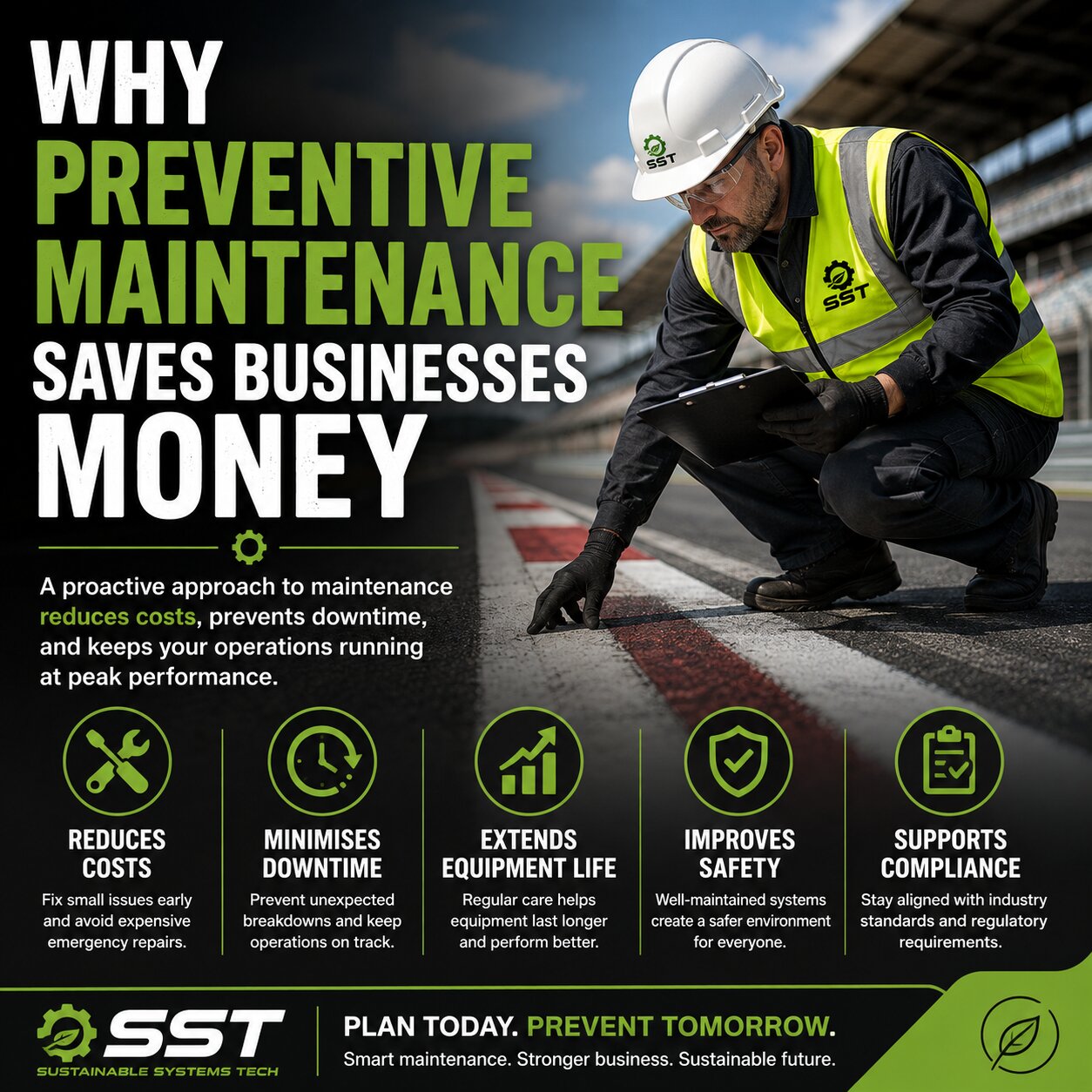
Many businesses only repair equipment once something breaks. While this may seem like a way to save money, it often leads to higher costs over time.
Preventive maintenance focuses on regular inspections, servicing, and replacing worn components before failures occur. This approach helps equipment operate efficiently while reducing the likelihood of unexpected downtime.
Unexpected breakdowns often disrupt operations, delay projects, and increase labour costs. In many industries, even a few hours of downtime can result in significant financial losses.
Regular maintenance also extends the lifespan of valuable equipment. Instead of replacing expensive machinery earlier than expected, businesses can maximise their investment through scheduled care and routine servicing.
Another advantage is improved safety. Well-maintained systems are less likely to develop faults that could place employees or customers at risk, while also supporting compliance with industry regulations.
Preventive maintenance should be viewed as an investment rather than an expense. Small, planned maintenance costs are usually far more affordable than major emergency repairs or complete equipment replacement.
Organisations that adopt a proactive maintenance strategy often experience improved reliability, better operational efficiency, and reduced long-term costs, making preventive maintenance an essential part of sustainable business management.