
Airports never truly sleep. Long after daylight disappears, aircraft continue arriving and departing while pilots depend on carefully designed visual guidance to navigate runways safely. Airport runway lighting systems are therefore among the most important electrical and safety systems found at modern airports.
From the first lights visible during an aircraft’s approach to the illuminated runway centreline beneath its wheels, different lighting components work together to communicate position, direction and remaining runway distance. Modern airports are also improving these systems with efficient LED technology, intelligent monitoring and increasingly sustainable power infrastructure.
As part of our Sustainable Systems Tech airport facilities series, we look at how airport runway lighting systems work and how the technology behind them continues to evolve.
What Are Airport Runway Lighting Systems?
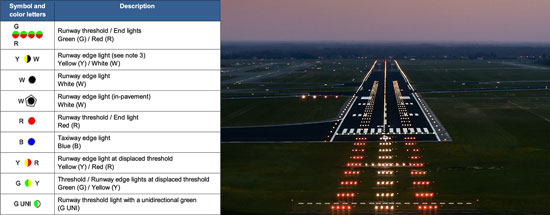
Airport runway lighting systems are specialised groups of lights installed around and sometimes within airport runways. Their primary purpose is to provide pilots with visual guidance during take-off, landing and ground movement, particularly at night or when visibility is reduced.
The system is far more sophisticated than simply illuminating the runway.
Different colours, positions, intensities and patterns communicate specific information. A pilot approaching an airport needs to distinguish the runway from surrounding roads, buildings and other airport infrastructure. Once aligned with the runway, additional lights help indicate its edges, centreline, threshold and end.
International standards established by organisations such as the International Civil Aviation Organization (ICAO) help ensure that pilots encounter recognisable visual guidance when operating at airports around the world.
The Different Types of Runway Lights
Several lighting components may form part of airport runway lighting systems, depending on the airport, runway configuration and operational requirements.
A typical installation may include:
- Runway edge lights outlining the usable edges of the runway.
- Runway threshold lights identifying where the runway available for landing begins.
- Runway end lights indicating the opposite end of the usable runway.
- Runway centreline lights helping pilots maintain alignment along the centre of the runway.
- Touchdown zone lights providing additional visual guidance within the touchdown area.
- Approach lighting systems extending outward from the runway to help approaching pilots identify and align with it.
Together, these lights effectively create a visual map of the runway.
Colour is especially important. For example, runway edge lighting is predominantly white, while threshold lights viewed from an approaching aircraft are green. Runway end lights are red when viewed by an aircraft travelling towards the end of the runway.
Why Lighting Matters During Poor Visibility
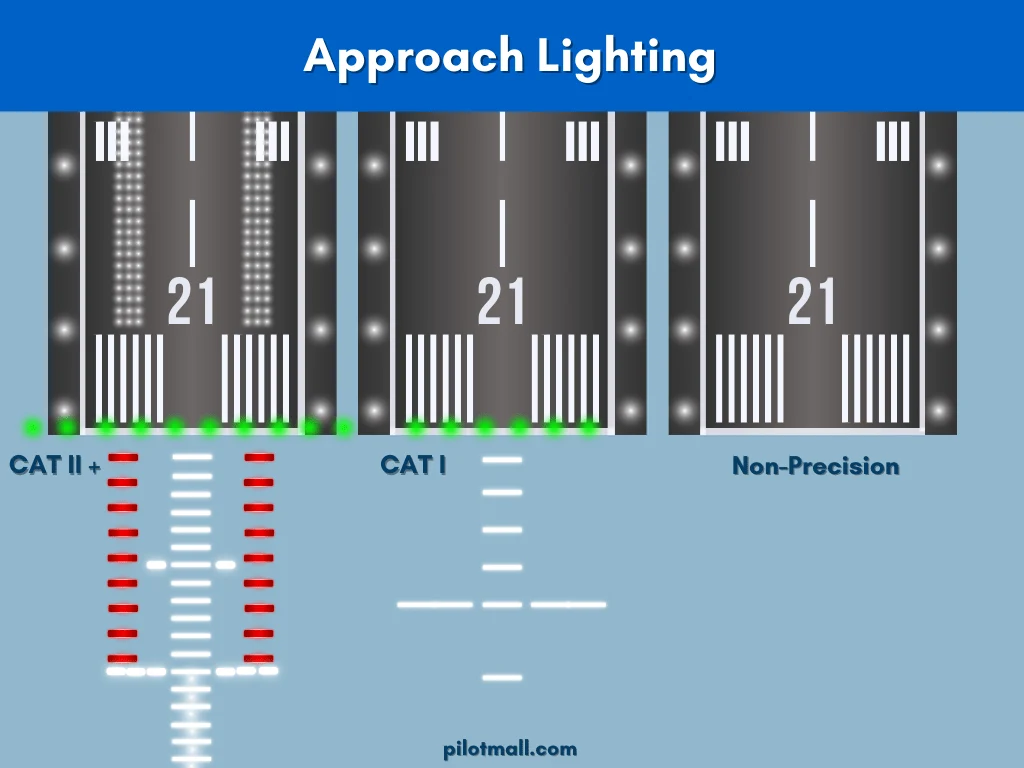
Night operations are an obvious reason for installing airport runway lighting systems, but darkness isn’t their only purpose.
Fog, rain, haze and other weather conditions can significantly reduce visibility. Airports capable of supporting low-visibility operations therefore require infrastructure designed to provide pilots with reliable visual references alongside their aircraft instruments.
Lighting intensity can also be adjusted according to operating conditions.
Bright lighting may be necessary when visibility deteriorates, whereas excessively intense lighting on a clear night could make visual guidance uncomfortable or distracting. Adjustable systems allow airport operators to provide suitable illumination for different conditions.
This ability becomes particularly important at large international airports where aircraft movements continue across a wide variety of weather and lighting conditions.
LED Technology Is Transforming Airport Lighting
One of the most significant developments in modern airport runway lighting systems has been the transition from traditional lighting technologies to LEDs.
LED fixtures generally consume less electricity while offering longer operational lifespans. For an airport containing hundreds or potentially thousands of airfield lights, those improvements can produce substantial reductions in energy consumption and maintenance requirements.
Longer service life also has another important benefit.
Replacing runway lights isn’t quite as simple as changing a bulb at home. Maintenance teams may need controlled access to operational areas, and work has to be coordinated carefully around aircraft movements. Reducing the frequency of maintenance interventions can therefore improve both operational efficiency and safety.
LED technology also offers precise illumination and rapid switching capabilities, making it particularly suitable for intelligent airfield lighting applications.
Smart Airport Runway Lighting Systems
The future of airport runway lighting systems involves far more than efficient bulbs.
Modern airfield ground lighting can be integrated with sophisticated monitoring and control platforms. Airport personnel can remotely manage lighting circuits, adjust intensity and identify equipment faults from centralised systems.
Individual light monitoring can provide even greater visibility into infrastructure performance.
Instead of discovering a failed fixture during an inspection, maintenance teams can potentially receive information identifying where a fault has occurred. This supports preventative maintenance strategies and helps reduce unnecessary inspection work.
Lighting can also become part of broader smart airport infrastructure, where operational data from different systems contributes to more efficient facility management.
Making Runway Lighting More Sustainable
Airports consume considerable amounts of electricity, making energy efficiency an important part of sustainable airport development.
Replacing older fixtures with LEDs represents one opportunity, but sustainability can extend across the entire electrical system supporting airport runway lighting systems.
Efficient power distribution, intelligent controls, renewable electricity and improved maintenance strategies can all contribute to reducing environmental impact. Airports generating electricity through on-site solar installations may also use renewable energy to offset some of the power required by their airfield infrastructure.
However, sustainability cannot compromise reliability.
Runway lighting is safety-critical infrastructure. Any sustainable solution therefore needs to provide the redundancy, resilience and operational performance demanded by aviation.
The goal isn’t simply to consume less energy. It is to achieve greater efficiency while maintaining or improving system reliability.
The Future of Airport Runway Lighting Systems
As airports become smarter, airport runway lighting systems will increasingly form part of connected airfield environments.
Advanced monitoring, automation and data analysis can help operators understand equipment condition, identify maintenance requirements and optimise energy consumption. More efficient fixtures and power electronics can further reduce electricity demand.
Future airports may also integrate runway lighting more closely with other systems responsible for aircraft movement and airfield operations.
Yet the fundamental purpose will remain unchanged.
Whether an aircraft is approaching through darkness, rain or fog, pilots need to know precisely where the runway begins, where its boundaries lie and where it ends.
Airport runway lighting systems provide those essential visual references while modern technology makes them more efficient, intelligent and sustainable.
For sustainable airport development, that combination of safety, reliability and energy efficiency will remain critical as aviation infrastructure evolves.