Airports consume enormous amounts of electricity. Terminals require lighting, heating, cooling and ventilation, while baggage systems, security equipment, offices, maintenance facilities, airfield infrastructure and countless other systems operate throughout the day. This makes energy management an important part of developing more sustainable airports.
One increasingly visible solution is airport solar power systems. Airports frequently control large areas of land and extensive building infrastructure, creating opportunities for solar photovoltaic installations on rooftops, car parks and suitable surrounding property.
As part of our Sustainable Systems Tech Airports series, let’s explore how solar energy can become part of the infrastructure powering modern aviation facilities.
Why Solar Power Works Well at Airports
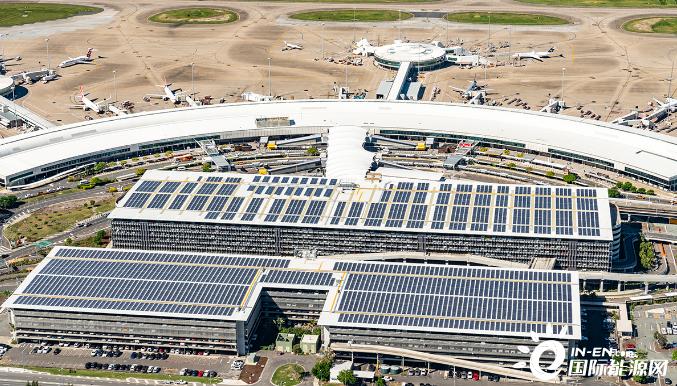
Airports can be particularly interesting locations for solar generation because of their scale. Terminal buildings, hangars, cargo facilities and other structures can provide substantial roof areas that might otherwise serve little purpose beyond protecting the spaces below.
There may also be suitable land around an airport that cannot practically accommodate conventional development. Where aviation safety, land-use requirements and environmental conditions allow it, portions of this property can potentially support ground-mounted photovoltaic installations.
Generating electricity at or near the airport also places renewable generation close to a major source of electricity demand.
Terminal and Hangar Rooftop Solar
One of the most obvious locations for airport solar power systems is on existing buildings.
Large terminal roofs can accommodate extensive photovoltaic arrays, while hangars, warehouses, maintenance buildings and cargo facilities provide additional possibilities. Using existing roofs can also reduce the amount of additional land required for renewable-energy infrastructure.
However, installing solar panels at an airport requires more than identifying an empty roof. Engineers need to consider structural loading, maintenance access, electrical infrastructure, wind exposure and the effect that glare could potentially have on pilots and air traffic control personnel.
Solar Car Parks
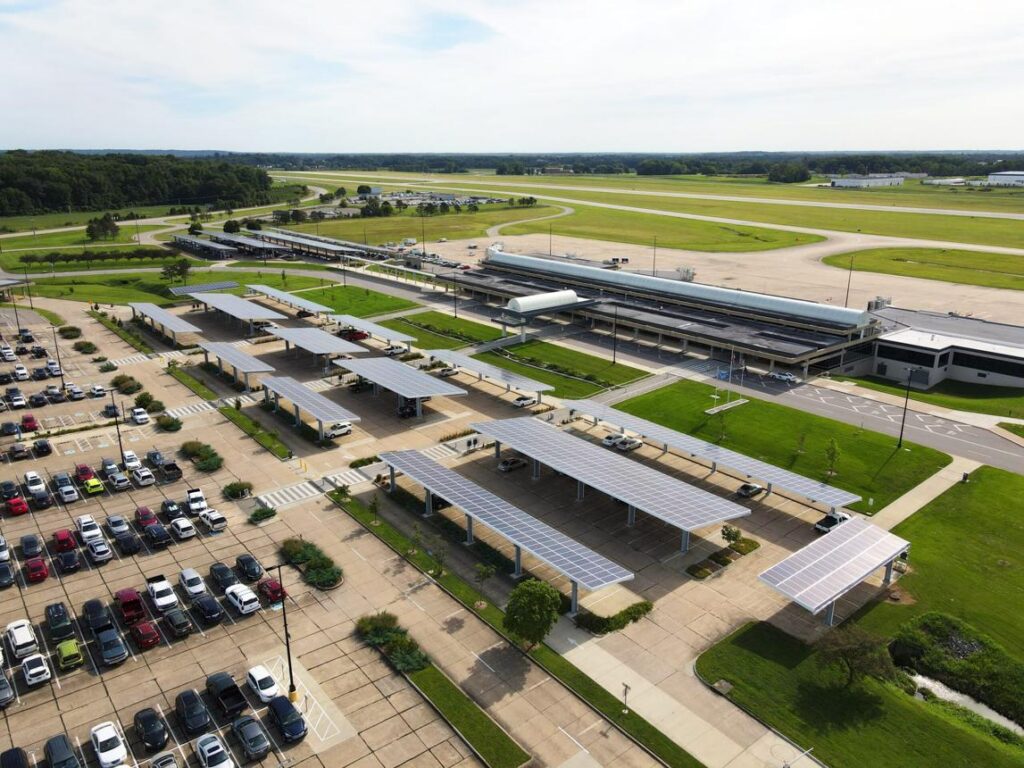
Airport parking areas present another interesting opportunity.
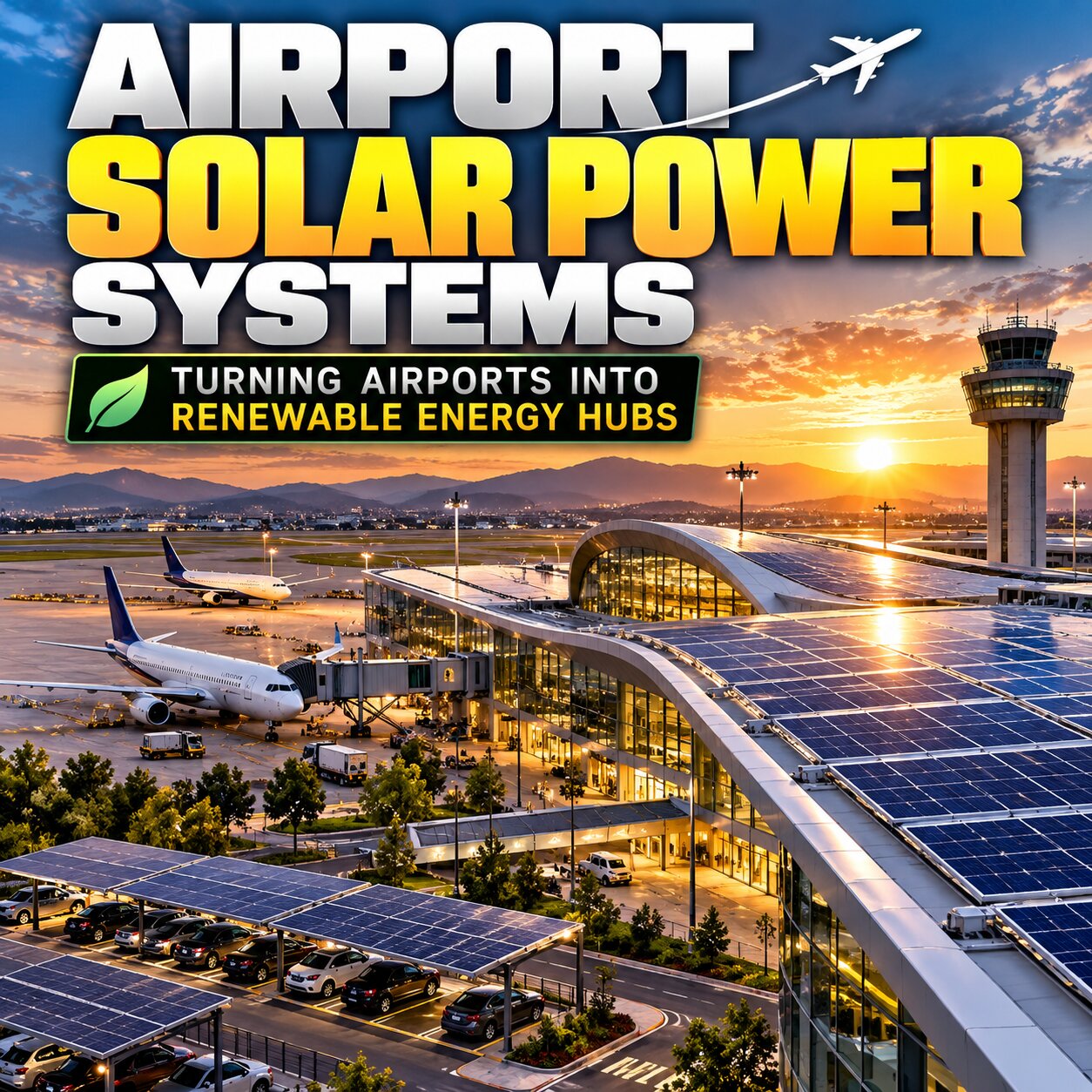
Solar canopies installed above parking bays can generate electricity while simultaneously providing shade for vehicles. In warmer climates, that additional function can make solar parking infrastructure particularly attractive.
The electricity generated could contribute towards terminal demand or other airport systems. Solar car parks could also be paired with electric vehicle charging infrastructure, creating a direct connection between renewable generation and lower-emission ground transportation.
Airport Solar Farms
Some airports have sufficient surrounding land to consider much larger ground-mounted solar installations.
These solar farms can potentially generate considerably more electricity than rooftop systems alone. Depending on the size of the installation and the airport’s energy requirements, solar generation may supply a meaningful portion of daytime electricity demand.
Location is critical. Solar infrastructure cannot interfere with runways, taxiways, navigation systems, future airport expansion or other operational requirements. Environmental impacts and glare must also be assessed before construction.
Solar Power and Battery Storage
Solar generation has an obvious limitation: electricity production changes according to available sunlight.
Battery energy storage can make airport solar power systems considerably more flexible. Electricity generated during periods of strong solar production can potentially be stored and used later when airport demand remains high but solar output decreases.
Storage can also form part of a broader airport energy-management system incorporating grid electricity, renewable generation and backup power infrastructure.
Rather than viewing solar panels as an isolated technology, sustainable airport planning can therefore consider generation, storage and electricity consumption as interconnected systems.
Aviation Safety and Solar Glare
Airports introduce considerations that don’t necessarily apply to an ordinary commercial solar installation.
Solar panels must be positioned so that reflections don’t create unacceptable glare for pilots or personnel working in air traffic control towers. Installations also need to respect protected areas around runways and aviation infrastructure.
The physical installation must similarly account for airport security, maintenance requirements and the demanding environmental conditions that can occur around large open airfields.
For this reason, airport solar power systems require careful planning between renewable-energy specialists, airport designers, engineers and aviation authorities.
Building a More Energy-Independent Airport
The long-term opportunity extends beyond simply reducing the amount of grid electricity an airport purchases.
Solar generation can become one component of a much broader sustainable energy strategy. Airports can combine photovoltaic systems with battery storage, energy-efficient terminals, smart building controls, electric ground-support equipment and EV charging infrastructure.
Future facilities may increasingly function as sophisticated local energy ecosystems, generating, storing and intelligently distributing electricity across different airport operations.
For countries with strong solar resources, including South Africa, the potential is particularly interesting. Airports combine significant daytime electricity demand with substantial infrastructure and, in some cases, considerable available space.
Airport solar power systems therefore represent more than panels installed on a terminal roof. When incorporated into the wider design of an airport, solar energy can become an integral part of creating aviation facilities that are more efficient, resilient and sustainable.