Airports consume enormous quantities of water. Thousands of passengers and employees use terminals every day, while restaurants, cleaning operations, landscaping, maintenance facilities, cooling systems, and other infrastructure add to overall demand. Sustainable airport design therefore needs to consider where that water comes from and what happens after it has been used.
One solution is reducing dependence on potable municipal water for activities that do not require drinking-quality supplies. Rain falling across terminal roofs, hangars, and other large structures can potentially be collected and stored instead of simply entering stormwater systems.
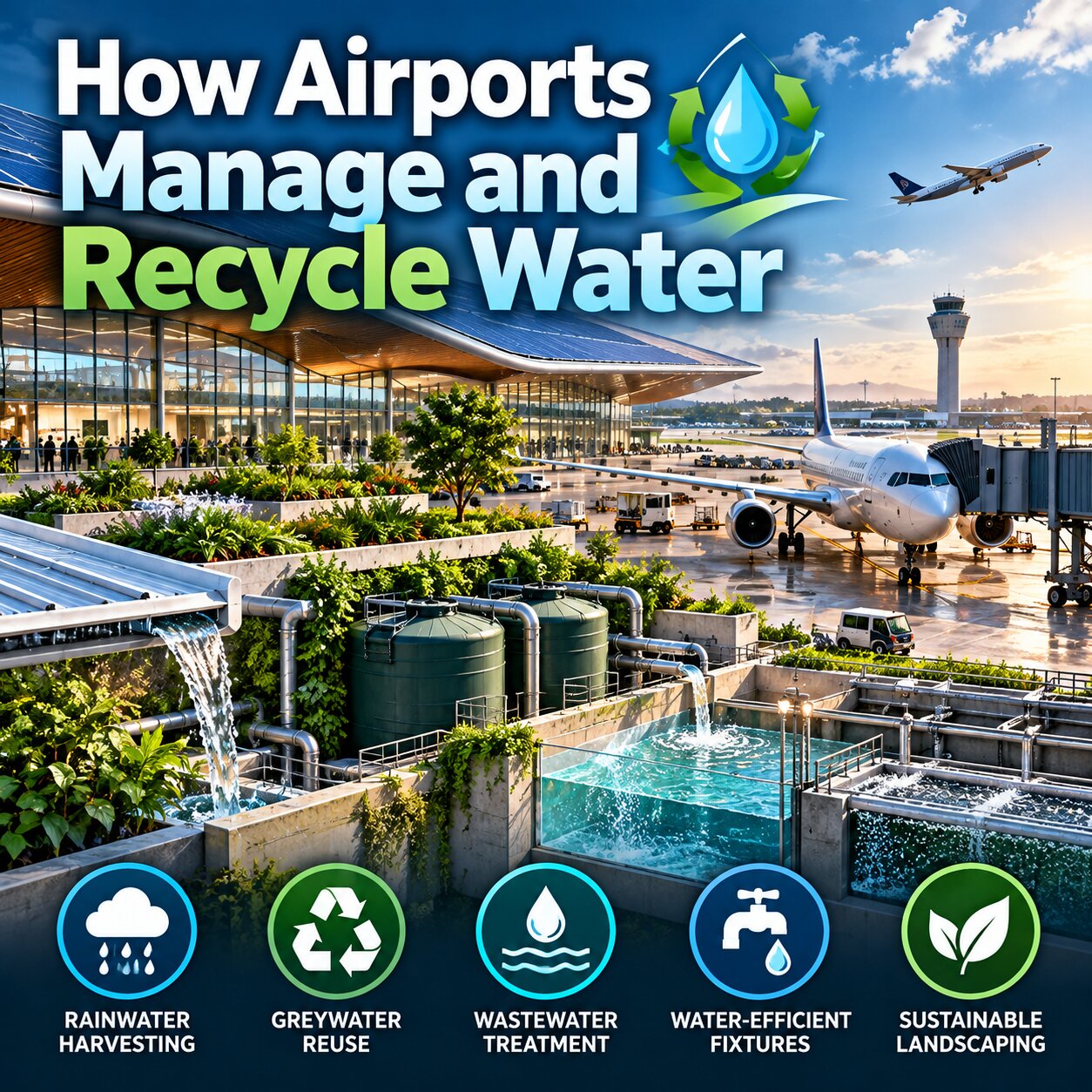
Airport water strategies can include:
- Rainwater harvesting from large roof surfaces
- Greywater reuse for toilets and irrigation
- On-site wastewater treatment
- Water-efficient bathroom fixtures
- Leak detection and smart monitoring systems
The scale of an airport can make relatively small improvements significant. A reduction in the amount of water used by every toilet, tap, or cleaning operation becomes substantial when multiplied across millions of annual passenger movements.
Landscaping provides another opportunity. Indigenous or drought-resistant plants can reduce irrigation requirements, while treated wastewater or harvested rainwater may replace potable water where regulations and treatment standards allow.
Stormwater management is equally important. Runways, taxiways, aprons, roads, and parking areas create vast impermeable surfaces. Airports therefore need drainage infrastructure capable of handling large volumes of rainfall while controlling pollutants that could otherwise enter surrounding waterways.
Water recycling cannot simply be added as an afterthought. Treatment facilities, storage tanks, separate pipe networks, monitoring equipment, and drainage systems need to form part of broader airport infrastructure planning.
As airports become more sustainable, water management will increasingly sit alongside renewable energy, efficient buildings, and cleaner transport as a fundamental part of facility design. Every litre that can safely be conserved, captured, treated, or reused reduces pressure on the wider water supply.