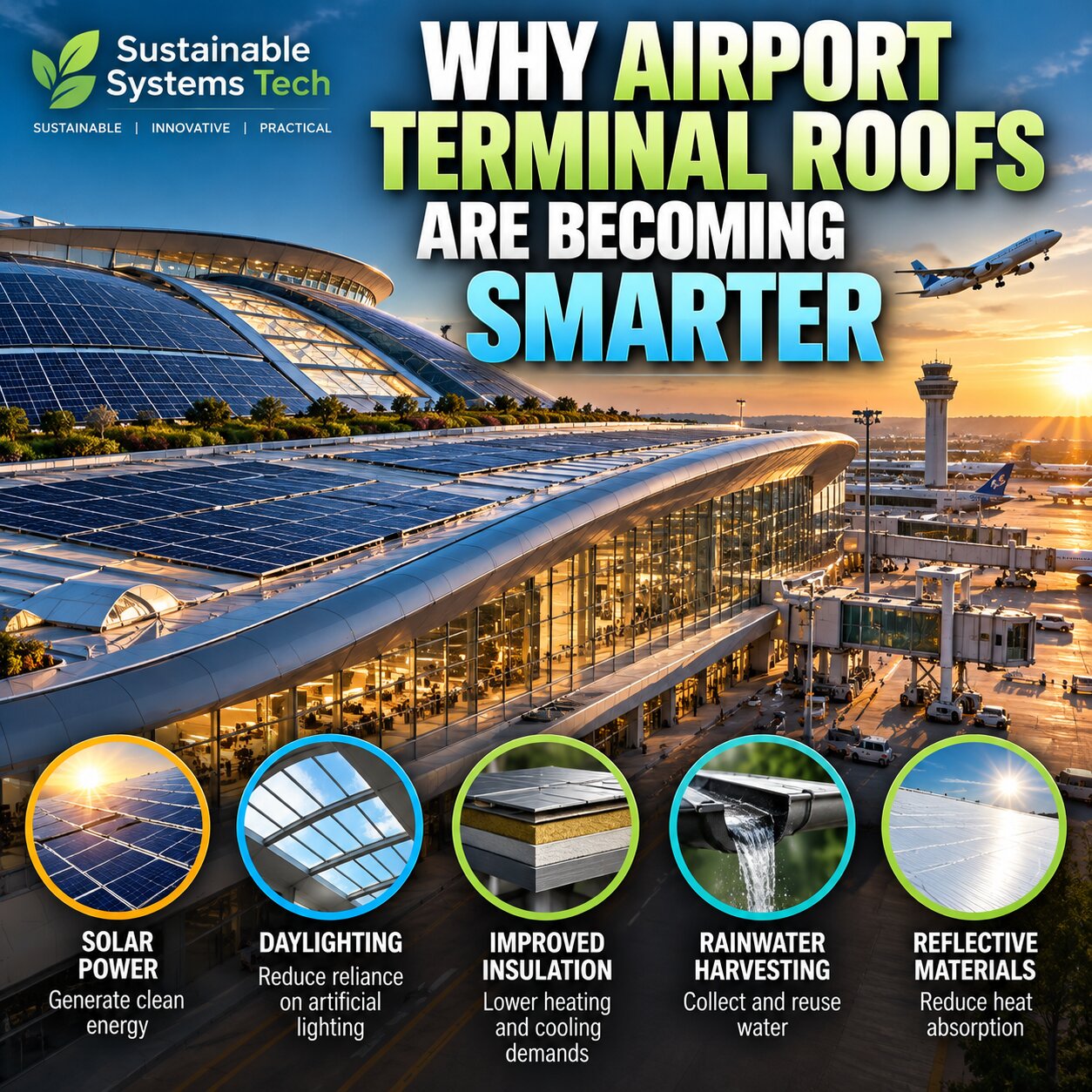
An airport terminal roof might appear to be little more than protection from the weather, but modern sustainable airport design is turning this enormous surface into valuable infrastructure.
Airport terminals often cover substantial areas, creating opportunities for architects and engineers to integrate technologies that reduce energy consumption and improve environmental performance.
More Than Just a Roof
One obvious opportunity is solar power. Large terminal roofs can provide extensive space for photovoltaic panels without requiring additional land around the airport.
However, renewable electricity is only one possibility.
Modern airport roofs can incorporate:
- Solar photovoltaic systems
- Skylights and daylighting solutions
- Improved thermal insulation
- Rainwater harvesting systems
- Reflective materials that reduce heat absorption
Natural daylight can reduce dependence on artificial lighting during the day, while better insulation can lower the amount of energy required to heat or cool large terminal spaces.
Turning Rain Into a Resource
Airport roofs can also act as enormous rainwater catchment surfaces.
Instead of allowing all that water to enter conventional drainage systems, airports can potentially collect, store and reuse rainwater for suitable non-potable applications such as landscaping or cleaning.
The humble terminal roof is therefore becoming an important component of sustainable airport infrastructure. When every square metre of a facility is considered part of the sustainability strategy, even the roof can contribute to a smarter airport.