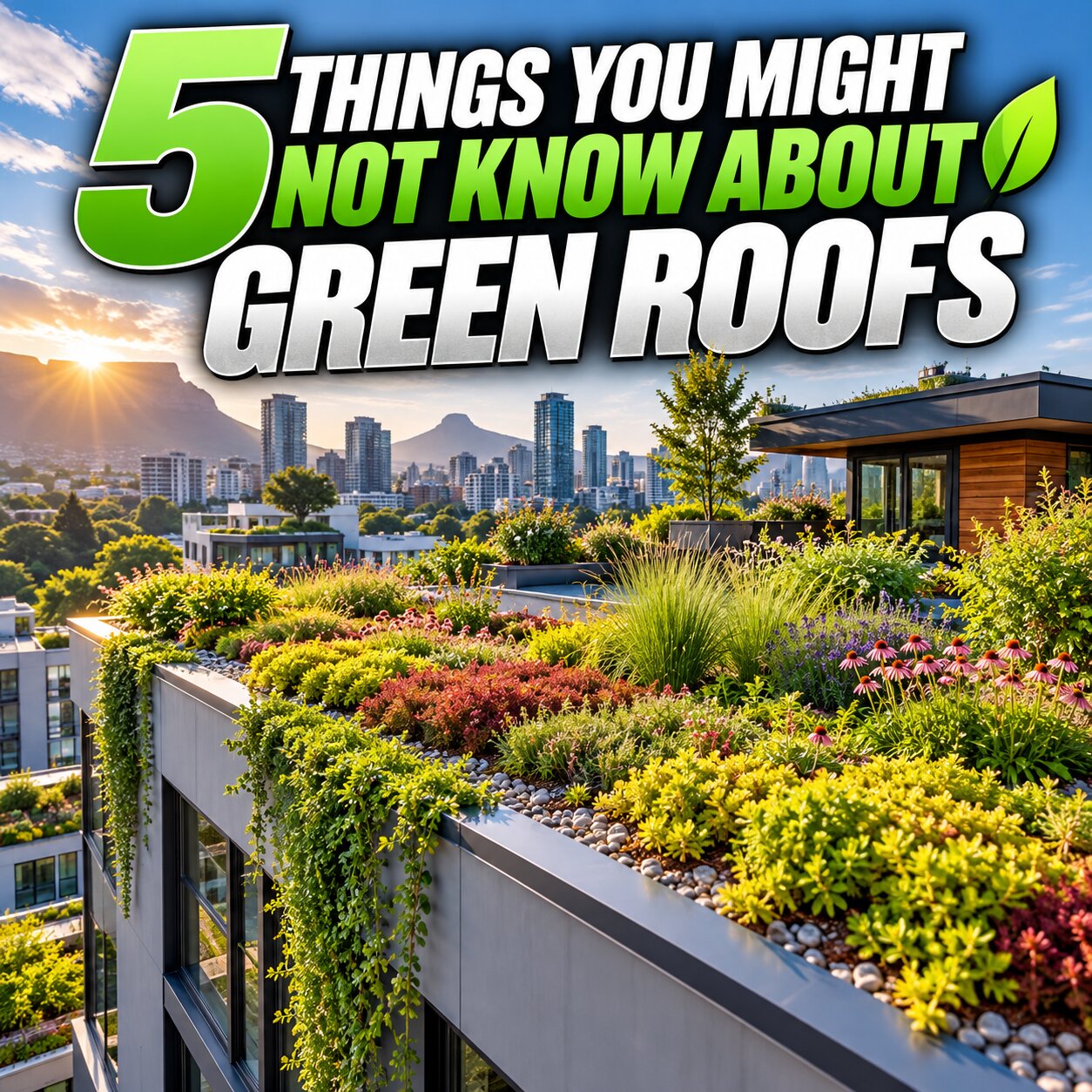
Imagine looking across a city and seeing gardens growing on rooftops instead of endless concrete surfaces. Green roofs are becoming an increasingly interesting feature of sustainable architecture, offering benefits that extend beyond their attractive appearance.
Here are five fascinating things you might not know about these living building systems.
Five Fascinating Green Roof Facts
- They can help cool buildings. Plants provide shade and release moisture through evapotranspiration, potentially reducing rooftop temperatures and cooling demands.
- They help manage rainwater. Green roof systems absorb and temporarily retain rainfall, reducing the volume and slowing the flow of stormwater runoff.
- They support urban biodiversity. Carefully selected vegetation can provide habitats for insects, birds and pollinators in densely developed environments.
- Not every green roof is a garden. Extensive green roofs typically feature shallow growing media and low-maintenance vegetation, while intensive systems can accommodate larger plants.
- They can protect waterproofing membranes. Properly designed green roofs shield underlying roof layers from ultraviolet radiation and temperature fluctuations.
A Greener Future Above Our Heads
Green roofs demonstrate how sustainable infrastructure can combine environmental benefits with practical building performance.
However, successful installations require appropriate structural capacity, waterproofing, drainage and maintenance planning.
As cities continue expanding, rooftops could become increasingly valuable spaces for supporting greener urban environments.