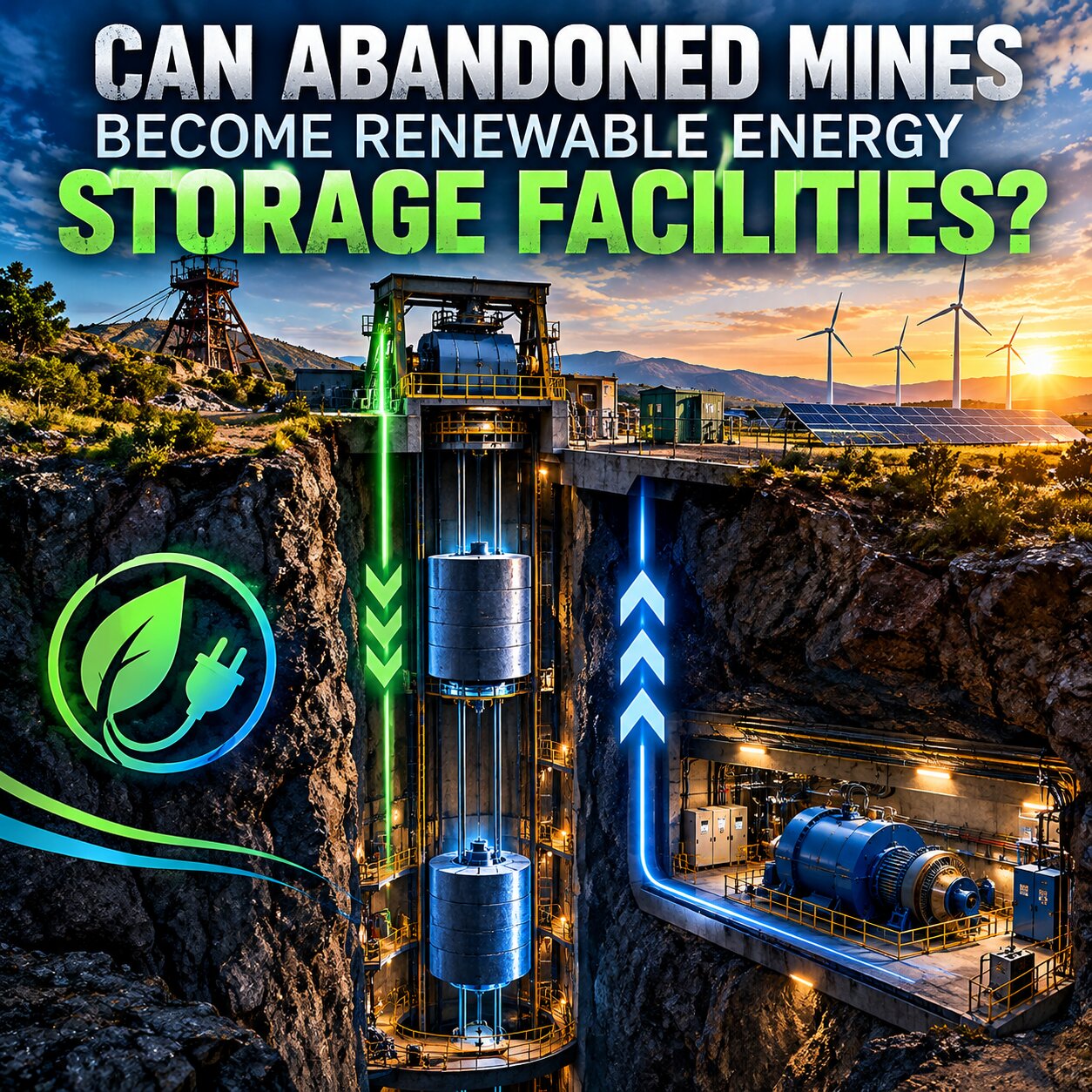
South Africa has numerous abandoned and inactive mines, many of which present environmental and rehabilitation challenges. However, could these underground structures become valuable assets for renewable energy storage?
An emerging concept known as gravity energy storage suggests that some former mine shafts could help store electricity for later use.
How Underground Gravity Storage Works
The principle is relatively simple.
When surplus electricity is available, electric motors lift heavy weights through a vertical mine shaft. This converts electrical energy into stored gravitational potential energy.
When electricity is needed, the weights descend in a controlled manner, driving generators that produce electricity.
The process does not create additional energy. Instead, it stores electricity generated earlier, with some losses during operation.
Opportunities for South Africa
Repurposing suitable mine shafts could reduce the need to construct entirely new underground facilities.
These projects might also create opportunities for engineering, maintenance and renewable energy employment in former mining communities.
However, not every abandoned mine would be suitable. Structural integrity, shaft depth, safety requirements and project costs would need careful evaluation.
Giving Old Infrastructure a New Purpose
As South Africa expands its renewable energy capacity, reliable energy storage will become increasingly important.
Gravity storage is one potential solution worth investigating alongside batteries and pumped hydroelectric systems.
Could yesterday’s mining infrastructure help power tomorrow’s sustainable energy systems?