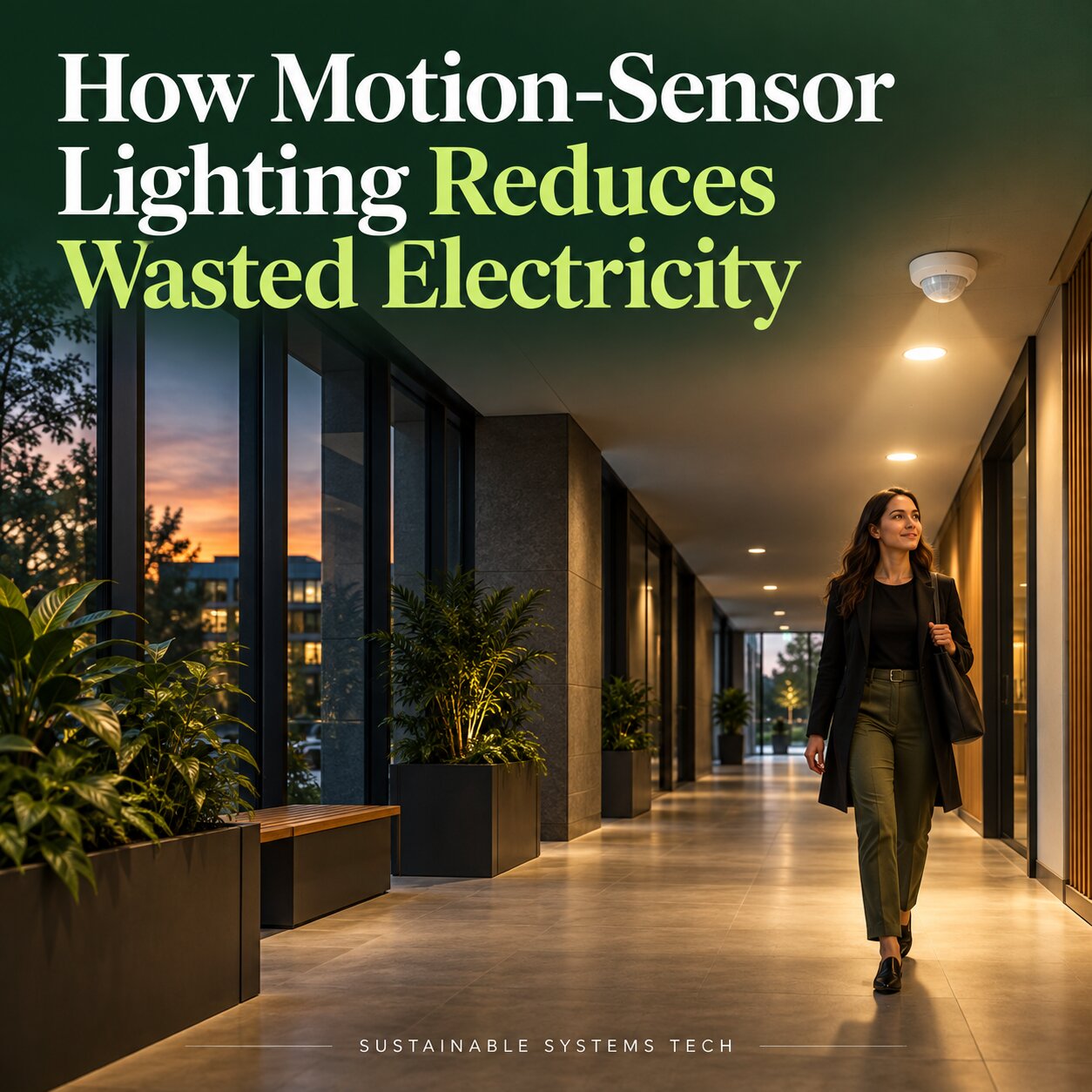
Lights left burning in empty rooms use electricity without providing much benefit. Motion-sensor lighting helps address this by switching lights on when movement is detected and turning them off after a set period without activity.
This makes it useful in spaces people visit briefly, such as storerooms, passages and shared bathrooms. Instead of relying on everyone to remember the switch, the system handles a routine task automatically.
Put Sensors Where They Make Sense
The biggest benefit comes from matching the sensor to how a space is used. A busy office where people sit still needs a different approach from a cupboard someone enters for a minute.
When planning an installation, consider:
- How frequently people enter the space.
- Whether occupants remain still for long periods.
- How much daylight is already available.
- The delay before lights switch off.
Poor positioning or an overly short delay can leave people waving their arms to restore the light. Daylight controls can also prevent unnecessary switching when natural light is sufficient.
Start With Frequently Forgotten Lights
Motion sensors work best where lights regularly remain on unnecessarily. Pairing suitable controls with efficient LED lighting can reduce wasted electricity while keeping everyday spaces convenient to use.