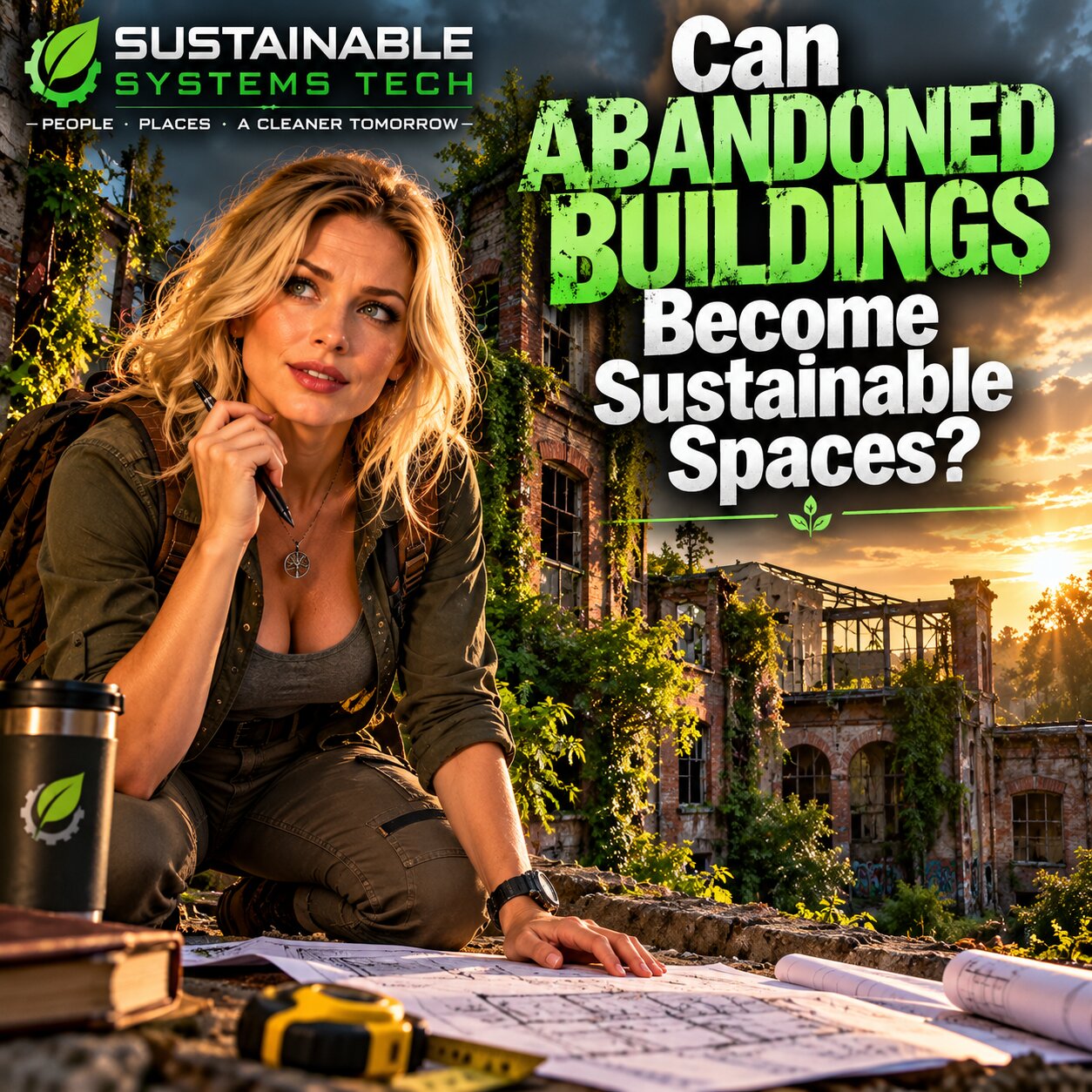
Abandoned buildings often appear beyond saving, particularly when years of neglect have left their walls deteriorating and vegetation reclaiming their surroundings. However, these forgotten structures may offer valuable opportunities for sustainable redevelopment.
The Value of Adaptive Reuse
Adaptive reuse involves transforming existing buildings for new purposes rather than demolishing them completely.
Old warehouses can become offices, factories can accommodate residential developments, and neglected commercial properties can find new life as community facilities.
Retaining suitable structural elements may reduce demand for newly manufactured construction materials while preserving some of the embodied carbon already invested in the building.

Challenges Behind the Transformation
Not every abandoned building is suitable for redevelopment. Engineers must assess structural integrity, moisture damage, contamination, and compliance with current building regulations.
Older properties may also require significant improvements to insulation, ventilation, lighting, and energy efficiency.
The environmental benefits depend on the condition of the structure and the extent of the necessary modifications.
Giving Forgotten Buildings Another Future
Successful adaptive reuse combines engineering assessments, responsible material selection, and modern building performance standards.
Instead of allowing abandoned structures to become permanent reminders of urban decline, sustainable redevelopment can give them a practical second life.
Even the most haunted-looking building might have a brighter future.