Post-apocalyptic fiction frequently depicts abandoned cities, collapsing infrastructure and survivors struggling to obtain basic necessities. Electricity becomes unreliable, supermarkets stand empty and conventional supply chains disappear. While these scenarios are often exaggerated for entertainment, they raise an interesting question: could sustainable technologies help communities survive after the collapse of modern civilisation?
Sustainability is usually discussed in terms of reducing environmental damage and protecting resources for future generations. However, many sustainable practices also encourage self-sufficiency, efficient resource management and resilience. These characteristics could become particularly valuable in a fictional world where centralised services no longer function.
Solar Energy Without the Electricity Grid
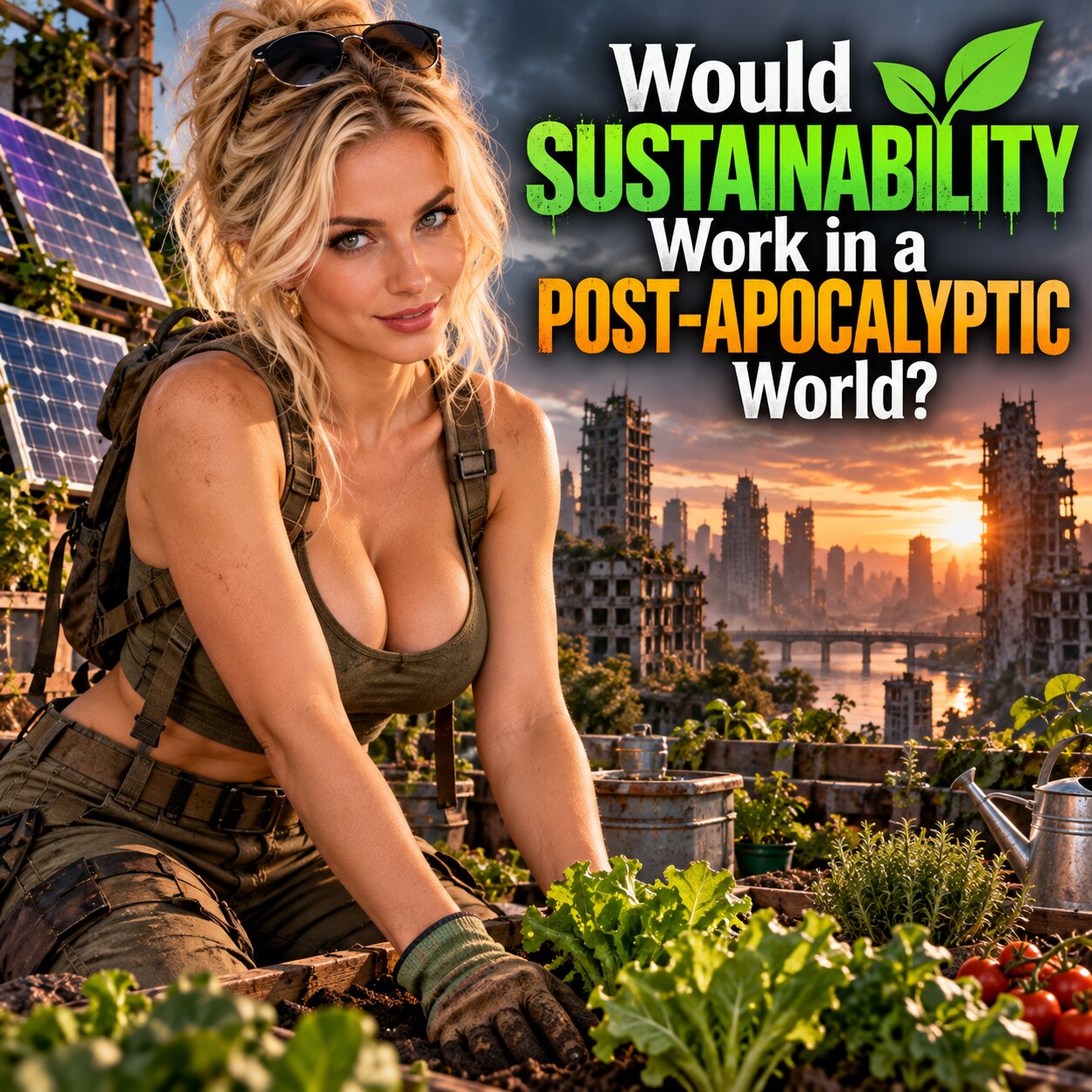
Solar panels could provide an important source of electricity for survivors living beyond the reach of functioning power networks. A properly configured off-grid system can generate electricity without relying on a conventional utility connection, making it potentially useful for lighting, communications and essential equipment.
However, solar technology would not offer unlimited power. Batteries deteriorate, electronic components fail and replacement equipment becomes difficult to obtain when manufacturing and distribution systems collapse. Survivors would also need sufficient technical knowledge to maintain their installations safely.
A functioning solar system could therefore become an extremely valuable community resource, especially when combined with careful electricity consumption and practical maintenance skills.
Rainwater Harvesting and Water Security
Access to safe drinking water would become one of the greatest challenges following widespread infrastructure failure. Municipal treatment facilities require equipment, chemicals, electricity and trained personnel, meaning that water distribution could become unreliable without functioning support systems.
Rainwater harvesting could provide an alternative source of water where rainfall patterns and storage conditions permit. Rooftop collection systems, gutters and storage tanks might allow communities to gather water for cleaning, irrigation and other activities.
Collected rainwater would still require appropriate treatment before drinking. Contamination from roofing materials, animal waste, airborne pollutants and storage containers can make untreated water unsafe. Sustainable water management would therefore depend on both collection infrastructure and reliable purification methods.
Growing Food After Civilisation Collapses
Urban agriculture could become an essential survival strategy when supermarkets and commercial farms are no longer accessible. Rooftop gardens, community vegetable plots and small-scale agricultural systems might provide fresh produce while reducing dependence on distant suppliers.
Composting could help restore nutrients to cultivated soil, while rainwater irrigation and mulching could improve water efficiency. Seed saving might also allow communities to continue growing suitable crops across successive seasons.
Nevertheless, producing enough food to sustain a population requires considerable land, labour, knowledge and planning. Crop failures, pests, seasonal limitations and nutritional deficiencies would remain serious concerns. A successful settlement would need diverse food sources rather than relying exclusively on a small vegetable garden.
Recycling Would Become a Survival Skill
In a world without functioning factories or reliable deliveries, discarded materials could become valuable resources. Metal components, timber, containers, textiles and mechanical parts might be repaired or repurposed instead of being thrown away.
This approach reflects the principles of a circular economy, where products and materials remain useful for as long as practical. Repair skills could become particularly important because replacing damaged equipment might no longer be possible.
However, not every material can be safely reused. Damaged batteries, contaminated containers and deteriorating electrical equipment may present significant hazards. Communities would need to balance resourcefulness with appropriate safety precautions.
Could Sustainable Communities Survive?
Individual self-sufficiency might provide temporary advantages, but long-term survival would probably depend on cooperation. Communities could share resources, distribute responsibilities and combine specialised skills to maintain essential infrastructure.
A settlement with people experienced in agriculture, engineering, healthcare, construction and water treatment would have more options than individuals attempting to master every survival skill alone. Sustainable systems could support these communities by reducing waste and dependence on resources that are difficult to replace.
The greatest challenge would be maintaining these systems over time. Without replacement parts, medical supplies and specialised manufacturing, even a carefully organised settlement could face serious difficulties.
Sustainability Beyond the Apocalypse
Although a complete societal collapse belongs largely to speculative fiction, the underlying lessons remain relevant. Extreme weather, infrastructure failures and supply disruptions already demonstrate the value of resilient communities and efficient resource management.
Solar energy, water conservation, local food production and repairable equipment cannot eliminate every emergency. They can, however, reduce certain vulnerabilities when conventional systems become unreliable.
Perhaps the most interesting lesson from imagining a sustainable post-apocalyptic world is that many of its most valuable survival strategies are worth developing long before disaster strikes.