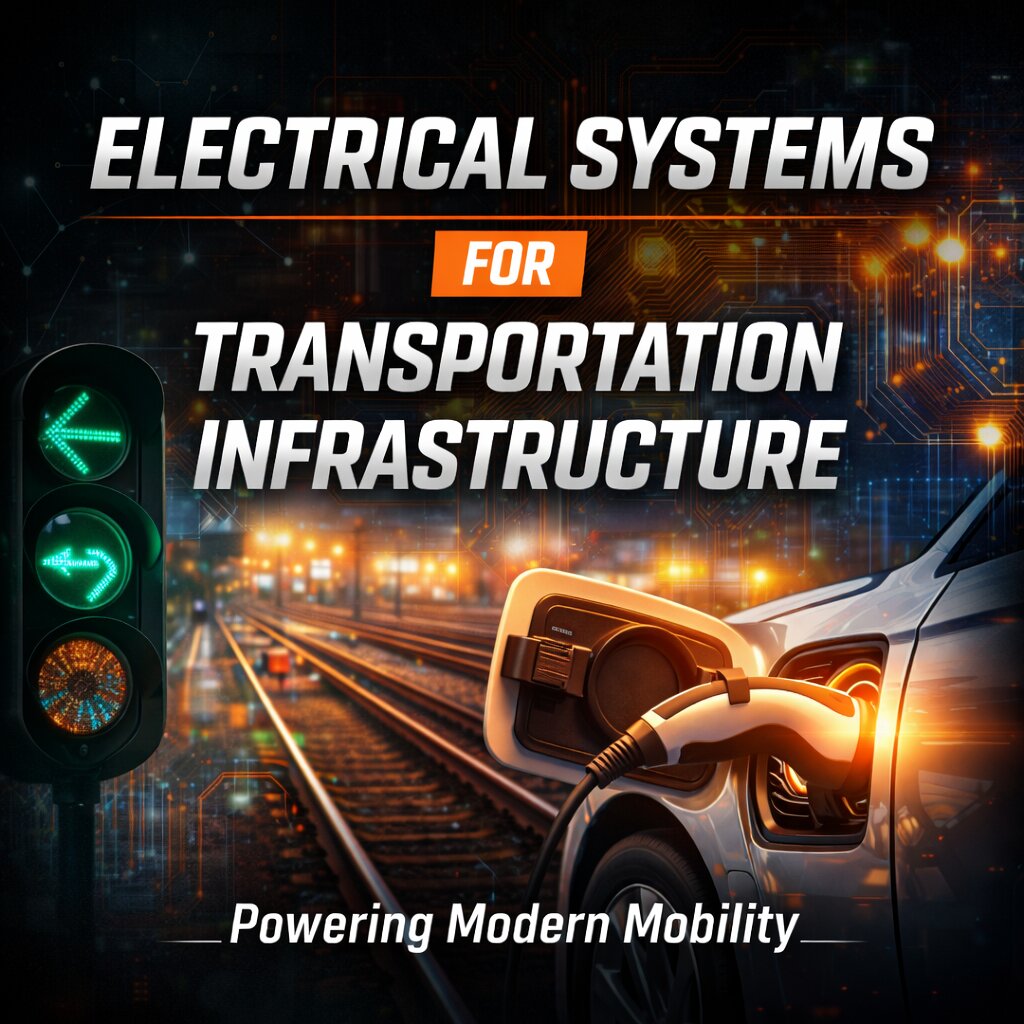
Electrical systems for transportation infrastructure are the backbone of modern mobility, ensuring that roads, rail networks, airports, and ports operate safely and efficiently. From powering lighting and signalling to supporting emerging technologies, these systems play a critical role in keeping people and goods moving.
The role of electrical systems in transport networks

Electrical systems for transportation infrastructure are responsible for far more than just basic power supply. They enable the safe operation of vehicles, guide traffic, and ensure that critical systems remain functional under all conditions.
In road infrastructure, electrical systems power street lighting, traffic signals, and monitoring equipment. These elements are essential for maintaining visibility and controlling vehicle flow, especially in high-density urban areas where congestion is a constant challenge.
Rail systems rely heavily on electrical infrastructure for both operations and safety. From electrified tracks to signalling systems, these components ensure that trains run on time and avoid collisions, even across complex networks.
Airports and ports also depend on reliable electrical systems. Runway lighting, navigation aids, cargo handling equipment, and security systems all require stable and uninterrupted power to function effectively.
Key components of electrical systems for transportation infrastructure

Electrical systems for transportation infrastructure consist of several interconnected components that work together to deliver power, control operations, and maintain safety.
Power distribution systems form the foundation, delivering electricity from the grid to various parts of the transport network. These systems must be designed for reliability, with backup solutions in place to prevent disruptions.
Control and automation systems manage how infrastructure operates. Traffic management systems, rail signalling, and smart monitoring platforms all rely on advanced electrical controls to optimise performance and reduce risks.
Communication networks are another critical element. Modern transport infrastructure uses electrical systems to support data transmission between devices, enabling real-time monitoring and decision-making.
Safety systems, including emergency lighting and backup power supplies, ensure that operations can continue even during outages or unexpected events.
Benefits of modern electrical infrastructure in transport

The advancement of electrical systems for transportation infrastructure has brought significant improvements in efficiency, safety, and sustainability.
Here are some key benefits:
- Improved traffic flow through smart signal control systems
- Enhanced safety with advanced monitoring and lighting solutions
- Reduced energy consumption through efficient electrical design
- Greater reliability with backup power and redundancy systems
- Support for electric vehicles and future mobility technologies
These benefits not only improve daily operations but also contribute to long-term infrastructure resilience and environmental goals.
Emerging technologies shaping the future

Electrical systems for transportation infrastructure are evolving rapidly, driven by new technologies and changing mobility demands. Smart cities are leading the way, integrating transport systems with digital platforms to create more responsive and efficient networks.
Electric vehicle charging infrastructure is becoming a major focus. As EV adoption grows, transport systems must support widespread charging networks, requiring robust electrical planning and capacity management.
Renewable energy integration is also gaining traction. Solar-powered lighting and energy storage systems are being incorporated into transport infrastructure to reduce reliance on traditional power sources.
Automation and data-driven systems are further transforming how infrastructure operates. From adaptive traffic signals to predictive maintenance, electrical systems are enabling smarter, more proactive management.
Building resilient and future-ready infrastructure
Electrical systems for transportation infrastructure are essential for building resilient and future-ready transport networks. As demand increases and technology advances, these systems must be designed with flexibility and scalability in mind.
Investing in robust electrical infrastructure ensures that transport systems can adapt to new challenges, from growing urban populations to the transition toward sustainable energy solutions.
By prioritising reliability, efficiency, and innovation, transportation networks can continue to support economic growth and improve quality of life for communities around the world.