Race tracks are complex facilities made up of far more than asphalt and grandstands. Every circuit depends on a network of physical assets that must remain safe, reliable, compliant, and financially sustainable. Effective race track asset management gives owners and operators a structured way to monitor these assets, plan maintenance, control costs, and protect the long-term value of the facility.
Without a coordinated system, maintenance becomes reactive. Repairs are completed only after failures occur, budgets become unpredictable, and critical infrastructure may deteriorate unnoticed. A formal race track asset management strategy allows decision-makers to understand what assets they own, what condition those assets are in, and when intervention is required.
What Race Track Asset Management Covers
Race track asset management involves the systematic planning, operation, inspection, maintenance, renewal, and eventual replacement of every important facility asset.
The racing surface is usually the most visible asset, but it is only one part of the system. Circuits also rely on drainage, barriers, fencing, lighting, electrical infrastructure, pit buildings, garages, medical facilities, communication systems, access roads, spectator areas, and security installations.
Each asset has its own expected service life, maintenance requirements, operational risks, and replacement costs. Managing these elements individually can result in fragmented decision-making. A comprehensive race track asset management programme brings them together within one coordinated framework.
This approach helps management teams prioritise investment according to safety, condition, usage, risk, and strategic importance rather than relying on urgency alone.
Building a Complete Asset Register
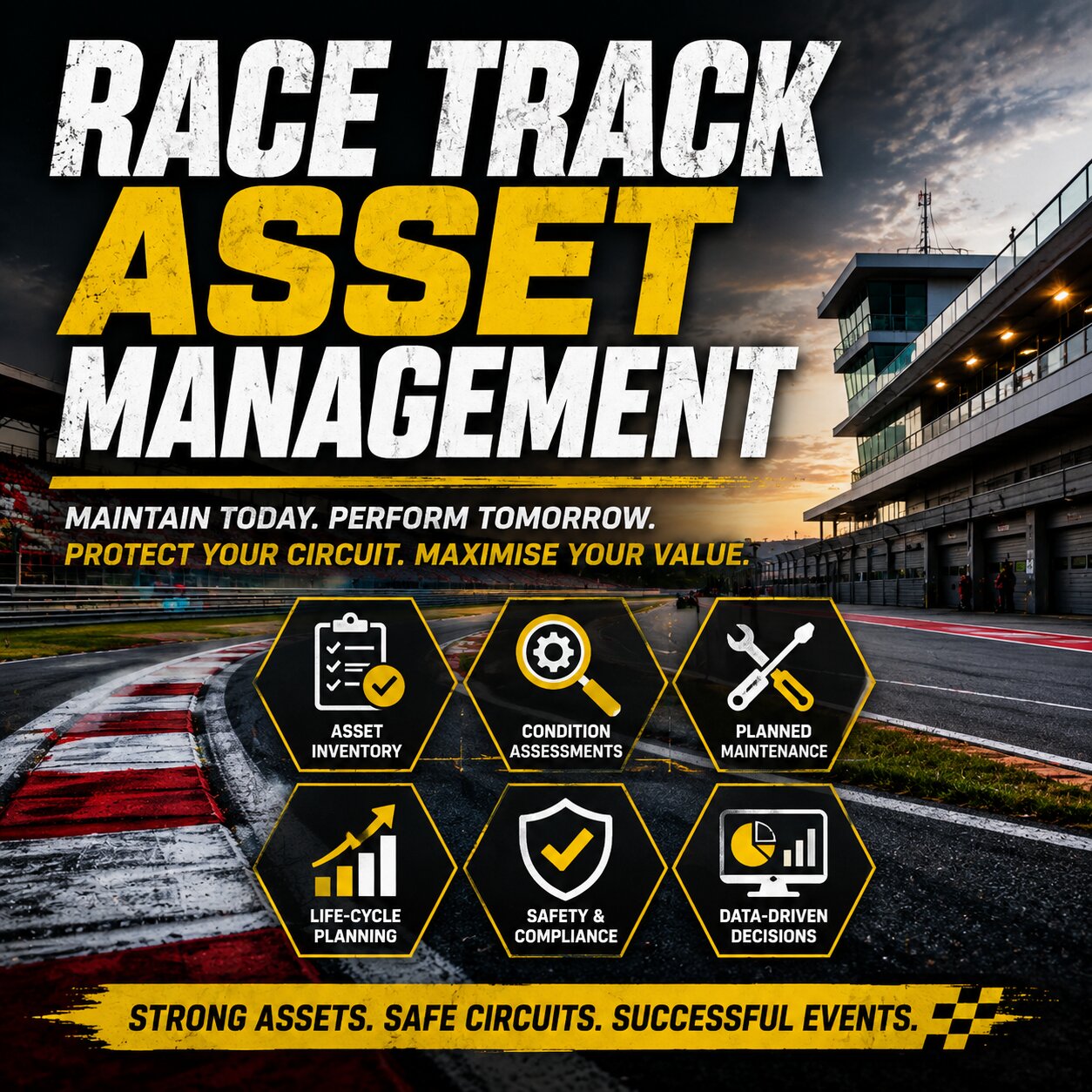
The foundation of successful race track asset management is a detailed asset register. This database records the location, condition, age, value, maintenance history, and expected lifespan of each major asset.
A complete register may include:
- Track surfaces, kerbs, run-off areas, barriers, fencing, and drainage systems
- Grandstands, hospitality suites, pit buildings, garages, offices, and workshops
- Lighting, generators, electrical networks, timing systems, cameras, and communications
- Medical centres, fire equipment, emergency vehicles, access routes, and evacuation infrastructure
- Parking facilities, internal roads, signage, security systems, and spectator amenities
Accurate information allows facility managers to make better decisions. It also reduces the risk of critical components being overlooked during inspections, maintenance planning, or capital budgeting.
The register should remain a living document. Asset information must be updated whenever inspections, repairs, upgrades, or replacements take place.
Condition Assessments and Inspection Planning
Regular condition assessments are essential within race track asset management. These inspections determine whether assets remain fit for purpose and identify signs of deterioration before they develop into serious problems.
Track surfaces may develop cracking, deformation, polished aggregate, drainage problems, or uneven grip levels. Safety barriers can suffer corrosion, impact damage, loose fixings, or alignment issues. Grandstands and buildings may experience structural wear, water ingress, electrical faults, or damaged access systems.
Inspection frequencies should be based on asset risk. High-risk infrastructure such as track surfaces, barriers, medical facilities, and emergency systems requires more frequent assessment than low-risk decorative or administrative assets.
Condition ratings can be used to compare assets and prioritise work. A standard rating system also creates consistency when multiple contractors, engineers, or facility managers perform inspections.
Moving from Reactive to Planned Maintenance
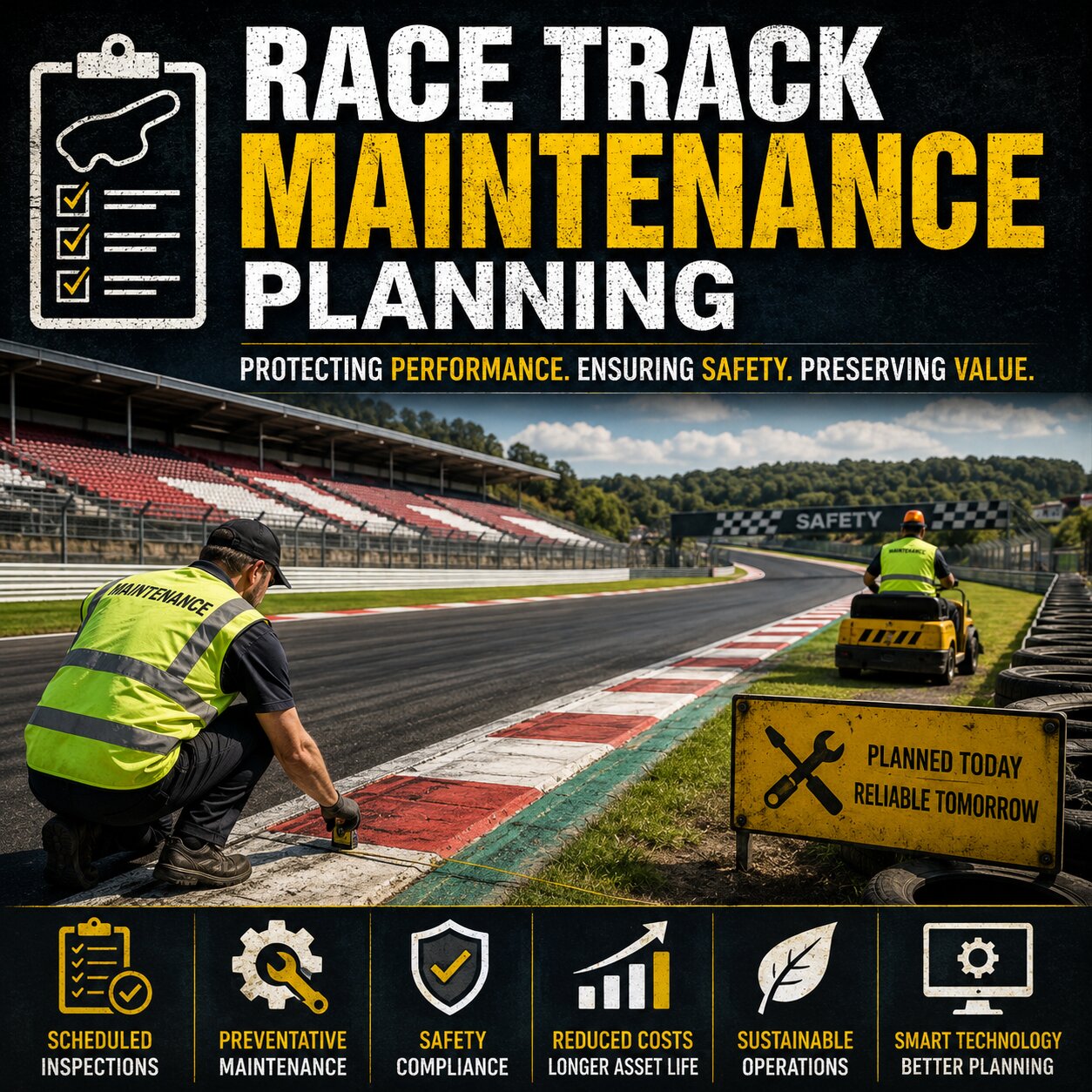
One of the greatest benefits of race track asset management is the shift from reactive repairs to planned maintenance.
Reactive maintenance often costs more because failures happen unexpectedly. They may disrupt race meetings, create safety concerns, damage other infrastructure, or require urgent contractor appointments. Planned maintenance allows work to be scheduled during quiet periods and included in approved budgets.
Preventive work may include resurfacing selected track areas, clearing drainage channels, treating corrosion, testing electrical systems, servicing generators, repainting markings, repairing fencing, or replacing worn components before failure.
Not every asset should be maintained in the same way. Some require scheduled servicing, while others can be managed through condition-based maintenance. The correct approach depends on the asset’s importance, failure risk, repair cost, and effect on operations.
Supporting Safety and Regulatory Compliance
Safety is one of the most important goals of race track asset management. Poorly maintained infrastructure can increase risks for competitors, officials, employees, contractors, and spectators.
A deteriorated racing surface may reduce grip or create standing water. Damaged barriers may no longer absorb impact correctly. Faulty communications or medical equipment could delay emergency responses. Defective grandstand infrastructure can expose spectators to avoidable hazards.
Asset records help demonstrate that inspections and maintenance have been completed. This documentation can support motorsport approvals, occupational health and safety requirements, insurance assessments, event licensing, and internal audits.
A well-managed facility is also more likely to meet the expectations of racing series, event organisers, sponsors, and commercial partners.
Life-Cycle Cost Planning
Purchase price alone does not reveal the real cost of an asset. Race track asset management considers expenditure across the full asset life cycle, including acquisition, operation, maintenance, repair, renewal, and disposal.
A cheaper asset may require frequent repairs or consume more energy. A more expensive alternative may offer greater durability, lower operating costs, and a longer service life. Life-cycle analysis allows managers to compare these options more accurately.
This is particularly useful when planning major projects such as resurfacing, barrier replacements, lighting upgrades, building refurbishments, or drainage improvements.
Long-term forecasting also reduces financial shocks. When management knows that a track surface, grandstand roof, or electrical network may require replacement within a specific period, funding can be planned gradually.
Using Technology to Improve Asset Decisions
Digital tools can make race track asset management more efficient and transparent. Computerised maintenance management systems allow teams to record inspections, schedule work orders, track costs, store documents, and monitor maintenance performance.
Mobile inspection tools enable employees and contractors to update asset information while working around the circuit. Photographs, measurements, notes, and fault reports can be attached directly to asset records.
Sensors may also support condition monitoring. Drainage levels, energy consumption, structural movement, equipment temperatures, and electrical performance can be monitored continuously where necessary.
Technology does not replace experienced facility managers, engineers, or maintenance teams. Instead, it gives them better information for planning and decision-making.
Protecting the Circuit as a Long-Term Investment
Effective race track asset management protects more than physical infrastructure. It protects the circuit’s reputation, commercial potential, operational continuity, and ability to attract major events.
Well-maintained facilities create better experiences for racing teams, spectators, sponsors, broadcasters, and event organisers. They also reduce the likelihood of cancellations, emergency repairs, safety failures, and unexpected capital expenses.
For circuit owners, race track asset management provides a clear picture of current conditions and future obligations. It transforms maintenance from a collection of isolated repairs into a strategic programme that supports the entire facility.
By understanding every asset, assessing its condition, planning its maintenance, and budgeting for its eventual replacement, race tracks can operate more safely and sustainably while preserving their value for years to come.