Race tracks are designed for speed, but speed can only be sustained when the right protection is in place. Every circuit, from a small club facility to a major international venue, depends on carefully planned safety measures that reduce risk for drivers, officials, spectators, emergency teams, and operational staff. Without effective race track safety systems, even a well-designed circuit can become dangerously exposed during an incident.
Modern motorsport safety involves far more than placing tyre barriers around corners. It combines physical protection, monitoring technology, emergency planning, communication infrastructure, track design, and trained personnel. Each layer works together to reduce the likelihood of an accident becoming a major emergency.
Race track safety systems also need to account for the type of racing taking place. A circuit used for motorcycles may require different run-off arrangements from one designed for touring cars or endurance racing. Karting, drifting, drag racing, and high-performance testing each create their own risks, meaning safety planning must be matched to the actual activities hosted at the venue.
For facility owners and race organisers, investing in race track safety systems is not simply a compliance exercise. It is a central part of responsible asset management, event delivery, and long-term venue sustainability.
Designing Safety Into the Circuit
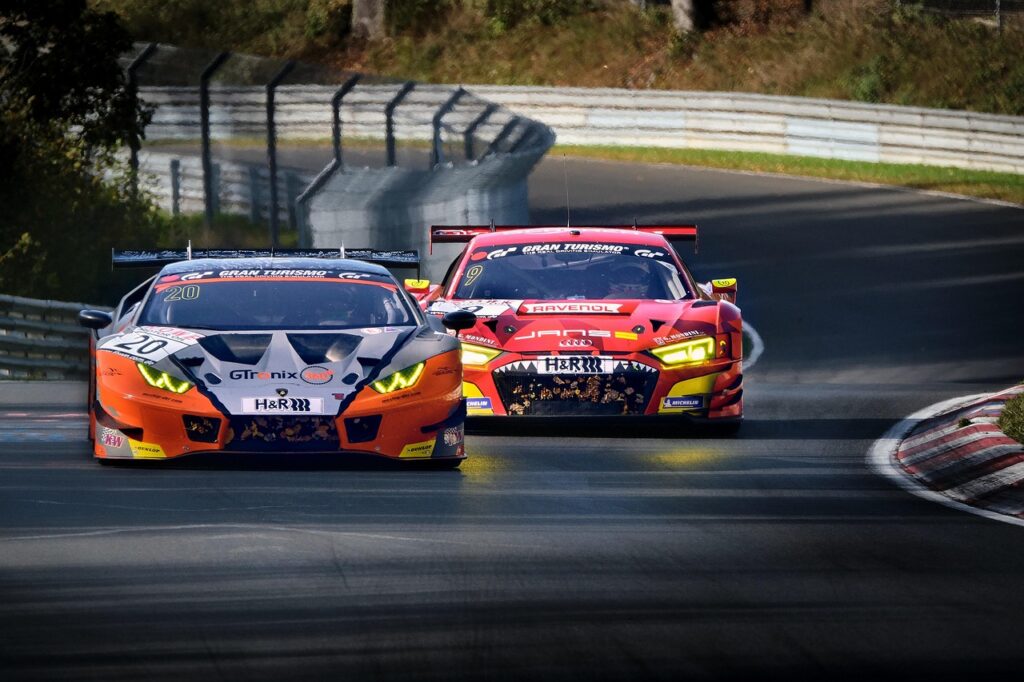
The strongest race track safety systems begin with the layout of the circuit itself. Track geometry influences where vehicles are most likely to leave the racing surface, how quickly they may be travelling, and what types of impact are possible. Engineers therefore examine braking zones, corner radii, elevation changes, sight lines, and likely accident trajectories when planning protective infrastructure.
Run-off areas are among the most important design features. These spaces give drivers additional distance to recover control or reduce speed before reaching a barrier. Depending on the circuit and available land, run-off areas may use asphalt, gravel, grass, or a combination of surfaces. Each material behaves differently and must be selected according to the expected vehicle types and approach speeds.
Track edges, kerbs, drainage channels, and surface transitions also affect safety. Poorly designed kerbs can launch a vehicle or destabilise a motorcycle, while standing water can increase the likelihood of aquaplaning. Proper drainage forms part of race track safety systems because weather-related hazards can quickly turn an otherwise manageable corner into a dangerous section of the circuit.
Safety must therefore be considered during the earliest stages of race track planning. Retrofitting protection later is often more expensive and may be limited by existing buildings, access roads, spectator areas, and property boundaries.
Barriers and Impact Protection
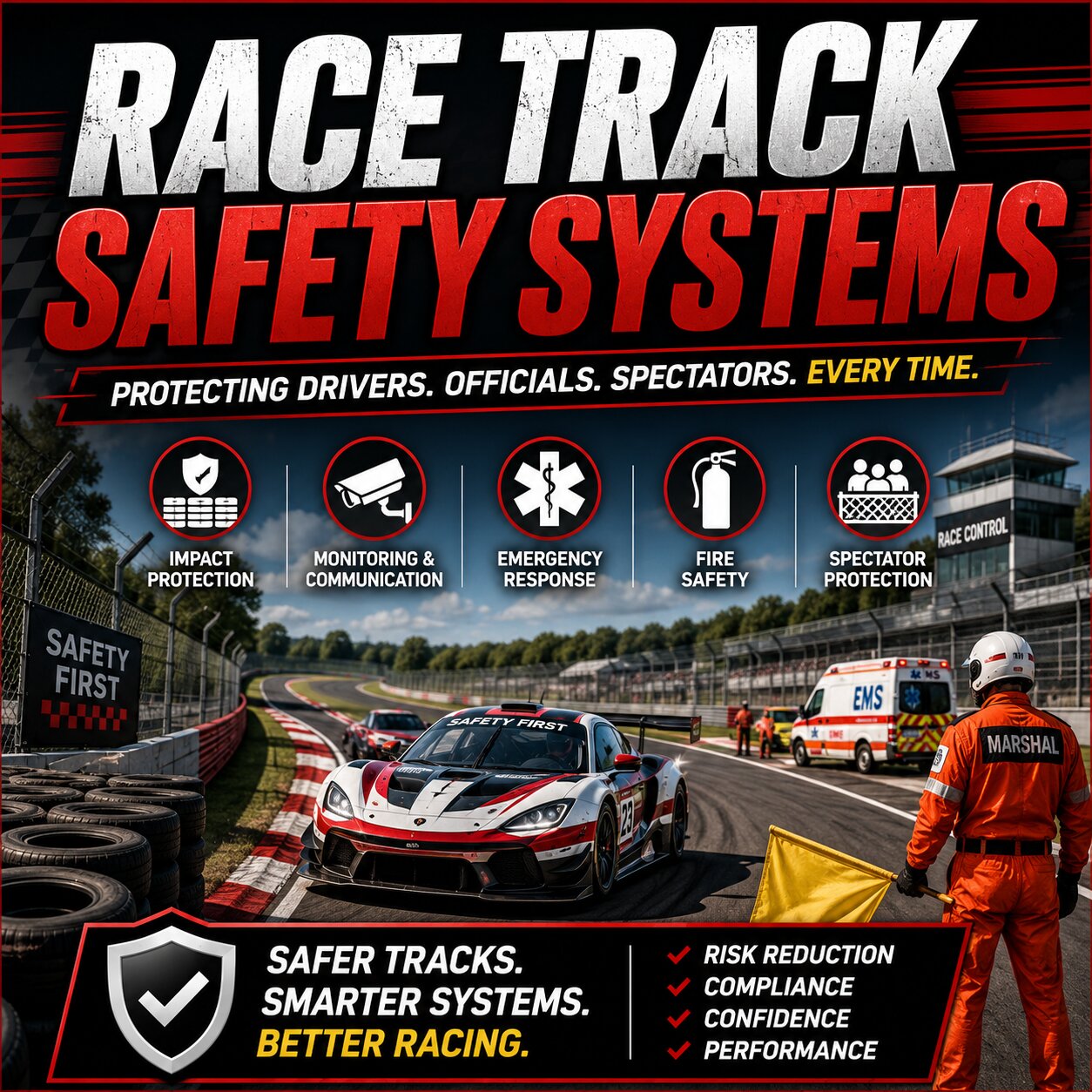
Barrier systems are designed to absorb, redirect, or contain the energy created when a vehicle leaves the track. No single barrier type is suitable for every location, which is why race track safety systems usually include several different forms of impact protection.
Tyre walls remain common because they can absorb substantial energy when correctly assembled and secured. However, they require regular inspection because loose, damaged, or waterlogged tyres may not perform as intended. Conveyor belting or protective covers are sometimes added to help keep the structure together during impact.
Modern circuits may also use steel barriers, concrete walls, energy-absorbing blocks, catch fencing, air barriers, or modular systems designed for specific motorsport categories. The position, height, angle, and distance from the racing surface are just as important as the barrier material itself.
A few common protective elements include:
- Gravel traps and asphalt run-off zones
- Tyre walls and energy-absorbing barriers
- Steel or concrete containment walls
- Debris and catch fencing
- Motorcycle air barriers
- Safety fencing around spectator areas
These components must be inspected before events and after any significant impact. A barrier may appear intact from a distance while having hidden damage that reduces its ability to protect competitors during a later incident.
Monitoring and Communication Systems

Effective race track safety systems depend on rapid access to information. Race control must be able to see what is happening across the circuit, communicate with officials, and respond immediately when an incident occurs.
Closed-circuit television systems allow race control teams to monitor blind corners, pit lanes, access roads, paddocks, and spectator areas. Camera placement should provide clear coverage without leaving critical gaps, particularly at high-risk corners or areas where vehicles frequently leave the track.
Marshal posts remain essential because trained officials provide human judgement that cameras cannot always replace. Marshals can assess smoke, fluid leaks, driver condition, debris, and local track conditions while communicating directly with race control.
Radio networks, digital flag panels, timing systems, public-address systems, and emergency communication channels all form part of modern race track safety systems. Redundancy is important because one failed radio repeater or damaged cable should not leave a section of the venue without communication.
Digital flag systems have become especially valuable at larger circuits. They can display warning signals quickly and clearly, even when visibility is reduced. However, they should support rather than completely replace trained marshals and traditional flagging procedures.
Emergency Response and Medical Readiness
No race track can eliminate every accident, which makes emergency preparedness a critical part of race track safety systems. When an incident occurs, the speed and coordination of the response can significantly affect the outcome.
Emergency teams need clear access routes to all parts of the circuit. Service roads, gates, crossover points, and recovery zones should be planned so that ambulances, fire vehicles, and tow units can reach an incident without unnecessary delay.
Medical facilities should match the scale and risk level of the event. Smaller events may rely on on-site paramedics and nearby hospitals, while major race meetings may require advanced trauma support, medical centres, extraction teams, and helicopter access.
Fire suppression is equally important. Fuel, batteries, hot engines, and damaged electrical systems can create serious fire hazards. Extinguishers and specialist fire equipment must be placed strategically around the circuit, pit lane, garages, fuel storage areas, and paddock.
Race track safety systems should also include detailed emergency procedures. Staff must understand who takes command, how the race will be stopped, where casualties will be moved, and how external emergency services will be contacted. Regular drills help identify weaknesses before a real incident exposes them.
Protecting Spectators and Operational Staff
Motorsport safety extends beyond competitors. Spectators, media teams, mechanics, vendors, cleaners, security staff, and event personnel all need appropriate protection.
Spectator zones should be positioned away from likely impact paths and separated from the circuit by suitable fencing and barriers. Elevated viewing areas, embankments, grandstands, and protected enclosures can improve both safety and visibility.
Restricted areas must be clearly marked and controlled. Allowing people into run-off zones, service roads, or unprotected trackside positions can create severe risks, especially during live sessions.
Pit lanes also require dedicated race track safety systems. Speed limits, lane markings, fire equipment, protective clothing, garage controls, and clear access procedures all reduce the chance of collisions or injuries in one of the busiest parts of the venue.
Crowd movement should be considered as well. Emergency exits, evacuation routes, pedestrian crossings, lighting, and public announcements all contribute to a safe event environment.
Maintaining and Improving Safety Systems
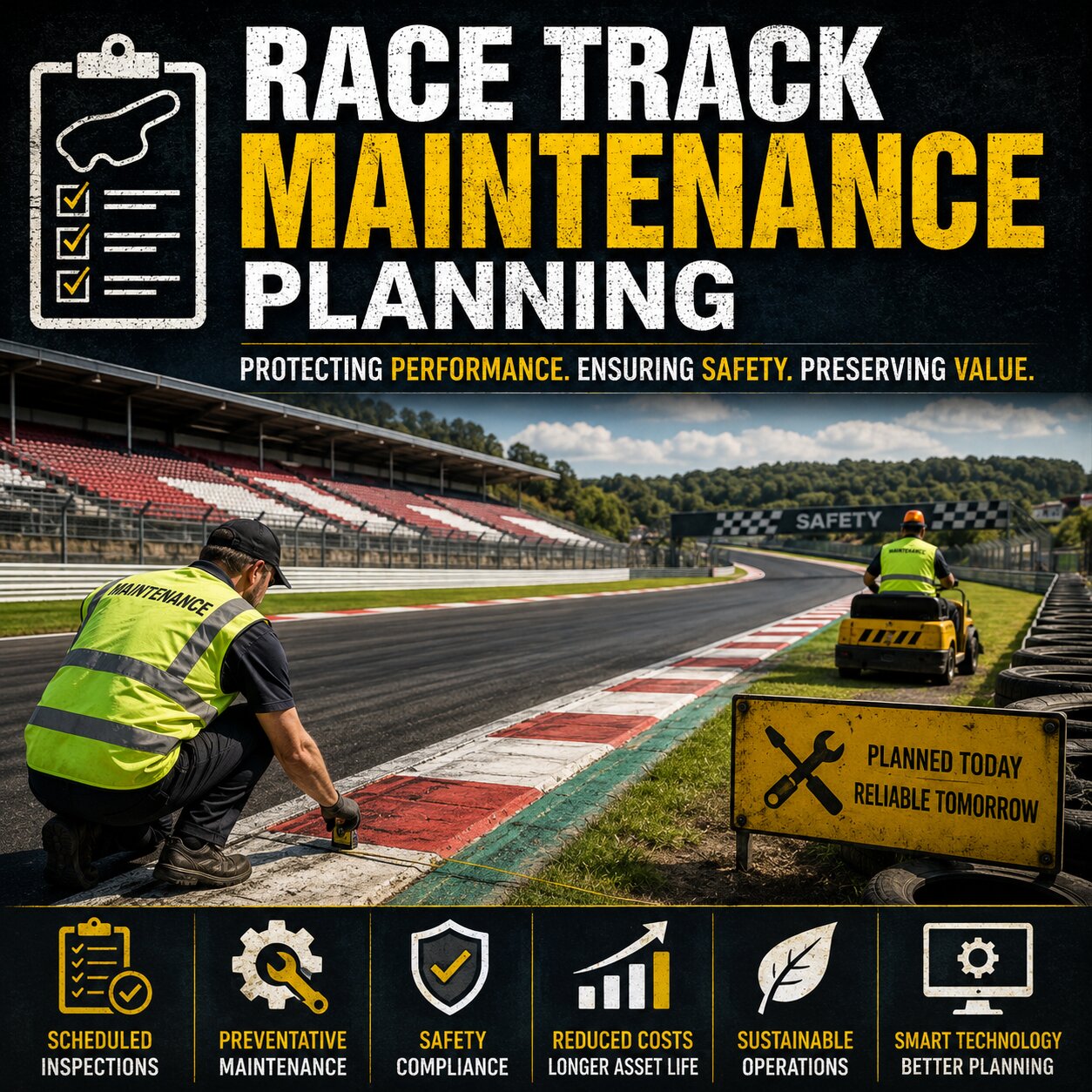
Race track safety systems are not installations that can be completed and forgotten. They require ongoing inspection, testing, maintenance, and improvement.
Track surfaces wear over time, barriers degrade, fencing corrodes, and electronic systems become outdated. Drainage channels may block, painted markings fade, and access gates may become difficult to operate. Routine maintenance helps prevent these small defects from becoming serious safety failures.
Incident reports are also valuable. Every accident, near miss, equipment failure, or communication problem provides information that can be used to improve the facility. Reviewing where a vehicle left the track, how barriers performed, and how quickly teams responded can reveal weaknesses that may not have been obvious beforehand.
Changes in racing categories should trigger fresh assessments. A circuit originally designed for lower-powered vehicles may need additional protection before hosting faster cars or motorcycles. Similarly, night racing, wet-weather events, and larger crowds may introduce new operational risks.
At Sustainable Systems Tech, we understand that race track safety systems must form part of a broader facility management strategy. Through careful planning, regular inspections, asset management, and operational review, circuit owners can create safer venues that support reliable events and long-term motorsport growth.