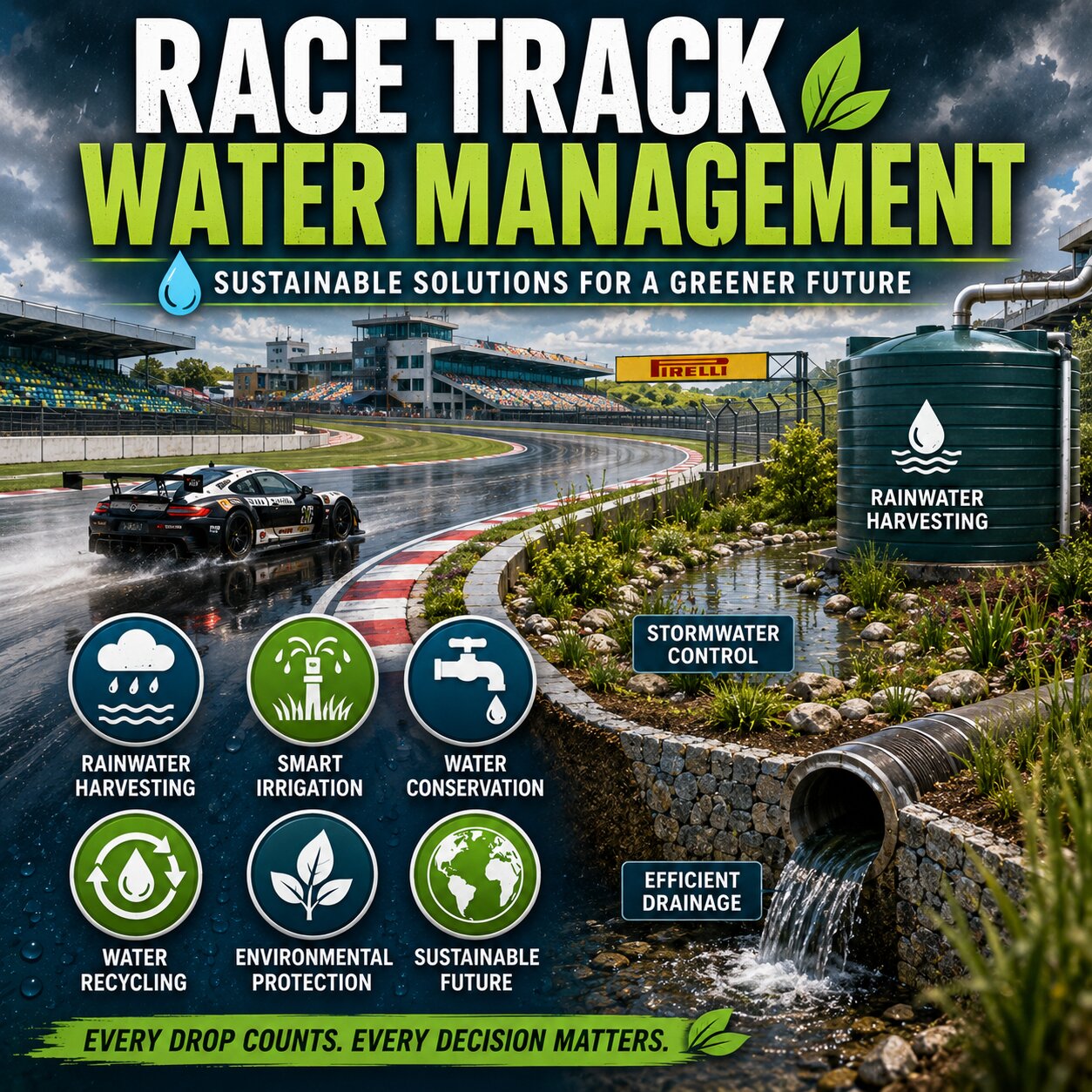
Water is one of the most valuable resources at any motorsport venue, making race track water management an essential aspect of modern circuit design and operation. From maintaining landscaping and supporting facility operations to controlling stormwater and protecting surrounding ecosystems, an effective water management strategy helps race tracks reduce environmental impact while improving long-term operational efficiency.
As sustainability becomes increasingly important across the motorsport industry, race track operators are investing in innovative solutions that conserve water, improve drainage, and ensure compliance with environmental regulations. Good race track water management benefits not only the circuit itself but also the local communities and natural environments that surround it.
Why Race Track Water Management Matters
Every race circuit experiences significant water-related challenges throughout the year. Heavy rainfall can flood sections of the track, damage infrastructure, and create hazardous driving conditions, while extended dry periods place pressure on irrigation systems and landscaping.
Effective race track water management ensures that circuits can handle both extremes by controlling water movement, reducing waste, and maintaining safe racing conditions. It also helps prevent erosion, protects nearby rivers and wetlands, and reduces the cost of water consumption over time.
For circuits hosting international events, strong environmental credentials have also become an important consideration for governing bodies, sponsors, and racing teams.
Managing Stormwater and Drainage
Stormwater management forms the foundation of every race track water management plan. Large paved surfaces generate significant runoff during rainfall, making efficient drainage systems essential.
Modern circuits incorporate carefully engineered drainage channels, underground pipe networks, retention ponds, and grass swales that direct water away from racing surfaces while slowing runoff before it reaches natural waterways.
These systems reduce flooding, minimise erosion, and prevent pollutants such as oil, rubber particles, and debris from entering the environment.
Regular inspections and maintenance ensure drainage infrastructure continues to perform effectively throughout the year.
Conserving Water Across the Facility

Reducing water consumption is another key objective of race track water management.
Many circuits now harvest rainwater from grandstand roofs, pit buildings, and other large structures. This stored water can be used for:
- Irrigating landscaped areas
- Cleaning facilities and paddock areas
- Vehicle washing
- Dust suppression
- Toilet flushing
- Emergency water reserves
Low-flow plumbing fixtures, leak detection systems, and smart irrigation technology further reduce unnecessary water usage without compromising visitor comfort or operational standards.
Protecting the Environment
Environmental protection remains a central goal of race track water management.
Oil separators, filtration systems, sediment traps, and vegetated buffer zones help remove contaminants before water leaves the facility. These measures protect aquatic ecosystems while helping circuits comply with environmental legislation.
Native plant species also require less irrigation than ornamental landscaping, reducing overall water demand while supporting local biodiversity.
Many modern race tracks integrate wetlands and natural ponds into their water management strategies, providing additional filtration while creating valuable wildlife habitats.
The Future of Race Track Water Management
Technology continues to transform race track water management. Smart sensors now monitor rainfall, soil moisture, water quality, and storage levels in real time, allowing facility managers to optimise water usage throughout the year.
Artificial intelligence and predictive weather forecasting are beginning to assist with irrigation scheduling and stormwater preparation, helping operators respond proactively to changing conditions.
As motorsport continues its sustainability journey, effective race track water management will become even more important. By combining efficient drainage, water conservation, environmental protection, and smart technology, modern circuits can reduce operating costs while protecting natural resources for future generations.
Sustainable water practices are no longer simply an environmental initiative. They have become a core component of responsible race track management, ensuring that motorsport facilities remain resilient, efficient, and environmentally responsible for decades to come.