Motorsport generates excitement, innovation, and unforgettable experiences, but every race weekend also produces significant amounts of waste. From food packaging and plastic bottles to worn tyres and vehicle fluids, race tracks must manage a wide variety of waste streams while maintaining safety, environmental compliance, and a positive visitor experience. Effective race track waste management has become an essential part of modern circuit operations.
As sustainability continues to influence the motorsport industry, race venues around the world are investing in smarter waste management strategies that reduce landfill, encourage recycling, and minimise their environmental footprint.
Understanding the Waste Challenges

A busy race circuit can welcome tens of thousands of spectators during a major event. Alongside fans come food vendors, merchandise stalls, paddock operations, media teams, and hundreds of support staff.
This creates multiple waste streams, including:
- Food waste
- Plastic bottles and packaging
- Aluminium cans
- Glass containers
- Cardboard
- Used tyres
- Waste oil and lubricants
- Hazardous workshop materials
- General litter
Managing each type of waste correctly ensures the venue remains safe, clean, and environmentally responsible throughout the event.
Recycling Starts with Smart Planning
Successful waste management begins long before spectators arrive.
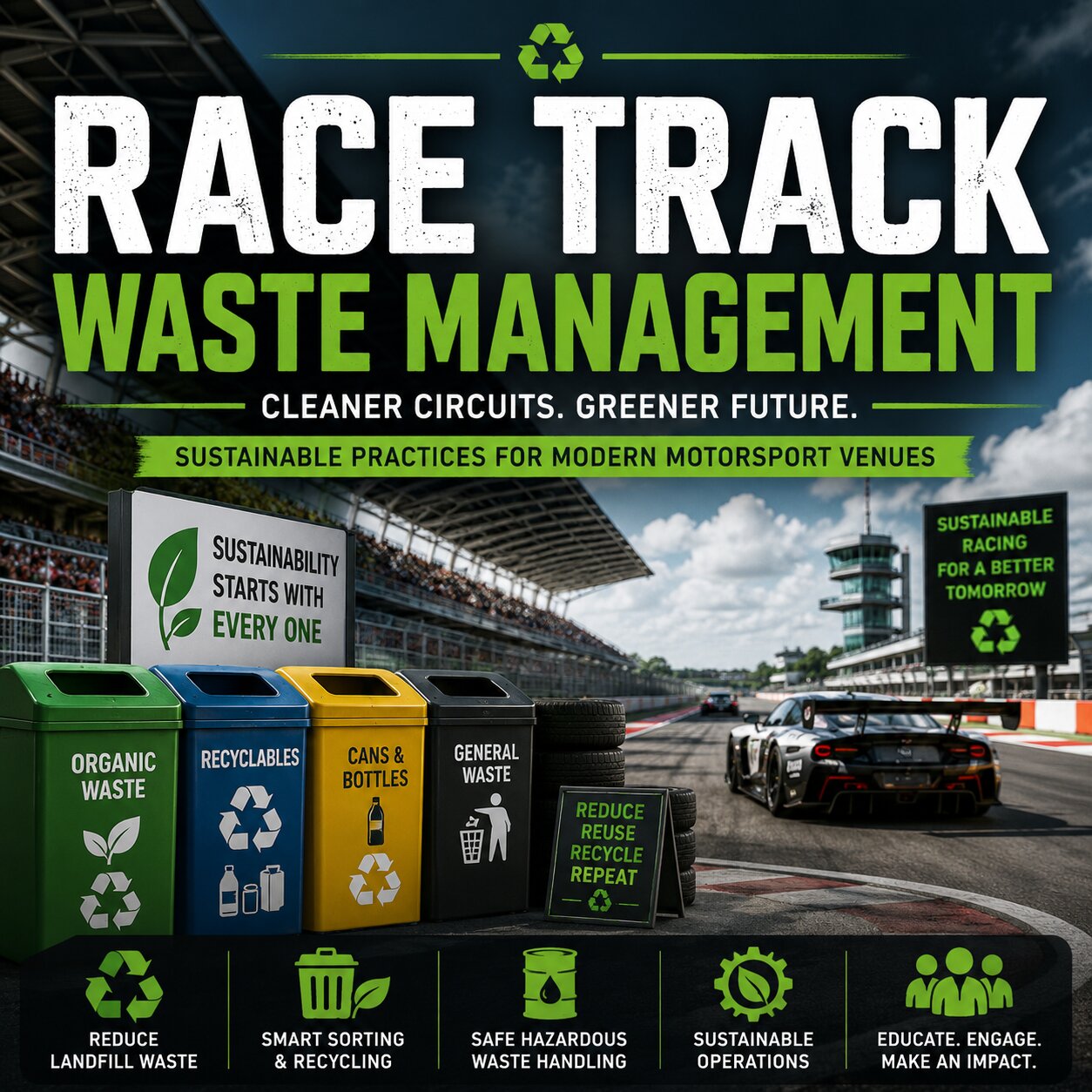
Race tracks should position clearly marked recycling stations throughout grandstands, hospitality areas, paddocks, camping facilities, and public walkways. Colour-coded bins help visitors separate recyclables from general waste, making downstream recycling far more efficient.
Organisers can also work with vendors to minimise unnecessary packaging and encourage the use of recyclable or compostable food containers. These small decisions significantly reduce the volume of landfill waste generated during an event.
Managing Hazardous Waste Safely

Motorsport facilities handle materials that require specialised disposal procedures.
Engine oil, brake fluid, coolant, fuel residues, batteries, solvents, cleaning chemicals, and contaminated workshop materials must all be stored and disposed of according to environmental regulations.
Dedicated containment areas, spill response plans, and licensed hazardous waste contractors help prevent soil and water contamination while ensuring compliance with local legislation.
Routine inspections also reduce the risk of accidental leaks reaching nearby ecosystems.
Reducing Waste Behind the Scenes
Many improvements happen away from public view.
Digital ticketing reduces paper consumption, while reusable paddock equipment, refillable water stations, and sustainable procurement policies all contribute to lowering overall waste production.
Maintenance departments can also recycle metals, electronic components, tyres, and damaged vehicle parts wherever practical rather than sending them directly to landfill.
Many modern circuits now measure waste diversion rates as part of their sustainability reporting, helping identify areas for continuous improvement.
Educating Spectators and Teams
Waste management works best when everyone participates.
Clear signage, public announcements, volunteer ambassadors, and educational campaigns encourage spectators to dispose of waste responsibly. Racing teams can also support sustainability initiatives by reducing single-use plastics, recycling workshop materials, and adopting environmentally friendly operational practices.
When organisers, teams, vendors, and fans work together, even major international race events can significantly reduce their environmental impact.
Sustainability Is Becoming a Competitive Advantage
Today’s motorsport venues are judged not only by the quality of their racing but also by their environmental responsibility. Effective race track waste management helps circuits reduce operating costs, improve regulatory compliance, strengthen their reputation, and support global sustainability initiatives.
As motorsport continues embracing greener technologies, responsible waste management will remain one of the simplest yet most effective ways race tracks can protect the environment while delivering world-class racing experiences.
At Sustainable Systems Tech, we explore the technologies, strategies, and innovations helping industries build a more sustainable future. Follow us for more insights into race track sustainability, environmental management, and the green solutions shaping tomorrow’s motorsport venues.