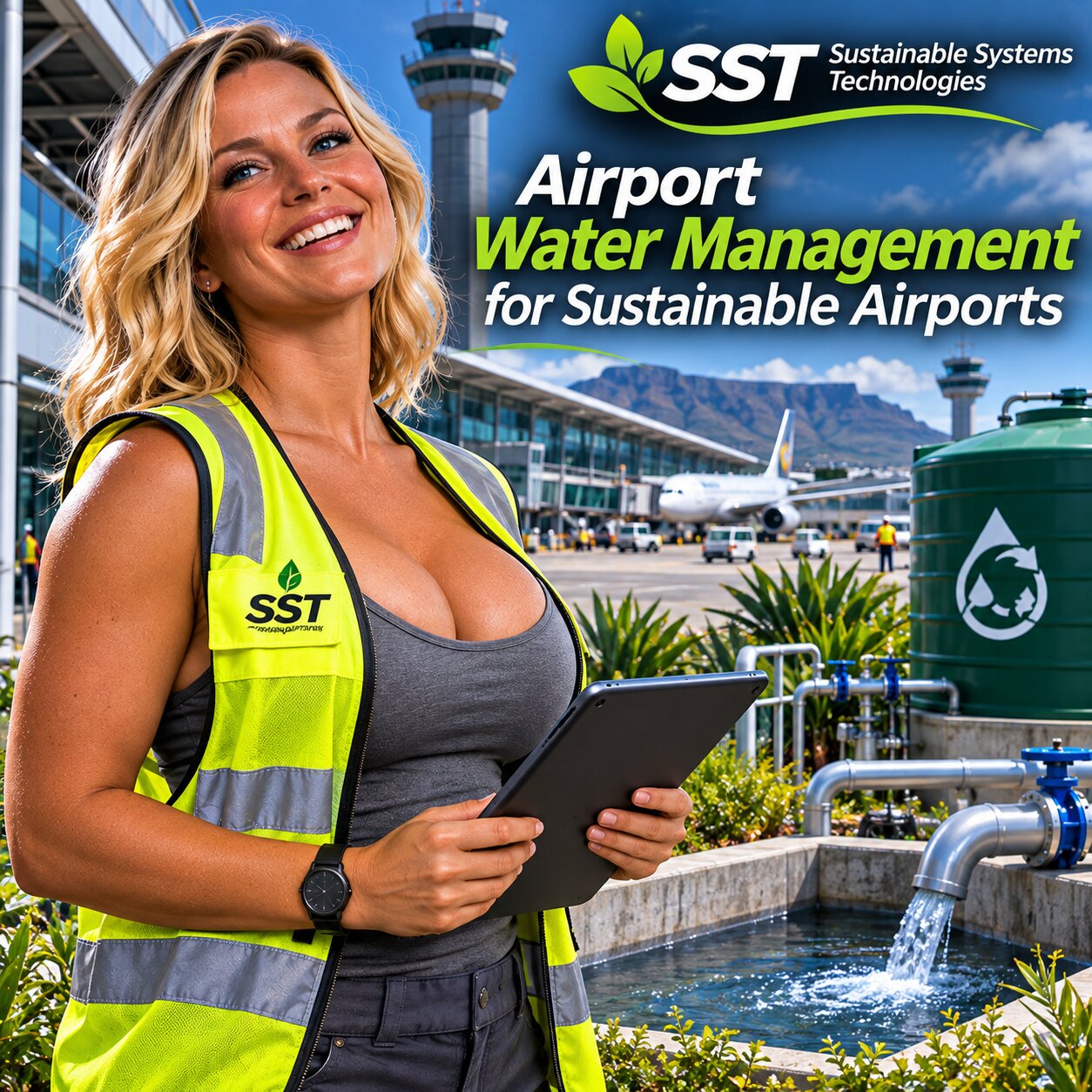
Airports operate like small cities, with extensive infrastructure supporting passengers, employees, aircraft and surrounding businesses. These facilities require water for sanitation, cleaning, cooling, landscaping and numerous operational activities. Effective airport water management is therefore an important part of reducing environmental impact and improving long-term operational resilience.
Understanding Airport Water Demand
Water consumption at airports extends far beyond public toilets and drinking fountains. Terminal buildings, catering operations, maintenance facilities, cooling systems and landscaped areas can all contribute to demand. The scale and composition of that demand vary considerably according to airport size, climate and available infrastructure.
Airport operators can begin improving efficiency by conducting water audits and identifying major consumption points. Separating water use by terminal, maintenance area and other facilities makes it easier to detect abnormal consumption and prioritise improvements. Accurate monitoring also establishes a baseline against which future conservation measures can be evaluated.
Rainwater Harvesting and Storage
Large airport roofs and paved surfaces create opportunities for rainwater collection. With suitable treatment and storage systems, harvested rainwater may support approved non-potable applications such as irrigation, toilet flushing and certain cleaning operations. System design must account for local rainfall patterns, water quality and applicable regulations.
Stormwater management is equally important. Runoff from aprons, parking areas and other operational surfaces may contain oils, sediment or chemicals. Appropriate separation, containment and treatment measures are necessary before water can be reused or discharged into the environment.
Wastewater Treatment and Reuse
On-site wastewater treatment can help airports reduce their reliance on freshwater supplies. Depending on treatment standards and regulatory approval, reclaimed water may be suitable for landscape irrigation, toilet flushing or selected industrial processes. Reuse systems require dedicated infrastructure and safeguards to prevent cross-connections with potable water networks.
Aircraft-related operations create additional considerations. Wastewater from maintenance activities or areas where de-icing chemicals are used may need specialised treatment. Airports must therefore distinguish between different wastewater streams rather than assuming that every source can enter the same recycling system.
Smart Monitoring and Leak Detection
Digital meters and connected monitoring systems allow facility managers to track water consumption across airport infrastructure. Unexpected increases in flow can indicate leaks, faulty equipment or unusual operational demand. Early detection is particularly valuable in large facilities where underground pipes and distributed buildings make manual inspections difficult.
Monitoring data can also support predictive maintenance and long-term investment decisions. When combined with occupancy patterns and operational schedules, consumption records help managers identify where conservation measures offer the greatest benefits.
Building Water-Resilient Airports
Water security is increasingly important for airports operating in drought-prone regions. Facilities can strengthen resilience through efficient fixtures, alternative water sources, storage capacity and carefully managed landscaping. However, these measures should form part of a coordinated strategy rather than isolated upgrades.
Successful airport water management combines environmental responsibility with operational continuity. By measuring consumption, preventing contamination and investing in appropriate reuse systems, airports can reduce pressure on municipal supplies while supporting more sustainable aviation infrastructure.