Industrial facilities often contain extensive roofs, paved yards, loading areas and access roads that prevent rainwater from naturally soaking into the ground. During heavy rainfall, these impermeable surfaces generate substantial volumes of stormwater runoff. Without appropriate management, the resulting flows can contribute to local flooding, erosion, infrastructure damage and water pollution.
Sustainable stormwater management offers industrial operators opportunities to address these challenges while improving environmental performance. By combining engineered drainage systems with nature-based solutions, facilities can reduce runoff impacts and support more responsible water resource management.
Understanding Industrial Stormwater Challenges
Stormwater behaves differently across industrial sites compared with natural landscapes. Rainfall that would ordinarily infiltrate soil instead travels across roofs and hard surfaces towards drains, channels and surrounding waterways. The increased speed and volume of runoff can overwhelm conventional drainage infrastructure.
Industrial activities may introduce additional risks through vehicle movements, material storage, maintenance operations and loading procedures. Runoff can potentially carry sediment, oils, metals and other contaminants into receiving water systems. The nature and severity of these pollutants depend on the activities taking place at each facility.
Effective management therefore requires more than simply removing water from the premises. Operators must consider runoff volumes, pollution prevention, treatment requirements and the potential effects on neighbouring communities.
Using Permeable Surfaces
Permeable paving allows rainfall to pass through specially designed surfaces into underlying storage and drainage layers. Depending on site conditions, this water may infiltrate the ground or be conveyed through a controlled outlet. The approach can reduce surface runoff while helping manage rainfall closer to where it lands.
Suitable applications may include selected parking areas, pedestrian routes and lightly trafficked spaces. However, industrial yards supporting heavy vehicles or activities involving potentially hazardous spills require careful assessment. Structural loading, soil conditions and contamination risks can limit where permeable systems are appropriate.
Regular maintenance is essential because sediment accumulation can reduce infiltration capacity. Sweeping, inspection and appropriate cleaning help maintain long-term performance.
Installing Bioswales and Rain Gardens
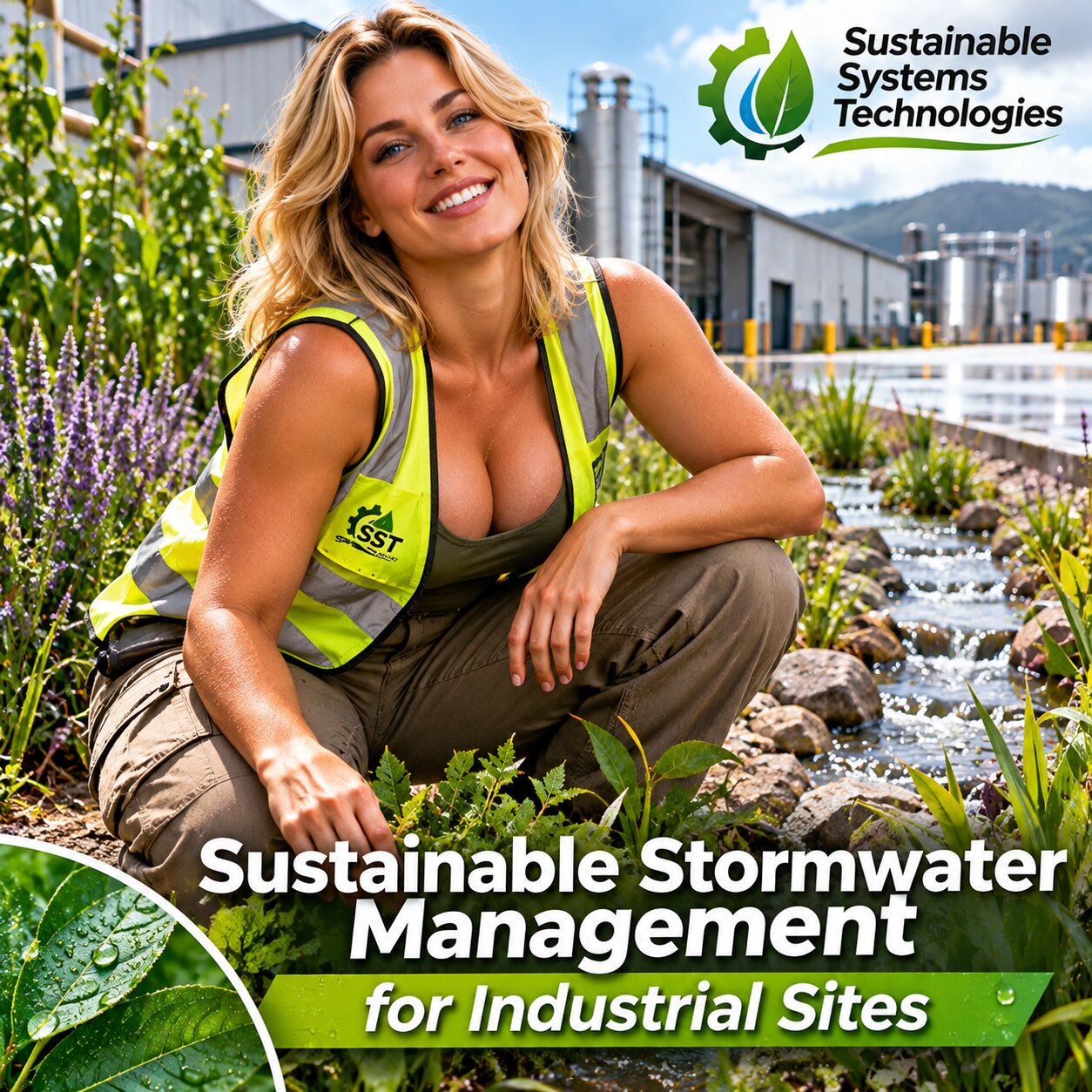
Bioswales are vegetated channels designed to convey, slow and potentially treat stormwater runoff. Their soil, vegetation and engineered layers can help capture sediment and certain pollutants while reducing flow velocities. They are particularly useful alongside roads, parking areas and landscaped industrial boundaries.
Rain gardens perform a related function by collecting runoff within shallow planted depressions. Water temporarily accumulates before infiltrating, evaporating or draining through an engineered system. Plant selection must account for local rainfall patterns, soil conditions and the possibility of prolonged dry periods.
Both solutions can improve site appearance and provide habitat opportunities. However, runoff containing significant industrial contaminants may require pretreatment or isolation rather than direct discharge into planted systems.
Detention and Retention Systems
Stormwater detention systems temporarily store runoff and release it at a controlled rate. This reduces peak discharge flows and can help protect downstream drainage networks during heavy rainfall. Facilities may incorporate detention basins, underground tanks or other engineered storage arrangements.
Retention systems generally maintain a permanent pool of water while providing additional capacity to manage storm events. Depending on their design, they may support sediment settling and certain water-quality improvements. However, they require appropriate maintenance, safety measures and consideration of evaporation losses.
Selecting between detention and retention depends on available land, rainfall characteristics, environmental objectives and regulatory requirements.
Harvesting Rainwater for Industrial Use
Rainwater harvesting can reduce dependence on municipal or other freshwater supplies where suitable applications exist. Roof runoff may be collected, filtered and stored for purposes such as irrigation, certain cleaning operations or appropriately designed industrial processes. The required treatment depends on the intended use and the quality of the collected water.
Storage capacity should be matched to local rainfall patterns and realistic demand. Oversized systems can increase capital expenditure without delivering proportional benefits, while insufficient capacity may limit the amount of water recovered.
Industrial operators must also prevent cross-connections between non-potable rainwater systems and drinking-water supplies. Appropriate filtration, treatment, monitoring and maintenance are essential where water quality presents operational or health risks.
Preventing Pollution at the Source
Sustainable stormwater management begins with preventing contamination wherever possible. Covered material storage, appropriate chemical handling and well-maintained equipment can reduce the likelihood of pollutants entering runoff. Separating clean roof water from potentially contaminated yard drainage can also simplify treatment requirements.
Facilities should maintain suitable spill-response procedures and inspect drainage infrastructure regularly. Oil-water separators, sediment traps and other treatment systems may be necessary depending on site activities and applicable discharge standards.
Employee training supports these measures by ensuring that personnel understand how everyday operational decisions affect stormwater quality.
Building a Resilient Industrial Water Strategy
Sustainable stormwater management works best when integrated into broader facility planning. Industrial operators should assess drainage catchments, flood risks, water quality, soil characteristics and future development requirements before selecting solutions. A combination of conventional infrastructure and green stormwater systems will often provide greater flexibility than either approach alone.
Long-term performance depends on inspection, maintenance and periodic reassessment. As rainfall patterns, site activities and surrounding development change, stormwater strategies may need to evolve.
By managing runoff as both an environmental responsibility and a potential resource, industrial facilities can improve operational resilience while reducing their impact on surrounding water systems.