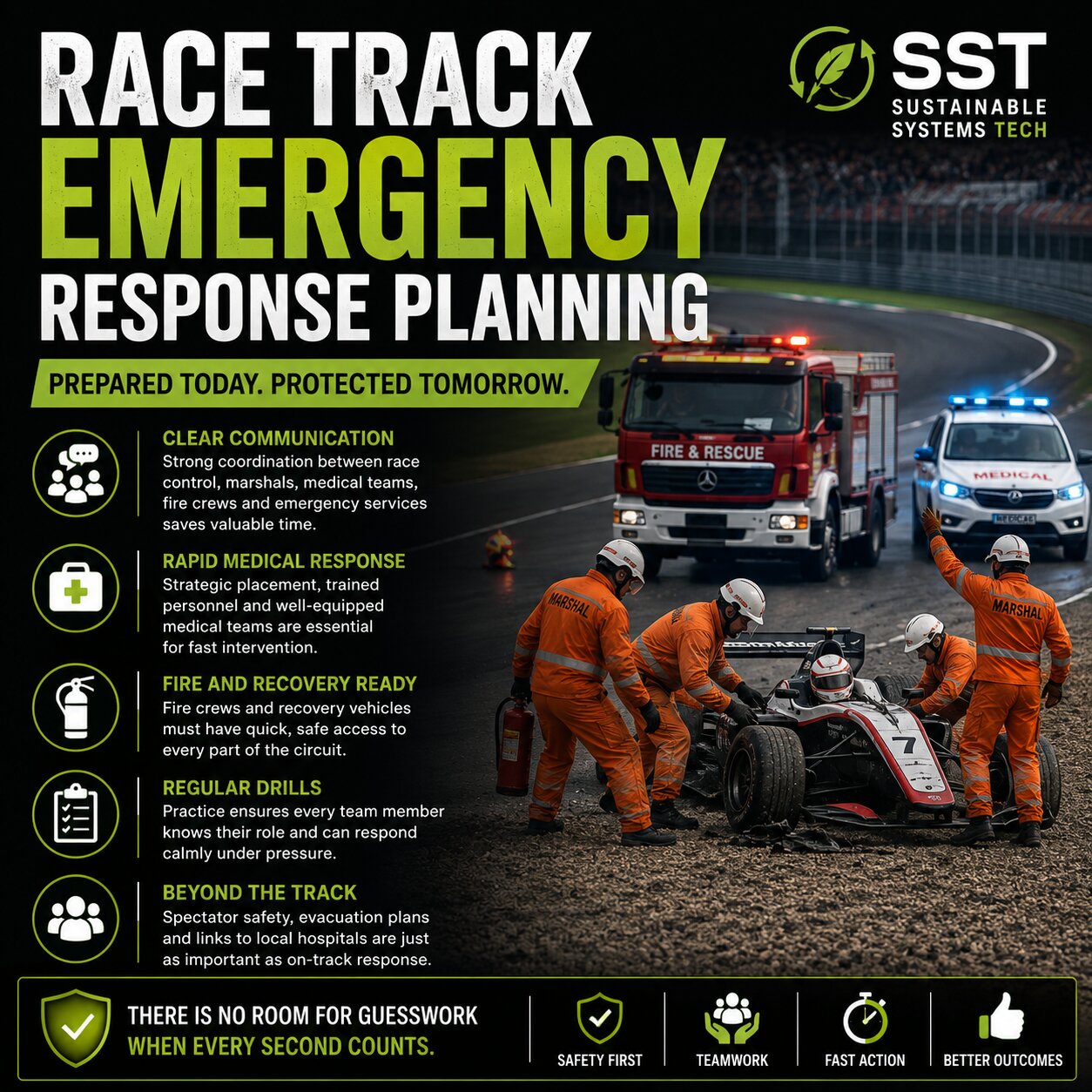
Every motorsport event carries an element of risk, making emergency response planning one of the most important responsibilities of any race circuit. A well-prepared emergency plan helps protect competitors, officials, spectators, and support staff when incidents occur.
Effective emergency planning begins with clear communication between race control, marshals, medical personnel, firefighters, recovery vehicles, and local emergency services. Every team member must understand their role before the event begins.
Medical teams should be positioned strategically around the circuit to minimise response times, while fire crews and recovery vehicles need rapid access to every section of the track. Regular drills allow staff to practise responding to a variety of scenarios, from vehicle fires to multi-car accidents and severe weather events.
Emergency planning also extends beyond the racing surface. Spectator evacuation routes, public announcements, and coordination with nearby hospitals all contribute to a safer event environment.
No circuit can completely eliminate risk, but thorough preparation dramatically improves the speed and effectiveness of emergency responses. Investing in planning, training, and communication helps ensure that when every second counts, everyone involved knows exactly what to do.